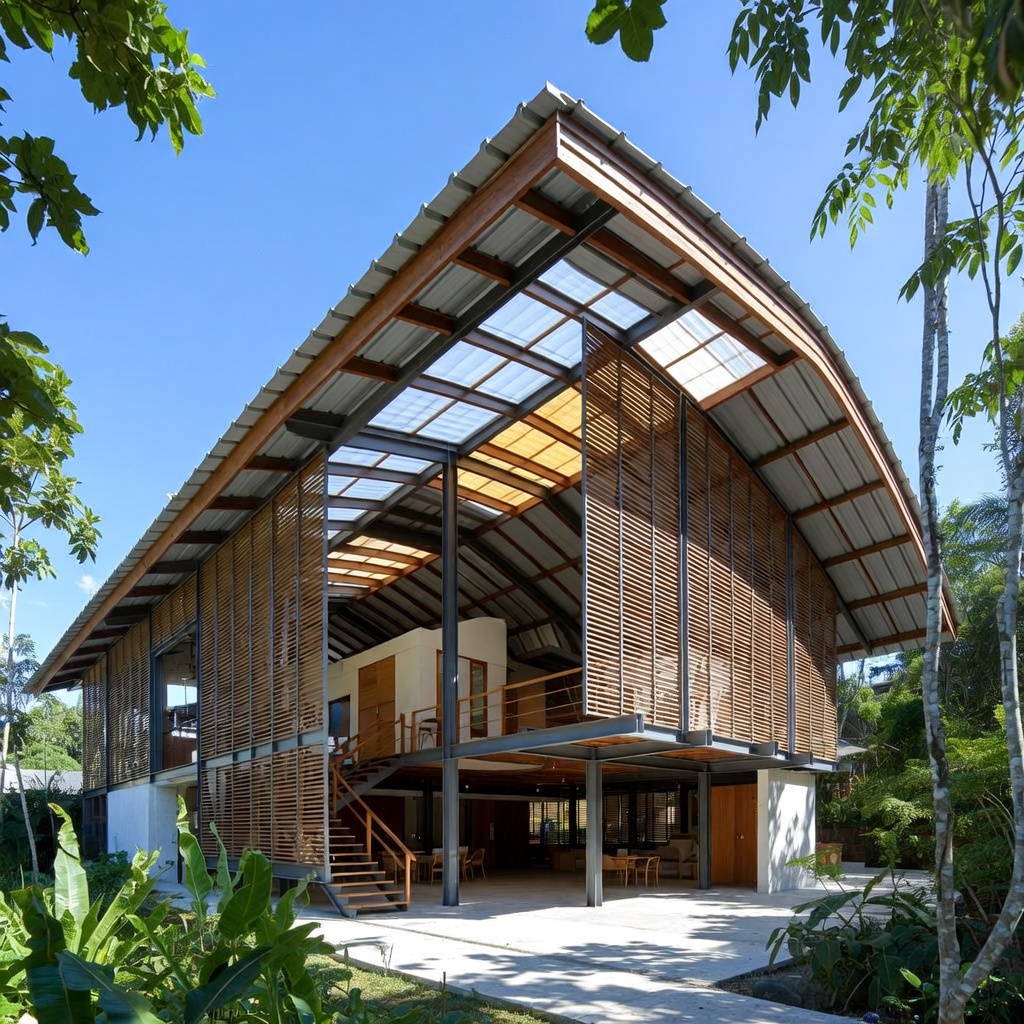
In the sweltering embrace of the equator, where concrete ovens masquerade as homes, a smarter way to build has long prevailed: tropical ventilated architecture. This isn’t about slapping on air conditioners; it’s engineering harmony between structures and the relentless sun. By channeling breezes, shading the fierce rays, and lifting hot air skyward, these designs turn humidity into an ally rather than an enemy.
At its core, tropical ventilated architecture hinges on passive cooling strategies tailored to hot, humid climates. Key features include elevated structures on stilts or pilings, which allow air to flow freely beneath floors, whisking away ground heat. Cross-ventilation reigns supreme—think wide eaves, operable louvers, and strategic window placements that create wind tunnels through rooms. High ceilings act as thermal buffers, trapping rising hot air while cooler layers settle low. Overhanging roofs and verandas provide deep shade, slashing solar gain by up to 70%, according to studies from the Tropical Architecture Group. Natural materials like timber, bamboo, and thatch insulate without trapping moisture, and green walls or courtyards introduce evaporative cooling via plants and water features. It’s a symphony of form following airflow.
This approach isn’t new; it’s etched in history across the tropics. Malay kampong houses in Southeast Asia, perched on stilts with steep thatched roofs, have ventilated homes since the 14th century, adapting to monsoons and heat. In West Africa, the Dogon people’s mud-brick granaries feature narrow slits for ventilation, a technique dating back millennia that preserves food without modern tech. Colonial-era bungalows in India and Sri Lanka borrowed these ideas, evolving into the “bangalore bungalow” with its high vents and punkahs—manual fans that prefigured ceiling fans. Even the ancient Mayans in Mesoamerica used thatched palapas with open sides, proving passive ventilation’s timeless logic.
Fast-forward to today, and modern examples showcase reinvention. Singapore’s School of the Arts, by WOHA architects, stacks sky gardens and perforated facades to funnel breezes through a 15-story behemoth, cutting energy use by 30%. In Bali, the Green Village resort employs bamboo mega-structures with curved roofs that mimic termite mounds—nature’s own ventilators—achieving net-zero cooling. Brazil’s favelas have inspired upscale twists, like the ventilated social housing in Recife, where modular breeze blocks allow 24/7 airflow without AC. These projects blend tradition with tech, like sensors optimizing louvers.
Why does this matter now? With climate change cranking up global temperatures—tropical regions face 2-4°C rises by 2050—air conditioning guzzles 10% of the world’s electricity, spewing CO2 and straining grids. Ventilated designs slash that footprint, promoting energy sovereignty in developing nations. They foster healthier indoor air, reducing sick-building syndrome in humid zones where mold thrives. Economically, they cut bills by 50-80% long-term, democratizing comfort. As urban sprawl engulfs the tropics, where 90% of future population growth hits, scaling these strategies is non-negotiable. Tropical ventilated architecture isn’t nostalgia; it’s the blueprint for resilient, livable cities in a warming world. Time to let the breeze lead.
Comments are closed