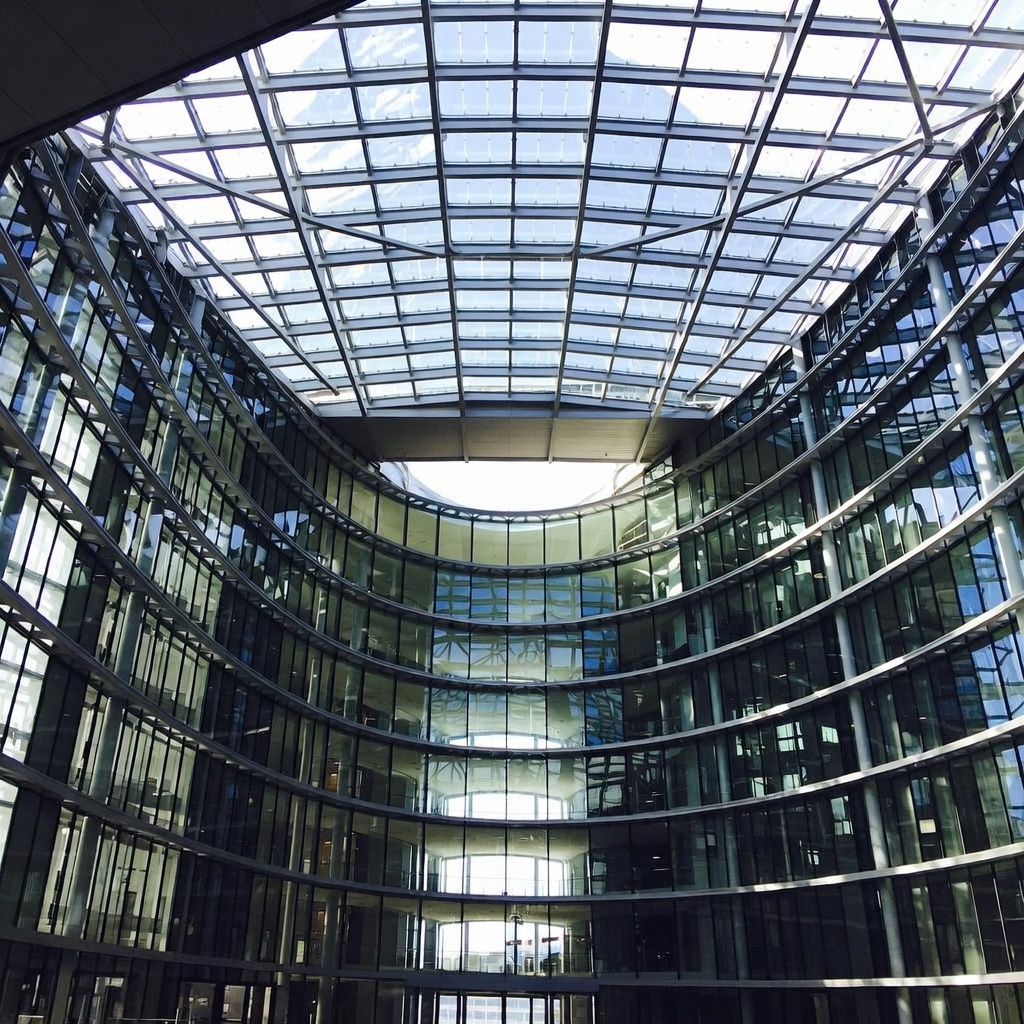
Norman Foster doesn’t just build buildings; he engineers ecosystems that pulse with technological vitality. As the godfather of high-tech architecture, his designs strip away ornamentation to expose the guts of a structure—beams, ducts, cables, and all—turning engineering into high art. This “bowellist” approach, as critic Reyner Banham dubbed it in the 1960s, celebrates the machine age not as cold functionalism, but as a symphony of precision and transparency.
High-tech expression emerged in the late 1960s amid Britain’s countercultural shift from brutalism’s raw concrete to something lighter, more intellectually playful. Foster, alongside Richard Rogers and Renzo Piano, cut his teeth on the seminal Pompidou Centre in Paris (1977). That upside-down cultural hub flaunted its colorful innards on the exterior—escalators snaking like rollercoasters, services color-coded and exposed. Foster’s own manifesto crystallized with the Sainsbury Centre for Visual Arts (1978) in Norwich, where a vast, adaptable space under a lightweight clamshell roof showcased serviced steel beams servicing the gallery like exposed veins. These weren’t mere gimmicks; they embodied a philosophy of demystifying construction. Why hide the workings when they can inspire awe?
Foster’s signature features—modular steel frames, tensile membranes, and intelligent facades—allow buildings to breathe, adapt, and perform. Take the Hongkong and Shanghai Bank’s headquarters (1986): a soaring skeletal frame with skybridges and glass elevators, evoking a microchip cityscape. It maximized natural light and ventilation in a humid climate, proving high-tech’s environmental prescience decades before sustainability became buzzword fodder. Fast-forward to modern icons like the Gherkin (30 St Mary Axe, 2004) in London. Its diagrid exoskeleton reduces steel use by 50% while sculpting airflow for passive cooling— a glassy pickle that slashes energy bills and sways gently in gales. Or Apple’s Cupertino “spaceship” campus (2017), a 2.8-million-square-foot ring of curved glass under the largest carbon-neutral roof, integrating solar arrays and native landscaping into Foster’s tech-optimism.
Why does this matter today? In an era of climate crisis and urban density, Foster’s high-tech legacy champions buildings as living machines. They prioritize performance metrics—energy efficiency, occupant health, flexibility—over stylistic flourishes. The 2021 redevelopment of London’s Bloomberg headquarters earned BREEAM Outstanding for its geothermal systems and rainwater harvesting, embodying “regenerative design.” Amid AI-driven construction and net-zero mandates, Foster + Partners (now helmed by the 88-year-old maestro) pushes boundaries with projects like the twisting Fosun International HQ in Shanghai or drone-optimized logistics hubs. High-tech expression isn’t dated; it’s evolutionary, reminding us that architecture can harness technology to humanize the future. Foster’s work proves that when form follows not just function, but futuristic ingenuity, cities transform from concrete jungles into intelligent organisms—vital, visible, and visionary.
Comments are closed