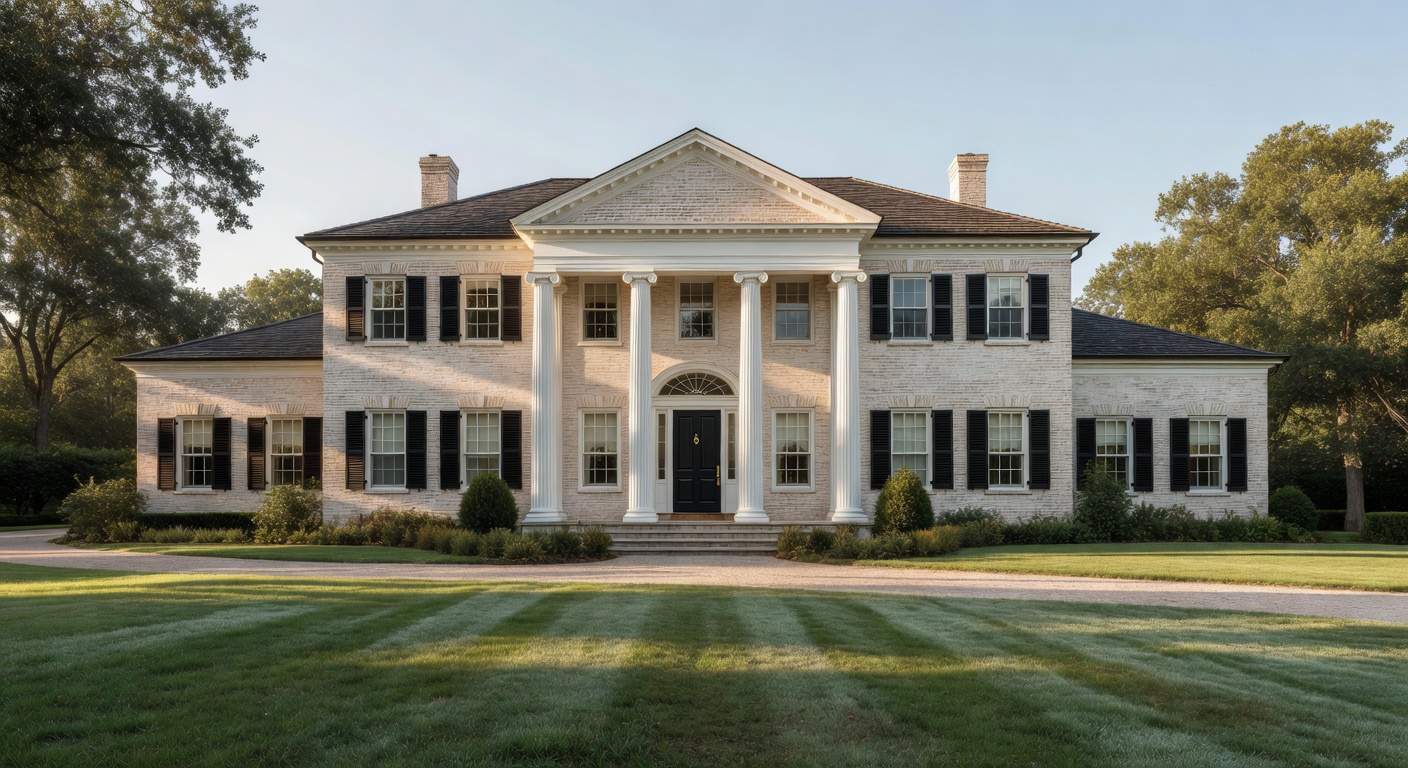
Federal style elegance captures the poised sophistication of a young nation stepping into maturity, blending classical grandeur with democratic restraint. Emerging in the late 18th century, this architectural and decorative movement defined the early United States, reflecting the Founding Fathers’ admiration for ancient Rome and Greece—ideals of order, virtue, and republican simplicity. Unlike the opulent Baroque or Rococo of European courts, Federal style whispered power through proportion and purity, embodying a break from monarchical excess.
At its core, Federal architecture prioritizes symmetry and balance. Think of grand porticos supported by slender columns—often Ionic or Corinthian—that evoke the Parthenon without overwhelming the viewer. Facades feature delicate moldings, fanlights over doorways, and evenly spaced sash windows with double-hung panes. Interiors shine with elliptical arches, delicate plasterwork, and motifs like swags, urns, and eagles symbolizing liberty. Furniture mirrors this: graceful mahogany pieces with inlaid bellflowers, tapered legs, and oval backs, crafted by masters like Duncan Phyfe. Colors stayed subdued—pale yellows, soft blues, creamy whites—allowing intricate details to stand out.
Historically, the style owes much to Scottish architect Robert Adam’s neoclassical influence, imported via immigrants like Charles Bulfinch and Asher Benjamin. George Washington’s endorsement propelled it forward; his presidential residence in New York and Philadelphia set the tone. Iconic examples include Bulfinch’s Massachusetts State House (1798), with its golden dome presiding over Beacon Hill, and Thomas Jefferson’s Monticello, where Federal elements fuse with Palladian innovation. In the nation’s capital, the White House (completed 1800, though burned and rebuilt) and the U.S. Capitol showcase this style’s civic aspirations, designed amid the Constitutional era’s optimism.
Today, Federal elegance endures, revived in modern contexts that honor heritage while adapting to contemporary life. Historic restorations, like the meticulous rehab of Philadelphia’s Second Bank of the United States, preserve original Adamesque interiors for public enjoyment. New builds nod to it too: Washington, D.C.’s Federal-style rowhouses inspire luxury condos with updated smart tech hidden behind classic brickwork and black shutters. Interior designers channel the aesthetic in high-end homes—think marble hearths, crystal chandeliers, and Klismos chairs reimagined in sustainable woods. Brands like Restoration Hardware offer Federal-inspired sofas with clean lines for urban living rooms.
Why does it matter now? In an age of chaotic maximalism and fleeting trends, Federal style offers timeless poise—a reminder that true elegance lies in restraint. It fosters calm amid digital noise, with balanced spaces promoting focus and harmony. Environmentally, its durable materials and efficient designs align with sustainability goals. Culturally, it reinforces American identity, bridging past revolutions to present aspirations. Embracing Federal elegance isn’t nostalgia; it’s a sophisticated choice for living with intention, where every arch and inlay tells a story of enduring grace. Whether restoring a Fanlight-topped doorway or selecting a shield-back chair, this style invites us to build legacies of quiet confidence.
Comments are closed