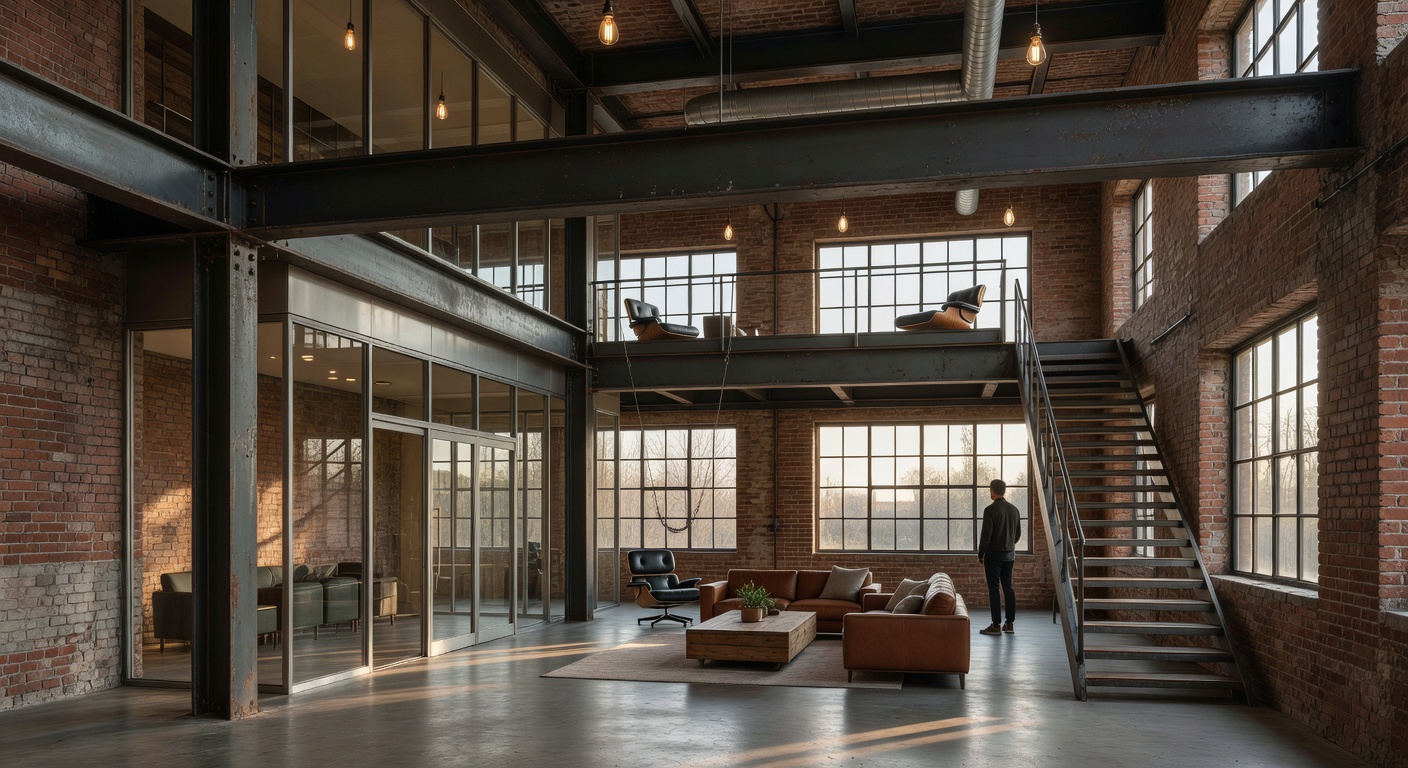
Old factories stand like silent sentinels in cities worldwide, their brick facades etched with the grit of bygone eras. Once humming with the clamor of assembly lines and the acrid tang of machinery, these structures now find new life as coveted lofts—sprawling homes that blend raw industrial charm with contemporary comfort. This transformation isn’t just a trend; it’s a smart fusion of history, design, and urban necessity.
The roots of factory-to-loft conversions trace back to the late 1960s in lower Manhattan’s SoHo district. Artists, priced out of traditional galleries and studios, began squatting in abandoned cast-iron warehouses built during the 19th-century industrial boom. These buildings, with their vast open floors, oversized windows for natural light, and sturdy timber beams, offered cheap, flexible spaces perfect for creative work. By the 1970s, what started as illegal occupation evolved into legalized live-work lofts, thanks to zoning changes and landmark preservation efforts. Pioneers like artist Donald Judd championed the aesthetic, turning exposed brick, ductwork, and concrete pillars into hallmarks of “industrial chic.” This movement spread globally: London’s Shoreditch warehouses became artist hubs in the ’80s, while Berlin’s post-Wall factories fueled a creative explosion in the ’90s.
Fast-forward to today, and factory conversions are booming, driven by millennials and Gen Z craving authenticity in a sea of cookie-cutter condos. Key features make them irresistible. High ceilings—often 12 to 20 feet—create airy, dramatic living spaces. Massive windows flood rooms with light, reducing energy costs and offering skyline views. Original elements like riveted steel beams, reclaimed wood floors, and weathered brick walls provide texture and character that new builds can’t replicate. Modern twists include open-plan kitchens with stainless steel islands echoing factory machinery, smart home tech hidden in vintage casings, and flexible layouts for hybrid work-from-home setups. In Chicago’s West Loop, the massive Reid, Murdoch & Co. warehouse, built in 1914, now houses lofts with private rooftop decks and fitness centers, blending history with luxury amenities.
Why does this matter now? In an era of housing shortages and climate urgency, conversions tackle multiple crises head-on. They preserve architectural heritage, dodging demolition and the carbon footprint of new construction—repurposing uses 40-60% less energy than ground-up builds, per urban planning studies. They revitalize blighted neighborhoods, spurring cafes, galleries, and shops that boost local economies. Take Detroit’s Russell Industrial Center: once a derelict auto parts factory, it’s now a thriving live-work community fostering artists and entrepreneurs. Amid remote work’s rise, these lofts offer adaptable spaces that feel like sanctuaries, not sterile boxes.
Yet challenges persist—retrofitting old bones for modern plumbing, insulation, and seismic standards can be pricey. Noise from exposed pipes or thin walls tests tolerance. Still, the allure endures: owning a slice of industrial history means living with stories in the walls.
Factory-to-loft conversions prove that reinvention beats replacement. They turn relics of mass production into personal havens, reminding us that the past holds keys to sustainable futures. As cities densify, expect more factories to loft up, keeping urban souls alive and kicking.
(Word count: 478)
Comments are closed