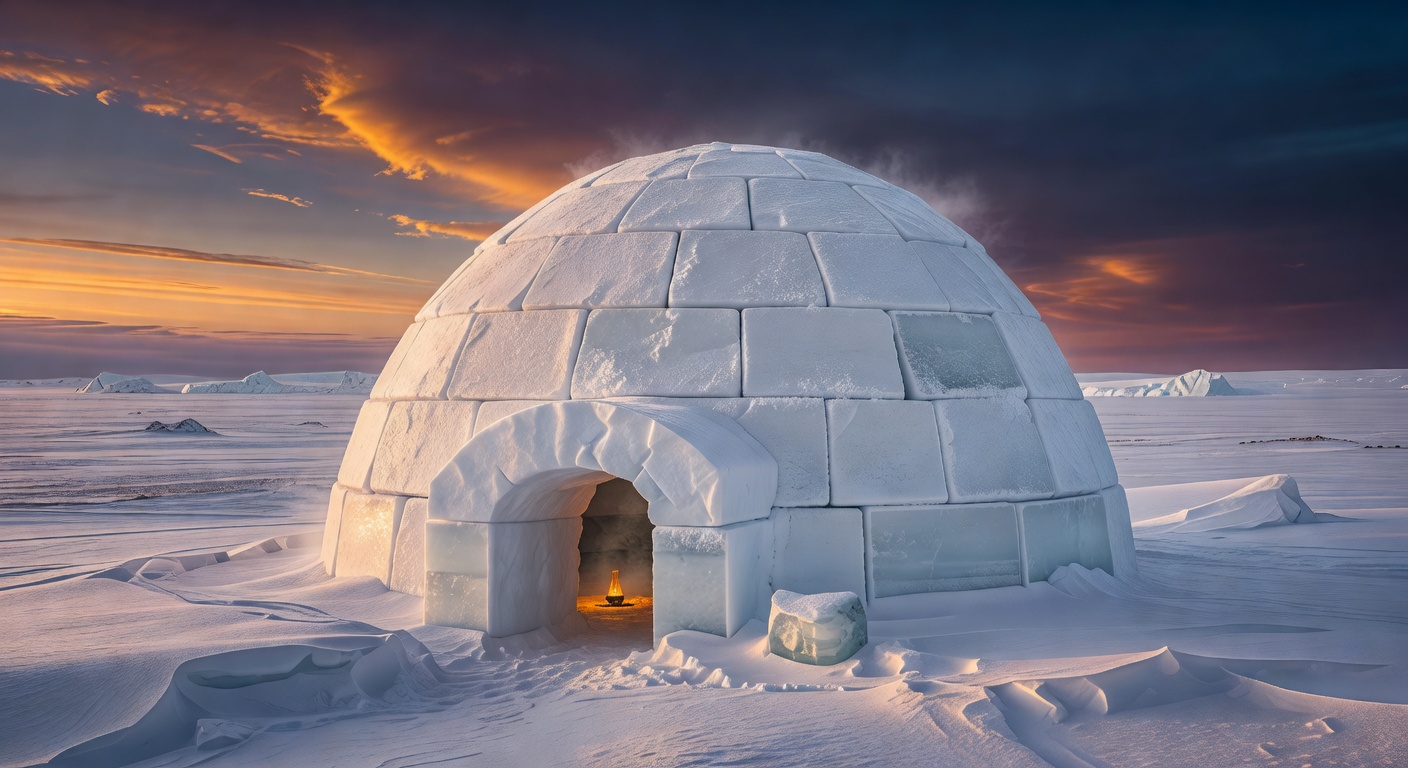
Few structures embody human ingenuity against nature’s extremes like the Inuit igloo. Crafted from snow blocks in mere hours, these dome-shaped shelters have sustained Arctic peoples for centuries, turning a frozen wasteland into livable refuge. Far from primitive huts, igloos reveal sophisticated engineering rooted in material science, geometry, and survival smarts.
The igloo’s construction begins with site selection—flat, wind-packed snow ideal for cutting stable blocks. Using a long-bladed snow knife, builders slice rectangular slabs about 18 inches by 24 inches and 8 inches thick, weighing 30-40 pounds each. The real brilliance unfolds in assembly: blocks lean inward in a spiral, starting wide at the base and narrowing upward. Each layer overhangs the one below by a few inches, creating a corbelled arch that locks into a self-supporting dome. The final keystone block seals the top, with a small ventilation hole punched through.
This design excels through snow’s unique properties. Fresh snow is 90-95% air, acting as an insulator better than wood or fur alone—interior temperatures can hit 60°F (15°C) with just a seal-oil lamp burning inside, even when outside plummets to -40°F (-40°C). The dome shape distributes weight evenly, resisting collapse under heavy snow loads or winds up to 60 mph. Low entrances, tunneled beneath the sleeping platform, trap warm air inside via the stack effect: cold air sinks, hot rises and exits the vent, maintaining airflow without drafts. A raised sleeping bench of packed snow, covered in furs, stays warmer than the floor, preventing heat loss.
Historically, igloos trace to the Thule people around 1000 AD, spreading across the Canadian Arctic, Greenland, and Alaska. They served as temporary winter camps during seal hunts, complementing permanent sod or whalebone homes. Explorer Knud Rasmussen documented their use in the early 1900s, praising the speed: a skilled builder finishes a 10-foot diameter igloo for five in two hours. Women and children often assisted, scraping interiors smooth to reduce drip.
Modern examples blend tradition with innovation. In Nunavut, Canada, communities host igloo-building festivals, teaching youth amid climate change threats. Engineers study igloos for inspiration: NASA’s cold-weather habitats mimic the dome for Mars missions, while survival trainers worldwide replicate them. Companies like Igloo Software nod to the legacy in branding, but real impact shines in disaster relief—quick-deploy snow shelters aid Antarctic researchers.
Why does this matter today? Igloos teach sustainable engineering: zero-waste, local materials, passive climate control. In a warming world eroding permafrost, they model resilience—adaptable, efficient, low-impact. They remind us that true innovation often hides in ancestral wisdom, proving that with clever physics and a sharp knife, humans thrive anywhere. Next time you battle a blizzard, tip your hat to the igloo: Arctic genius, eternally cool.
Comments are closed