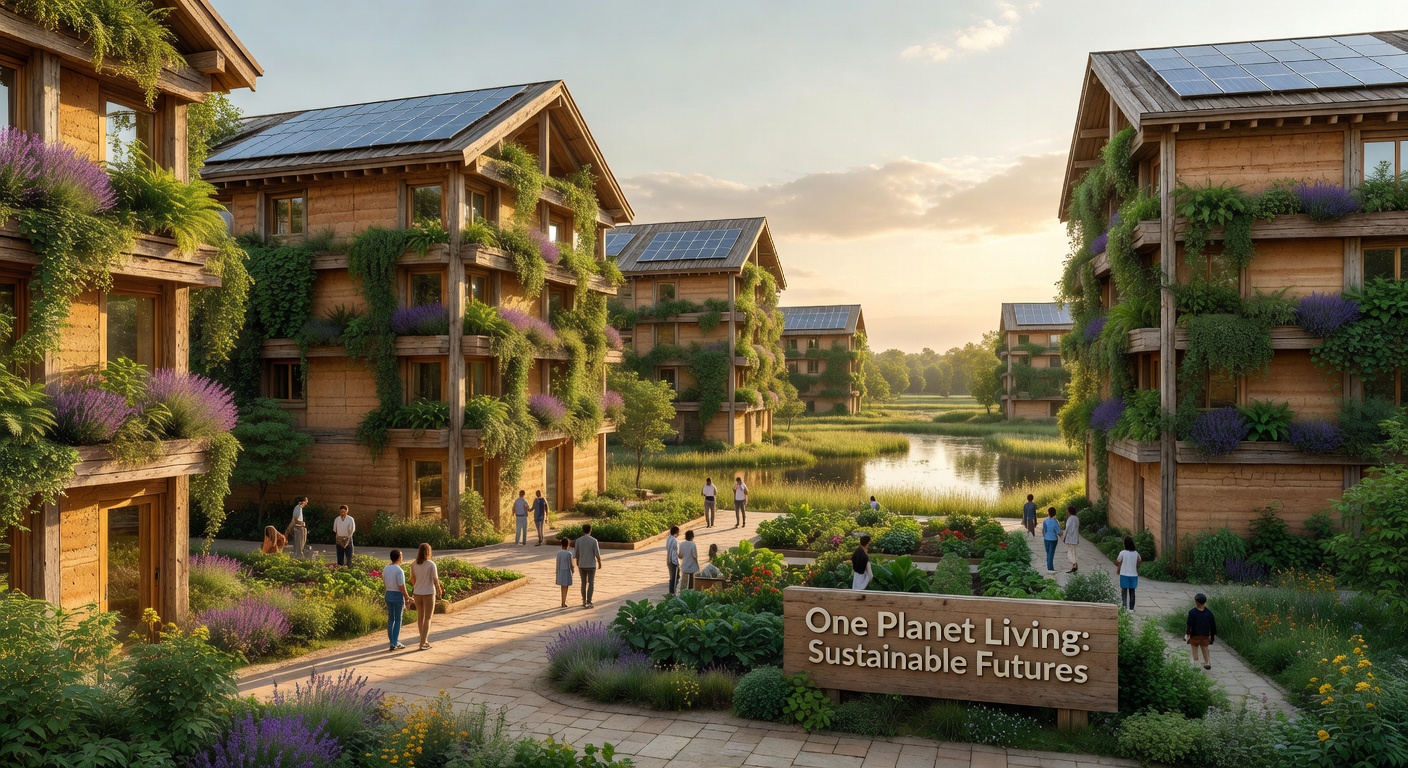
Masdar City in Abu Dhabi gleams under the desert sun, a testament to human ingenuity reimagining urban life without exhausting the Earth. This UAE flagship project embodies “One Planet Living,” a framework developed by Bioregional and WWF in the early 2000s. It challenges developers to create communities that operate within a single planet’s ecological limits—delivering high quality of life while slashing resource use by up to 80% compared to conventional cities.
At its core, One Planet Living rests on ten principles, each a practical pillar for harmony with nature. Zero carbon means on-site renewable energy, like solar panels and wind turbines powering Masdar’s electric pods zipping silently between buildings. Zero waste transforms discards into resources through rigorous recycling, composting, and cradle-to-cradle design—no landfills in sight. Sustainable transport prioritizes walking, cycling, and shared electric vehicles, minimizing car dependency. The model extends to local, organic food production via urban farms and rooftop gardens, plus wildlife corridors that weave green lungs into the urban fabric.
Historical roots trace back further. The concept echoes early 20th-century garden cities by Ebenezer Howard, which sought balanced, self-sufficient communities amid industrial sprawl. But One Planet Living sharpens this vision with modern metrics, inspired by the 1990s ecological footprint analysis showing humanity’s overshoot—using 1.7 Earths annually today. Bioregional’s founders, amid growing climate awareness post-Kyoto Protocol, distilled global best practices into this blueprint, first piloted in the UK with BedZED in 2002, London’s pioneering eco-village.
Fast-forward to vibrant modern examples. Findhorn Ecovillage in Scotland thrives as a car-free haven with straw-bale homes, community-owned wind turbines, and equity-based economies fostering social cohesion. In Mexico, the One Planet development at Tepoztlán integrates indigenous wisdom with permaculture orchards and natural wastewater systems. Even corporate giants like Arup apply it to projects worldwide, from Shanghai’s Sino-Singapore eco-city to planned expansions in Africa.
Why does this matter now? As climate records shatter—2023 the hottest year ever—and urban populations swell to 68% globally, One Planet Living offers scalable solutions. It proves affluence needn’t mean ecological debt: residents report higher happiness from community bonds and nature access, per studies from the University of Greenwich. Economically, upfront green investments yield long-term savings—Masdar’s energy bills are a fraction of peers. Amid COP summits and net-zero pledges, these developments pressure policymakers and builders to pivot from sprawl to stewardship, showing thriving cities can regenerate rather than deplete.
Critics note challenges like higher initial costs or cultural resistance, yet successes abound, inspiring global codes like the UN’s Sustainable Development Goals. One Planet Living isn’t utopia—it’s achievable engineering for a balanced future, urging us to build not just homes, but homes for the planet.
Comments are closed