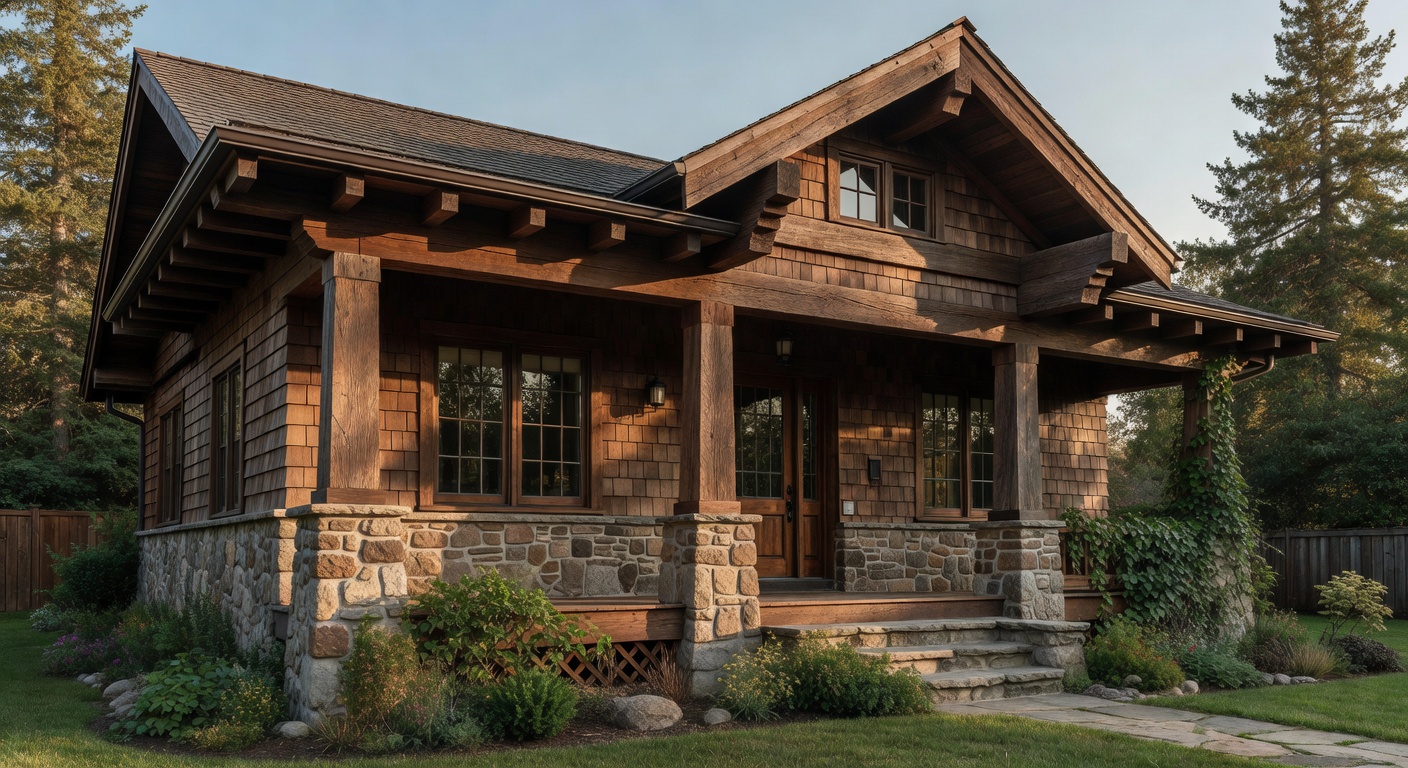
Craftsman bungalows rose up in the early 1900s as a direct pushback against the fussy details and towering scale of Victorian houses. Shaped by the Arts and Crafts movement, they pulled in straightforward English ideals and the clean lines of Japanese design, most famously through Greene and Greene’s work in Pasadena. Gustav Stickley spread the word in his magazine The Craftsman, offering plans that Sears, Roebuck turned into affordable mail-order kits. By the 1920s these homes had spread through neighborhoods from California to the Midwest, giving middle-class families solid construction and thoughtful details without excess.
Their signature look starts outside. Low-pitched gable roofs extend with wide overhangs that shade deep porches, where tapered columns rest on heavy stone or concrete bases. Walls often combine smooth stucco with horizontal siding or shingles, while exposed rafter tails and knee braces highlight the hand-built feel. Sloped porch piers add weight and keep the whole structure feeling grounded on its lot.
Inside, the layout stays open and practical. Living areas feature built-in cabinetry, window seats, bookshelves, and cozy inglenooks around fireplaces finished with river rock or clinker brick. Quarter-sawn oak shows off its striking grain in mantels and trim, while casement windows with leaded glass bring in light and views. Kitchens keep the same care with exposed beams, wainscoting, and sturdy hardware like hammered strap hinges. Beamed ceilings, raised picture-frame molding, and mission-style lights with mica shades tie every room together.
The style keeps evolving today. In Seattle’s Fremont district and Pasadena’s historic pockets, restored bungalows mix original details with energy-efficient windows, hidden smart-home systems, and sustainable materials. Architects such as Steve Reed focus on accurate repairs, while firms like Olson Kundig adapt the form for current living with passive solar features and open kitchens.
What sets these homes apart now is how they reward long-term ownership. Their compact size and sturdy build cut down on waste and energy use. Front porches still encourage casual neighborhood connections, and natural finishes develop character over time. In places like Oak Park, Illinois, preservation rules have helped values climb. Whether someone is bringing a 1915 Sears Alhambra back to life or adding Craftsman touches to a new addition, the approach favors quality that lasts over quick trends.
Comments are closed