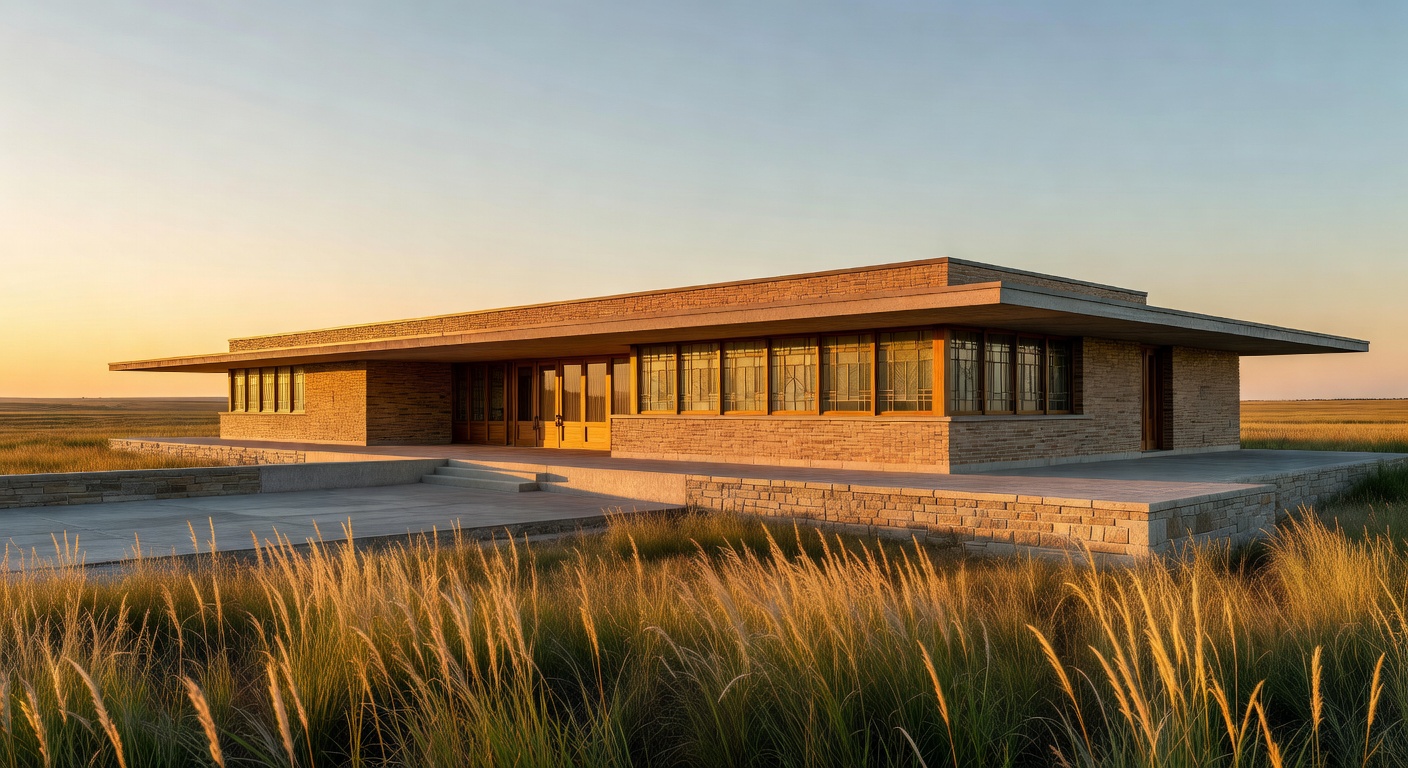
In the flat expanses of the American Midwest, where the horizon stretches unbroken, architecture found a natural ally in the horizontal line. The Prairie School movement, pioneered by Frank Lloyd Wright and his contemporaries around 1900, harnessed this elemental form to create buildings that hugged the earth rather than dominating it. At its core, the horizontal line wasn’t mere decoration—it was a manifesto for harmony between structure and landscape.
Key features of Prairie School horizontal lines reveal a deliberate rebellion against the vertical pomp of Victorian excess. Low-pitched roofs extended dramatically outward, their broad eaves mimicking the expansive prairie skyline. Continuous horizontal bands of brick, stone, or wood casings framed windows and doors, drawing the eye across facades like a gentle prairie wind. Wright’s Robie House in Chicago (1910) exemplifies this: its cantilevered rooflines and overhanging terraces create a layered, grounded profile, while ribbon windows flood interiors with natural light, blurring boundaries between inside and out. These lines fostered openness, with asymmetrical compositions that flowed organically, often incorporating native materials like red clay brick to blend with the soil.
Historically, this style emerged amid the Arts and Crafts movement’s pushback against industrialization. Urbanization was exploding in early 20th-century America, but Prairie architects sought rootedness. Wright, influenced by his Wisconsin upbringing amid rolling fields, envisioned homes as “organic” extensions of their sites—horizontal to counter the skyscraper’s arrogance. Peers like George Elmslie and Marion Mahony Griffin amplified this through intricate ornamentation, like stylized prairie flowers etched into friezes, reinforcing the motif’s symbolic tie to the land. The movement peaked pre-World War I, influencing suburbs and public buildings before modernism eclipsed it.
Today, Prairie principles resonate in sustainable design. Modern examples abound: the sleek horizontal profiles of Fallingwater’s descendants, or contemporary nods like Chicago’s Unity Temple reinterpretations. Architects like Jeanne Gang echo it in projects such as the Aqua Tower, where undulating balconies evoke layered horizontals. In an era of climate urgency, these lines promote energy efficiency—wide eaves shade against harsh sun, reducing cooling needs, while low profiles minimize wind resistance.
Why does it matter now? Horizontal lines remind us that architecture can be humble yet profound, fostering well-being through connection to nature. In a world of towering glass monoliths, they advocate for biophilic design, proven to lower stress and boost creativity. As cities sprawl, reviving Prairie horizontals offers a blueprint for resilient, human-scaled spaces—grounded, inclusive, and timeless. They whisper that true innovation lies not in reaching skyward, but in embracing the horizon.
Comments are closed