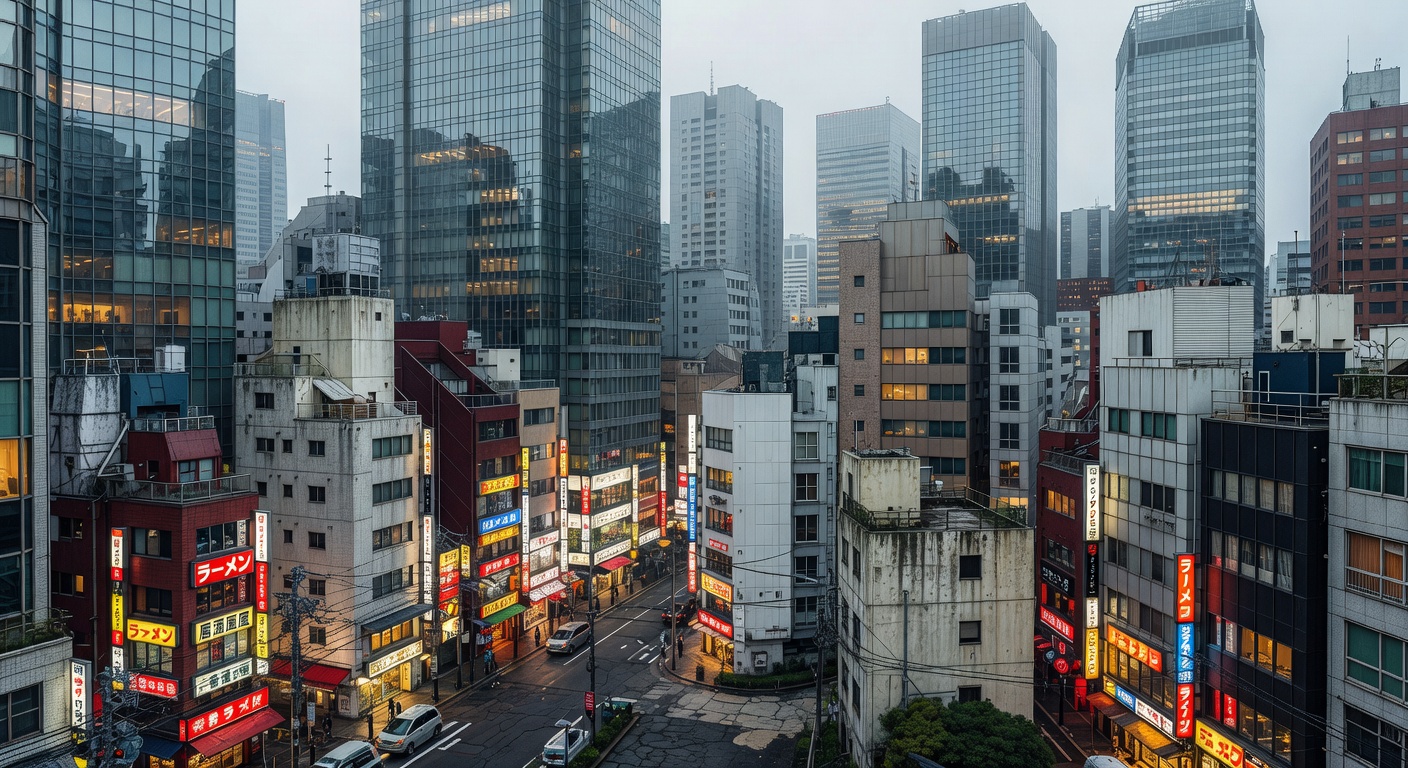
Tokyo pulses with an intensity that defies its 2,194 square kilometers of land. Home to nearly 14 million in the core metro area—and 38 million if you stretch to the full sprawl—this city crams more people per square kilometer than almost anywhere else on Earth. But Tokyo’s secret isn’t sprawling suburbia; it’s vertical density, a high-wire act of engineering, policy, and culture that stacks humanity skyward without collapsing into chaos.
At its heart, vertical density means building up, not out. Zoning laws here favor mid- and high-rises over single-family homes, with height limits often capped at 40-60 meters in residential zones to preserve sunlight and views—yet exceptions abound for commercial towers piercing 200 meters or more. The result? Neighborhoods like Shinjuku boast over 18,000 residents per square kilometer, where sleek apartments perch above buzzing konbini (convenience stores) and ramen joints. Public transit reinforces this: 90% of Tokyoites live within a 15-minute walk of a train station, feeding the world’s busiest system with 40 million daily riders. No car dependency means streets stay navigable, sidewalks lively.
Historically, this didn’t happen overnight. Post-World War II, Tokyo was rubble. The 1950s-60s economic miracle spurred rapid reconstruction, but the 1923 Great Kanto Earthquake scarred the psyche, birthing strict seismic codes. By the 1980s bubble era, bubble-era developers raced upward, erecting icons like the Sunshine 60 tower. The 1995 Kobe quake refined those codes further—today, buildings sway like bamboo in typhoons, with base isolators and dampers absorbing 90% of quake energy. Modern examples shine: Toranomon Hills, a 2023-completed mini-city with offices, residences, and a hotel in a 256-meter helix, integrates green terraces to cool urban heat. Or look to Azabudai Hills, unveiled this year, blending luxury condos with public art spaces atop earthquake-proof foundations.
Why does this matter now? As climate clocks tick and populations urbanize—68% of humans will live in cities by 2050—Tokyo offers a blueprint. Its density slashes per-capita emissions: Tokyo’s carbon footprint is half that of Los Angeles despite similar metro sizes, thanks to efficient rail and compact living. It combats housing crises too; micro-apartments (20-30 sqm) keep rents “affordable” relative to supply, though critics decry cramped quarters. Socially, it fosters serendipity—your barista might be a rocket scientist—but strains mental health amid constant buzz.
Yet challenges loom: an aging population (29% over 65) demands elder-friendly high-rises, while sea-level rise threatens lowlands. Tokyo adapts, piloting “super-redevelopment” zones that retrofit entire blocks vertically. In a world of horizontal sprawl, Tokyo proves density done right: vibrant, resilient, and improbably livable. Gaze up at those glowing facades tonight, and you’ll see not just steel and glass, but a metropolis defying gravity.
(Word count: 462)
Comments are closed