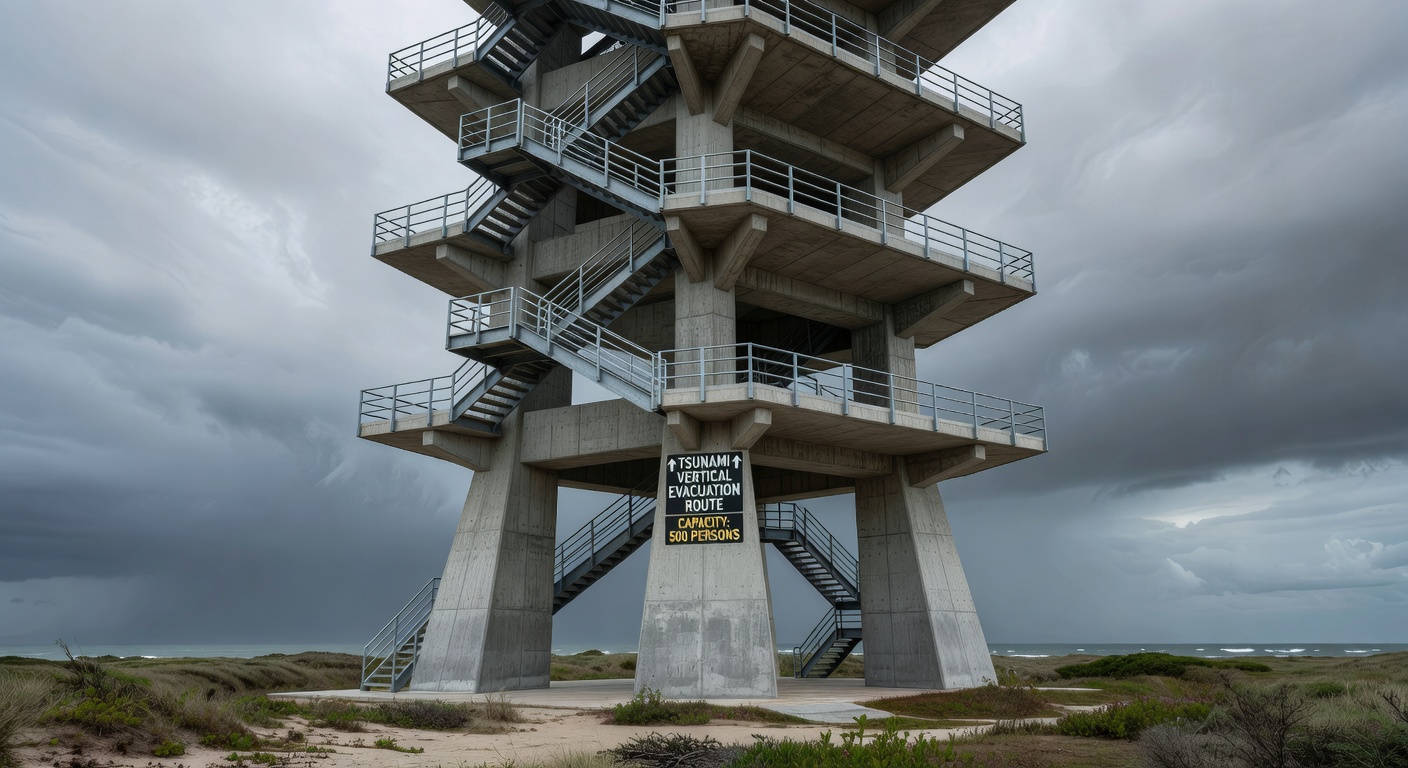
When a tsunami barrels toward shore, seconds count—and going up might be your best bet. Vertical evacuation, a strategy where people flee to higher floors of sturdy buildings rather than racing inland, is reshaping how coastal communities fight back against these watery juggernauts. It’s not about outrunning the wave; it’s about out-climbing it.
Picture a typical seaside town: narrow streets clogged with fleeing cars, bridges jammed, and escape routes vanishing under surging seas. Traditional horizontal evacuation—heading to higher ground—works fine for earthquakes or hurricanes, but tsunamis strike with brutal speed, often within minutes. Vertical evacuation flips the script. Designated multi-story structures, reinforced to withstand quake shaking and wave forces, become instant refuges. Elevators? Off-limits. Stairs are your lifeline, marked with clear signage and wide enough for crowds.
This isn’t pie-in-the-sky theory. Japan’s 2011 Tohoku disaster hammered it home. A magnitude 9.0 quake unleashed waves up to 40 meters high, killing over 15,000. In places like Kesennuma, where inland paths were cut off, people who climbed into designated hotels and schools survived. One hotel’s fourth floor sheltered dozens as water lapped the roof below. Post-disaster reviews praised these “vertical forts,” prompting Japan to expand the model. Today, their building codes mandate tsunami-resistant designs, including deeper foundations and impact-resistant walls.
Fast-forward to modern examples. In the U.S., California’s Palos Verdes Peninsula rolled out the nation’s first vertical evacuation pilot in 2022. Engineered towers, vetted by FEMA, can hold 500 people each during a Cascadia Subduction Zone megaquake. Indonesia’s Aceh region, scarred by the 2004 tsunami that claimed 230,000 lives, now trains locals on “run-up” drills to upper floors. Even New Zealand’s rugged coasts feature retrofitted high-rises as safe havens.
Why does this matter now? Rising seas from climate change amplify tsunami risks, while urban sprawl packs more people onto vulnerable shores. The U.S. Geological Survey warns that a Cascadia event could drown Pacific Northwest lowlands, displacing millions. Vertical evacuation buys time—critical when warnings give just 15-20 minutes. It’s cost-effective too: retrofitting beats building distant shelters. Public education campaigns, like Hawaii’s “Climb, Not Swim” posters, drill the habit home.
Critics worry about structural failures or overcrowding, but studies from the Pacific Tsunami Museum show success rates soar with preparation—regular drills, geotech assessments, and app-based alerts. It’s empowering: no car needed, accessible for the elderly or disabled via priority stair access.
As oceans warm and faults rumble, vertical evacuation stands as a beacon of resilience. It’s a reminder that survival isn’t just about speed—it’s about smart elevation. Coastal dwellers, take note: when the earth growls and the sea rises, look up. Your high ground might be right underfoot.
Comments are closed