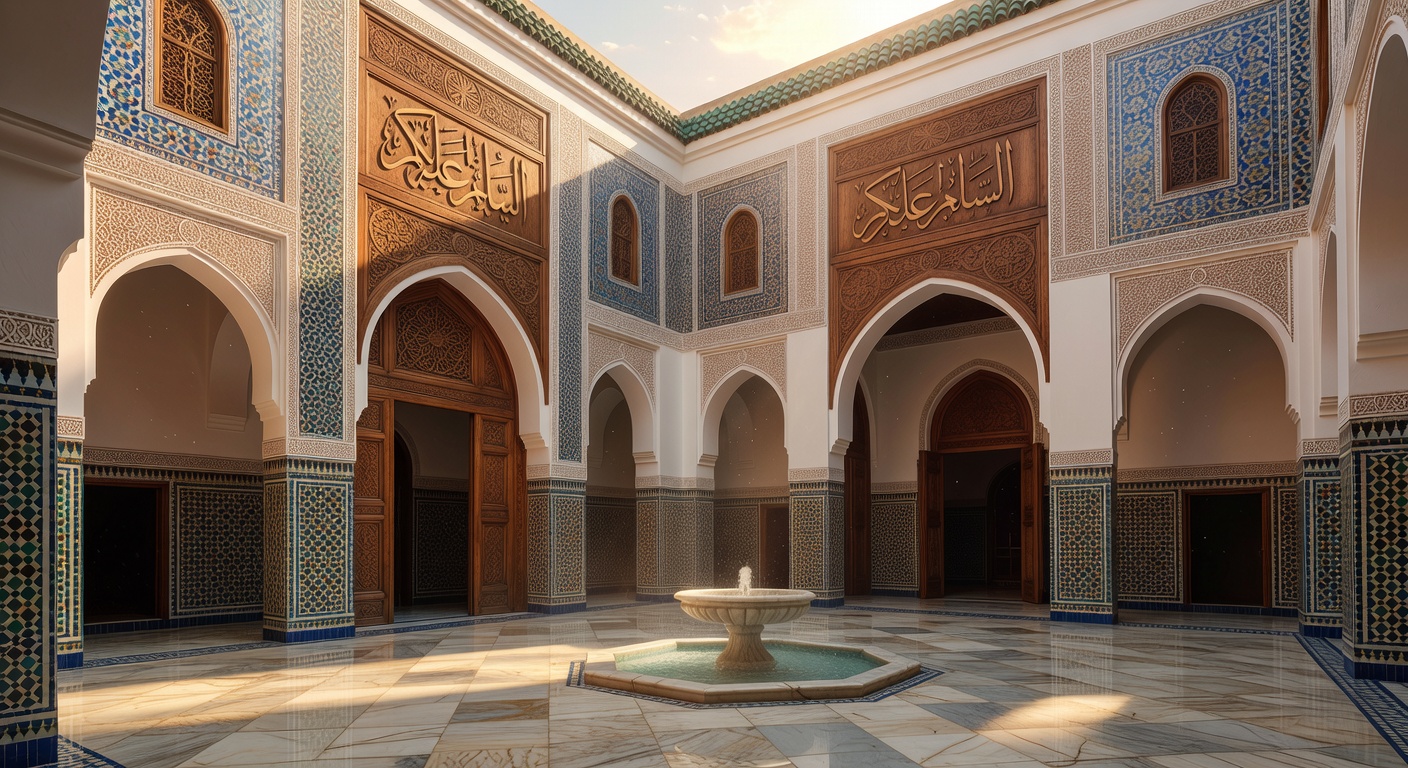
Stepping into a Moroccan riad feels like slipping behind a weathered door into a private universe. These traditional homes, clustered in the medinas of Marrakech, Fez, and Essaouira, revolve around their courtyards—intimate gardens that blend architecture, nature, and daily life with effortless grace. Far from mere patios, riad courtyards are the beating heart of Moroccan domesticity, designed centuries ago to thrive in a harsh desert climate.
At their core, these spaces masterfully manipulate light, air, and water. High walls enclose a rectangular or square area, shielding it from the bustling streets and scorching sun. A central fountain bubbles softly, its tiles gleaming in shades of cobalt and emerald, while a shallow pool reflects the sky. Zellij—intricate mosaic tilework—climbs the walls in geometric patterns, a testament to Andalusian influences from the 14th century when Moorish refugees fled Spain. Arched doorways and wooden cedar ceilings frame the scene, often crowned by a retractable glass roof or fabric canopy that opens to stars at night. Potted orange trees, jasmine vines, and date palms provide dappled shade, their scents mingling with mint tea brewing nearby. Every element serves a purpose: the fountain cools the air through evaporation, plants humidify, and the layout channels breezes for natural ventilation.
Historically, riads emerged during the Almoravid and Saadian dynasties (11th-17th centuries), when wealthy merchants and scholars built them as family compounds. Privacy was paramount in Islamic culture—women could relax unseen from the street, and the courtyard hosted communal meals, storytelling, and rituals. Unlike grand palaces, riads were understated exteriors hiding lavish interiors, embodying the Moroccan proverb: “The treasure is inside.” They dotted medina labyrinths, their plain facades blending into the urban fabric.
Today, many riads have reinvented themselves as boutique hotels, preserving heritage while adapting to modern tastes. Take Riad Kniza in Marrakech, where a 17th-century courtyard now features a hammam spa amid banana trees, or Dar Attajmil in Essaouira, blending riad traditions with Atlantic views. These restorations employ local artisans, sustaining crafts like plaster carving (plasterwork with floral motifs) and ironwork lanterns. Yet challenges persist: overtourism strains old structures, and gentrification displaces locals.
Why do riad courtyards matter now? In an era of glass skyscrapers and air-conditioned boxes, they offer a blueprint for sustainable living. Their passive cooling slashes energy use—studies show such designs can reduce indoor temperatures by 10-15°C without electricity. Amid climate crises, they inspire eco-friendly architecture worldwide, from California’s drought-resistant courtyards to Dubai’s shaded malls. More than relics, these oases remind us that beauty and ingenuity can harmonize with nature, turning a simple patch of earth into a sanctuary. Next time you crave escape, seek a riad—its courtyard awaits, whispering timeless secrets.
Comments are closed