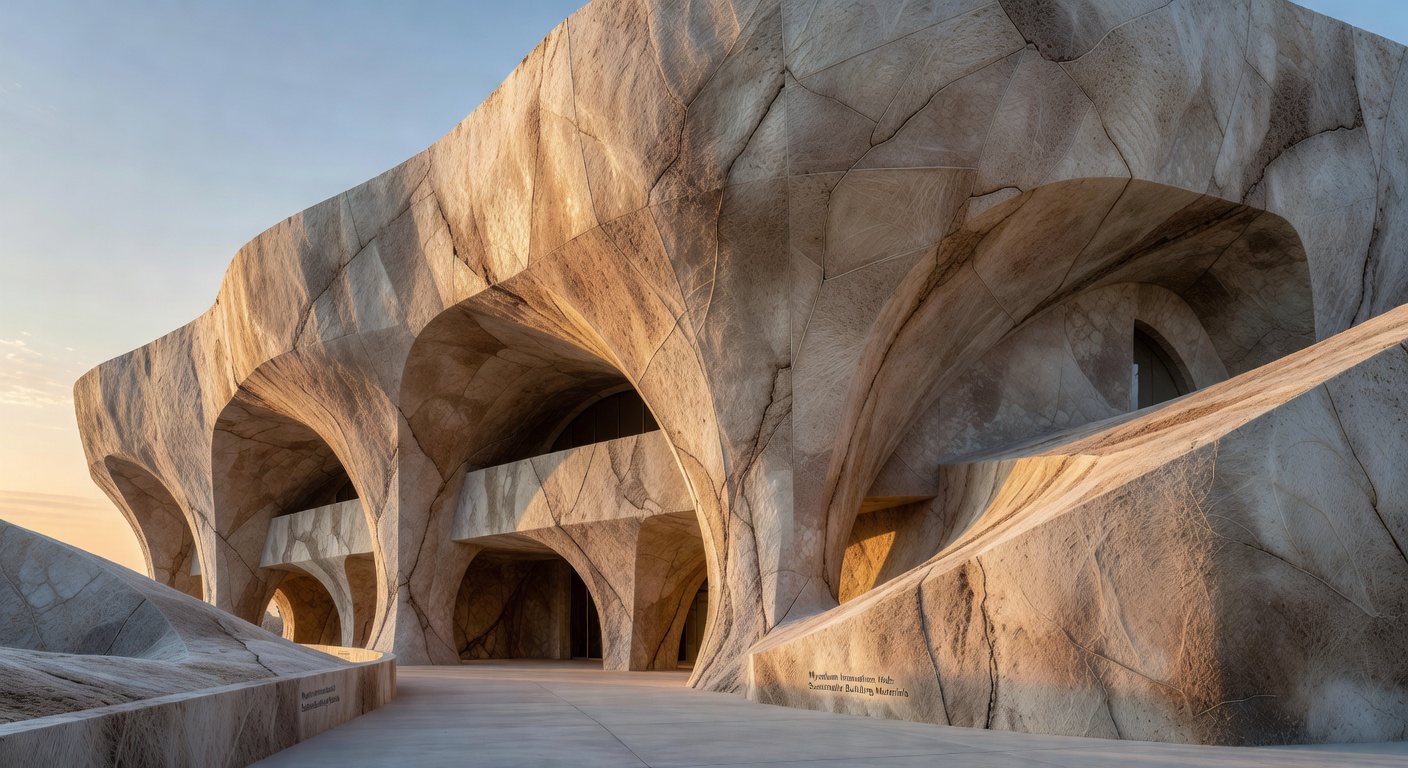
Mycelium, the root-like network of fungi, isn’t just nature’s underground internet—it’s emerging as a game-changer in sustainable construction. By binding agricultural waste like hemp hurds or corn stalks with its thread-like hyphae, mycelium creates lightweight, strong panels, bricks, and insulation that grow rather than get manufactured. These bio-materials decompose naturally, offering a compostable alternative to concrete and foam plastics that clog landfills.
The concept took root in the early 2000s when artist and inventor Phil Ross began experimenting with mushroom-based sculptures at his San Francisco Fungi Perfecti lab. What started as art evolved into engineering when Ecovative Design, co-founded by Ross and Eben Bayer in 2007, partnered with academic labs to refine the process. They inoculate substrates with mycelium spores, let the fungus colonize for five to seven days in the dark, then bake the blocks to halt growth. The result? Fire-resistant, water-repellent composites that insulate better than Styrofoam and match some woods in compressive strength.
Fast-forward to today, and mycelium materials star in real-world projects. In 2014, MoMA’s PS1 exhibit featured a mycelium tower grown on-site, proving scalability. Companies like MycoWorks supply luxury brands such as Hermes with mycelium leather alternatives, but construction lags behind. A standout: Mogu, an Italian firm, produces mycelium tiles used in office interiors for their acoustic properties. In the Netherlands, startups like Neat Materials create load-bearing bricks tested to withstand earthquakes. NASA’s even exploring mycelium habitats for Mars, where robots could “print” radiation-shielding bricks from regolith and fungal spores.
What sets mycelium apart are its key features: it’s carbon-negative, sequestering CO2 during growth; renewable, using waste that would otherwise rot and emit methane; and versatile, moldable into custom shapes without energy-intensive factories. Unlike petro-based insulators, it doesn’t off-gas toxins. Tests show it repels termites naturally—fungi outcompete pests—and it’s cheaper to produce at scale, around $10-20 per square foot.
Why does this matter now? The building sector guzzles 40% of global energy and emits more CO2 than aviation and shipping combined. With climate deadlines looming and urban populations swelling, we need alternatives to cement, whose production alone rivals aviation emissions. Mycelium slashes that footprint: Ecovative’s process uses 90% less energy than polystyrene manufacturing. It democratizes construction too—farmers could grow local blocks, cutting transport emissions.
Challenges remain: scaling production, ensuring consistent strength, and navigating building codes. Yet pilots in Europe and the US hint at tipping points. As mycelium evolves from lab curiosity to commercial staple, it promises structures that breathe, biodegrade, and bolster biodiversity. The fungi among us might just rebuild our world, one block at a time.
Comments are closed