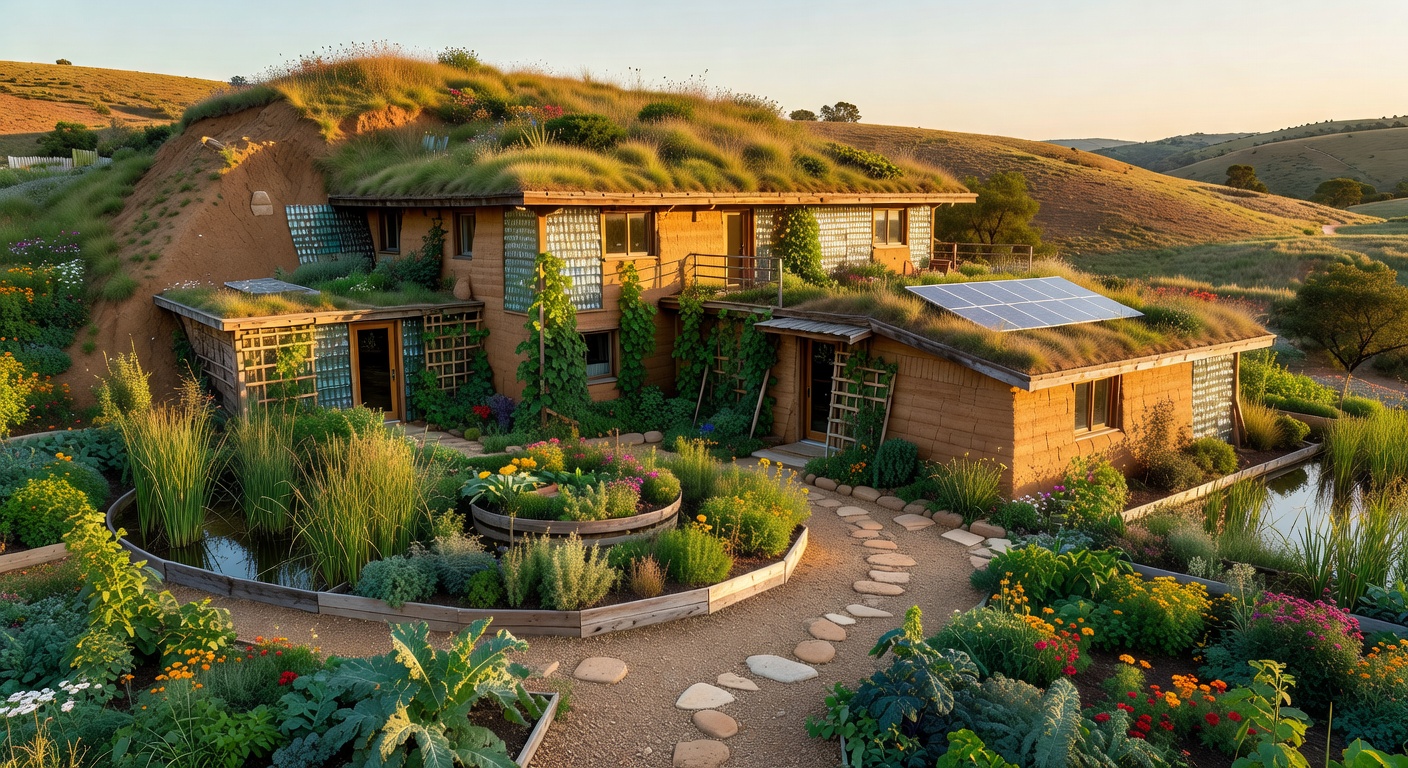
Permaculture isn’t just for gardens—it’s reshaping how we build homes and structures from the ground up. Integrated permaculture buildings fuse human habitats with natural ecosystems, turning concrete jungles into thriving biomes. These designs mimic nature’s patterns, producing food, energy, and resources while slashing waste. Let’s dig into what makes them tick, trace their roots, and see why they’re surging in relevance now.
At their core, permaculture-integrated buildings prioritize passive systems that work with the environment. Think south-facing walls draped in fruit-bearing vines that provide shade in summer and insulation in winter, doubling as living solar panels. Greywater from sinks and showers irrigates vertical gardens or aquaponic setups right on the facade, recycling 80-90% of household water. Roofs become food forests: sedum for pollinators, berries for snacks, and solar tiles generating power amid the greenery. Inside, rammed-earth walls regulate humidity naturally, while composting toilets feed worm bins that enrich on-site soil. Key features like swales—shallow ditches that direct rainwater to plant roots—prevent erosion and recharge groundwater, even in urban plots.
This ethos traces back to the 1970s, when Australians Bill Mollison and David Holmgren coined “permaculture” (permanent agriculture) amid oil crises and environmental wake-up calls. Early pioneers like Earthship creator Michael Reynolds built off-grid homes from recycled tires and cans in New Mexico’s desert, proving self-sufficiency in harsh climes. Fast-forward to today: modern gems abound. The Bullitt Center in Seattle, dubbed the “greenest commercial building,” integrates permaculture principles with net-zero energy, rainwater harvesting, and composting toilets, powering itself via rooftop solar and serving as a productivity powerhouse. In rural Portugal, the Tamera community’s “solar villages” blend adobe homes with food-producing landscapes, fostering water autonomy. Urban innovator Mark Shepard’s Restoration Agriculture project in Wisconsin showcases “perennial polyculture” farms encircling homes, yielding nuts, fruits, and timber indefinitely.
Why does this matter today? We’re staring down climate chaos—rising seas, wildfires, food shortages—and our buildings guzzle 40% of global energy while spewing emissions. Conventional construction devours resources, but permaculture integration flips the script: structures that regenerate rather than deplete. They bolster resilience against blackouts or supply chain snaps, cutting bills by up to 70% through on-site production. In a world of 8 billion, where cities sprawl and soils erode, these buildings democratize abundance, empowering communities to feed, heat, and heal themselves.
Embracing permaculture architecture isn’t retro—it’s evolutionary. As materials like mycelium bricks and hempcrete gain traction, expect more hybrids blending tech with ecology. Whether retrofitting a balcony or dreaming big, it’s a blueprint for harmony: buildings that don’t just shelter us, but sustain the planet we call home.
Comments are closed