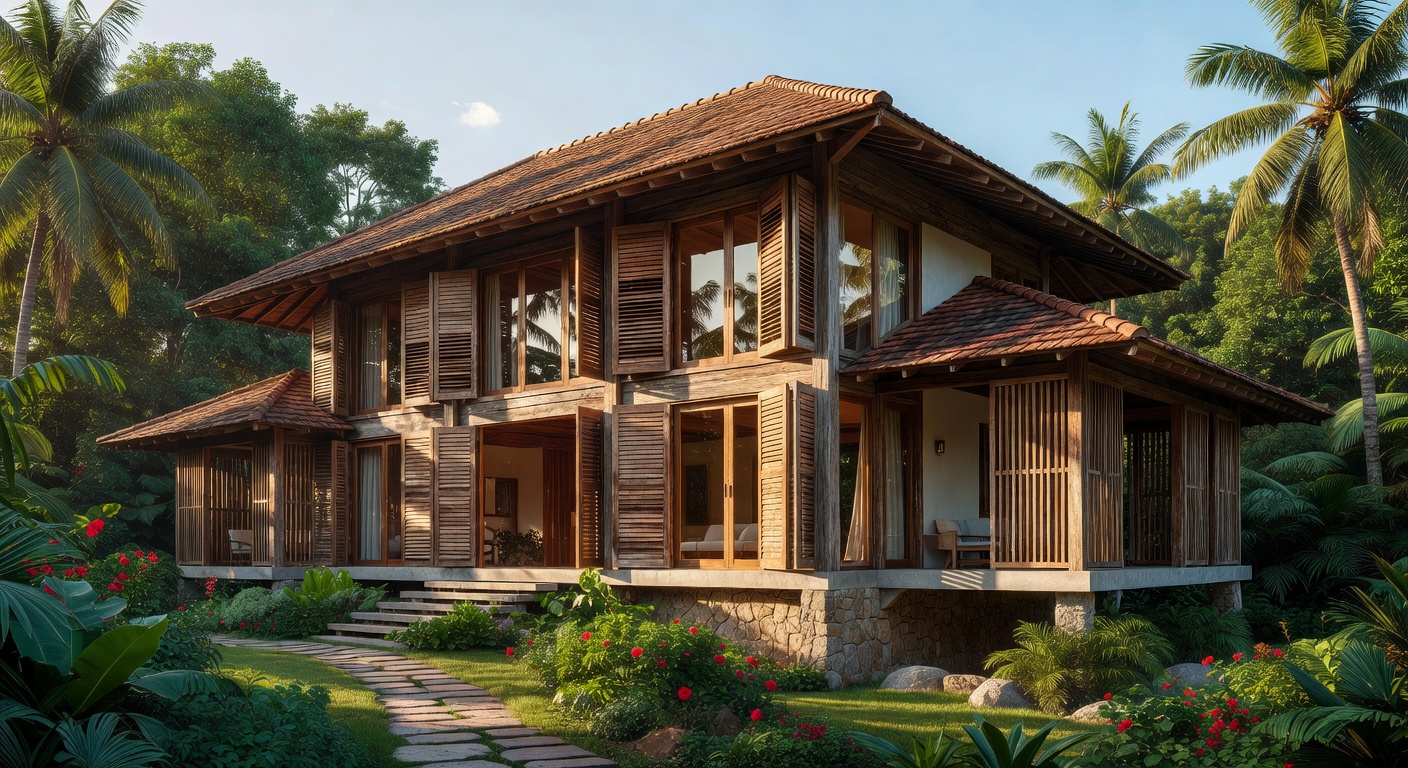
Tropical climates demand buildings that work with nature, not against it. Enter ventilated architecture, a smart fusion of design and airflow that keeps spaces cool without cranking up the AC. From ancient thatched huts to sleek modern resorts, this approach harnesses wind, stack effects, and strategic openings to banish heat and humidity. It’s not just about comfort—it’s a blueprint for sustainable living in the sweltering equator belt.
At its core, tropical ventilated architecture relies on passive cooling principles. Cross-ventilation is king: windows, vents, or louvers positioned to catch prevailing breezes on one side and exhaust hot air on the other. Think elevated structures on stilts, which lift living spaces above ground-level humidity and allow air to flow underneath. Courtyards act as chimneys, drawing in cooler air at the base while hot air rises and escapes through high-level openings—a natural convection powered by the sun’s own heat. Materials matter too: breathable walls from bamboo, thatch, or perforated concrete let moisture escape, preventing the sticky buildup that plagues sealed modern boxes.
History offers timeless lessons. In ancient Southeast Asia, Malay kampung houses featured steep roofs with wide overhangs to shed rain and channel breezes into open living areas. Indonesia’s Rumah Adat and the Philippines’ Bahay Kubo used atria and vented gables for constant airflow, thriving for centuries without electricity. Colonial influences blended in, like the British “bungalows” in India with verandas and punkahs—manual fans that evolved into ceiling fans. These designs weren’t accidental; they were survival tools in lands where temperatures rarely dip below 25°C and humidity hovers at 80%.
Fast-forward to today, and architects are reviving these ideas with high-tech twists. Norman Foster’s Masdar City in Abu Dhabi incorporates wind towers inspired by ancient Persian badgirs, funneling breezes down light shafts to cool pedestrian paths. In Singapore, the School of the Arts by WOHA features sky courts and perforated facades that boost ventilation by 40%, slashing energy use. Singapore’s zero-energy SkyVille@Dawson apartments stack “void decks” for communal airflow, mimicking traditional atria. Even in Brazil, the Edifício Copan in São Paulo uses curved balconies to induce swirling winds, a nod to Oscar Niemeyer’s modernist flair.
Why does this matter now? Climate change is supercharging tropical heatwaves, and air conditioning guzzles 40% of energy in places like Indonesia and Thailand, pumping out CO2 and straining grids. Ventilated designs cut that reliance dramatically—studies from the Council on Tall Buildings show passive strategies can reduce cooling loads by 70%. They’re cheaper long-term, resilient to blackouts, and healthier, minimizing mold and stale air. In a world racing toward net-zero, these buildings prove we don’t need gadgets; we need geometry and foresight.
As urban sprawl engulfs tropics from Lagos to Jakarta, ventilated architecture isn’t nostalgia—it’s the future. By breathing life into our structures, we stay cool, green, and connected to the winds that shaped our ancestors. Time to let the breeze lead the way.
Comments are closed