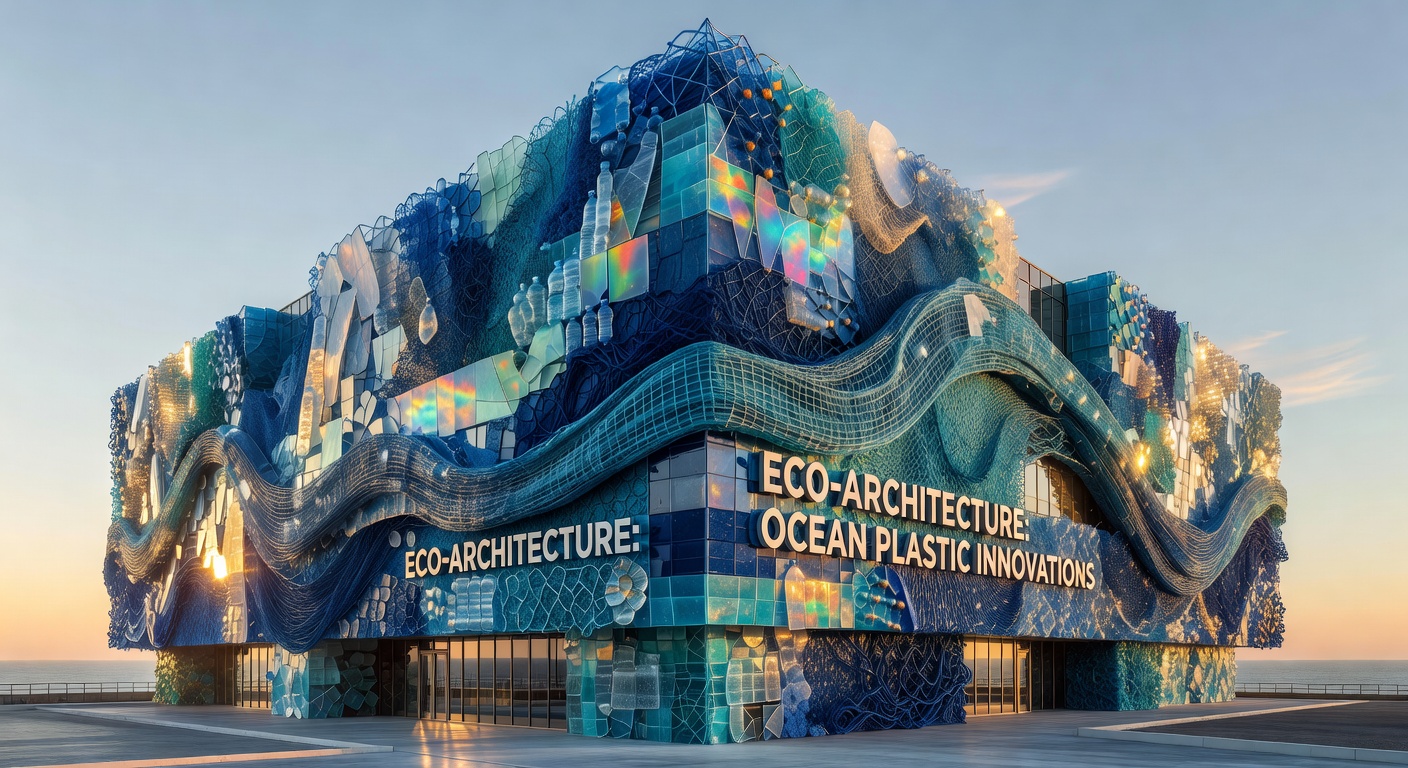
Ocean plastic pollution has long been a scourge, with 14 million tons dumped annually into our seas. But what if the very waste choking marine life could shield our buildings from the elements? Enter recycled ocean plastic facades—innovative cladding systems transforming debris into durable, eco-smart exteriors. These aren’t just greenwashing gimmicks; they’re a practical revolution in sustainable architecture, blending high performance with a powerful environmental punch.
At their core, these facades repurpose polyethylene terephthalate (PET) and high-density polyethylene (HDPE) bottles fished from gyres like the Great Pacific Garbage Patch. The process starts with collection by organizations such as The Ocean Cleanup or local beach cleanups, followed by shredding, cleaning, and melting into uniform pellets. These are extruded into interlocking panels, tiles, or shingles mimicking wood, stone, or metal textures. Key features shine through: exceptional UV resistance prevents fading in harsh sun, while water-repellent properties fend off mold and rot. They’re lightweight—up to 50% less than concrete alternatives—easing installation and cutting transport emissions. Fire-retardant additives meet building codes, and modular designs allow easy repairs, extending lifespans beyond 50 years. Colors? Vibrant and customizable, derived naturally from the plastic’s pigments, no paints required.
The concept isn’t entirely new. Historical roots trace to the 1990s when early recyclers experimented with plastic lumber for decks, but ocean-specific facades gained traction post-2010 amid rising plastic waste awareness. A pivotal moment came in 2017 when Bureo, a surfboard maker, pivoted to architectural panels from nets haunting sea turtles. Fast-forward to modern showcases: Singapore’s Ocean Plastic House (2022) sports facades from 20,000 recycled bottles, slashing embodied carbon by 30%. In the U.S., Delta Air Lines’ New York lounge features walls clad in Parley for the Oceans’ material, diverting 25 tons of beach plastic. Europe’s VanishPoint Apartments in Rotterdam use Baux’s acoustic panels infused with ocean waste, blending sound absorption with aesthetics. Even luxury enters the fray—Versace’s Sea & Sky collection incorporates facade elements for high-end villas.
Why does this matter today? Climate urgency demands it. Construction guzzles 40% of global energy and produces 39% of carbon emissions; switching to recycled ocean plastic facades could recycle 1 billion bottles yearly per major project, per industry estimates. It tackles the plastic crisis head-on—11 million metric tons enter oceans annually, killing 1 million seabirds and 100,000 marine mammals. Economically, costs rival traditional materials (around $10-15 per square foot), with incentives like LEED credits boosting ROI. Culturally, these facades tell a story: visible flecks of blue bottle shards remind occupants of the sea’s plight, fostering stewardship.
As urban sprawl accelerates—global building stock doubling by 2060—these facades offer scalable salvation. They’re not perfect; scalability hinges on better collection infrastructure, and microplastics in processing need monitoring. Yet, they’re proof that design can detox our planet. Next time you admire a shimmering building skin, consider: it might just be the ocean breathing new life into our world.
Comments are closed