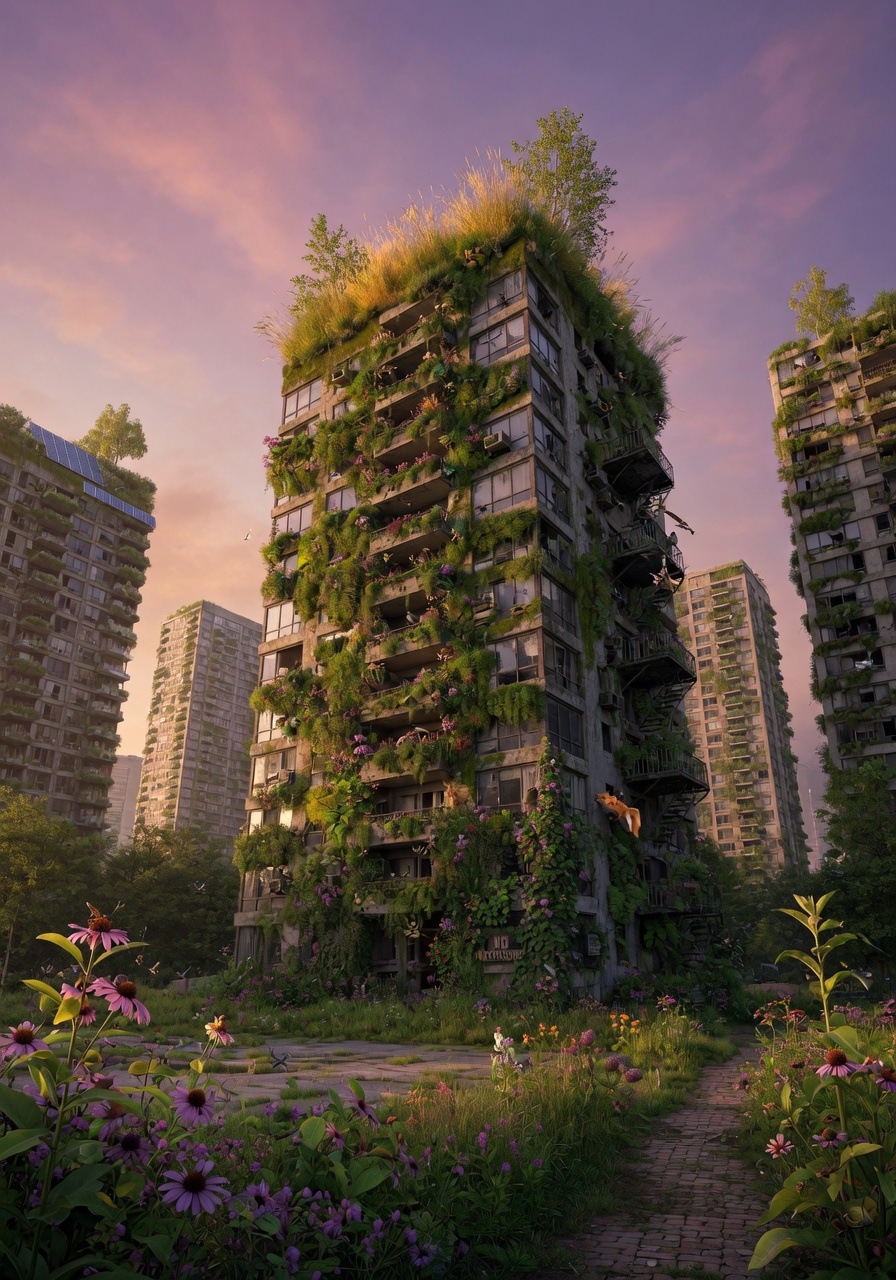
Cities have spent decades pushing nature to the margins, yet rewilding architecture is quietly reversing that trend by letting ecosystems move in and take over parts of the structures we build. Instead of sealed-off concrete shells, these projects weave native plants into rooftops and facades so that insects, birds, and small mammals find food and shelter right in the middle of dense neighborhoods. The result feels less like landscaping and more like handing over the steering wheel to natural processes.
What sets this apart from standard green building is the focus on ongoing change rather than fixed appearances. Gardens here are not clipped into neat patterns; they shift through natural succession as species compete and adapt. Living walls and roofs rely on locally sourced plants that already know how to handle the local climate, while materials are chosen to break down or let water and roots pass through. Designers tuck in nesting boxes, perches, and foraging zones so wildlife can move through the site without extra human help. Maintenance stays minimal on purpose, because the aim is resilience—buildings that bend with shifting weather patterns instead of fighting them.
The roots of this thinking stretch back further than most people expect. Ancient builders in Mesopotamia and indigenous communities around the world long ago shaped homes and temples to fit existing landscapes rather than flatten them. The modern push gained momentum during the environmental awakening of the 1960s and 70s, when ecologists began arguing that development should support, not erase, living systems. Today the approach shows up in concrete ways: Milan’s Bosco Verticale towers carry thousands of trees and shrubs that filter air and cut summer heat. In the Netherlands, old industrial plots are being turned into structures that slowly dissolve into regenerating wetlands. The Eden Project in Cornwall demonstrates how large enclosures can still foster wild succession inside their biomes.
These choices matter now because cities are running out of ways to ignore biodiversity loss and rising temperatures. Rewilded buildings pull carbon from the air and create pockets of habitat where concrete once dominated. People who live or work around them report lower stress and a stronger sense of connection to place. At the same time, the living systems handle heavy rain and temperature swings more effectively than pipes and air-conditioning units ever could. In short, the strategy turns urban density from an ecological problem into part of the solution.
At its core, rewilding architecture asks designers to step back and accept that nature often knows better how to keep a place alive. That shift in attitude produces spaces that last longer, cost less to run, and feel more alive than anything built on total control.
Comments are closed