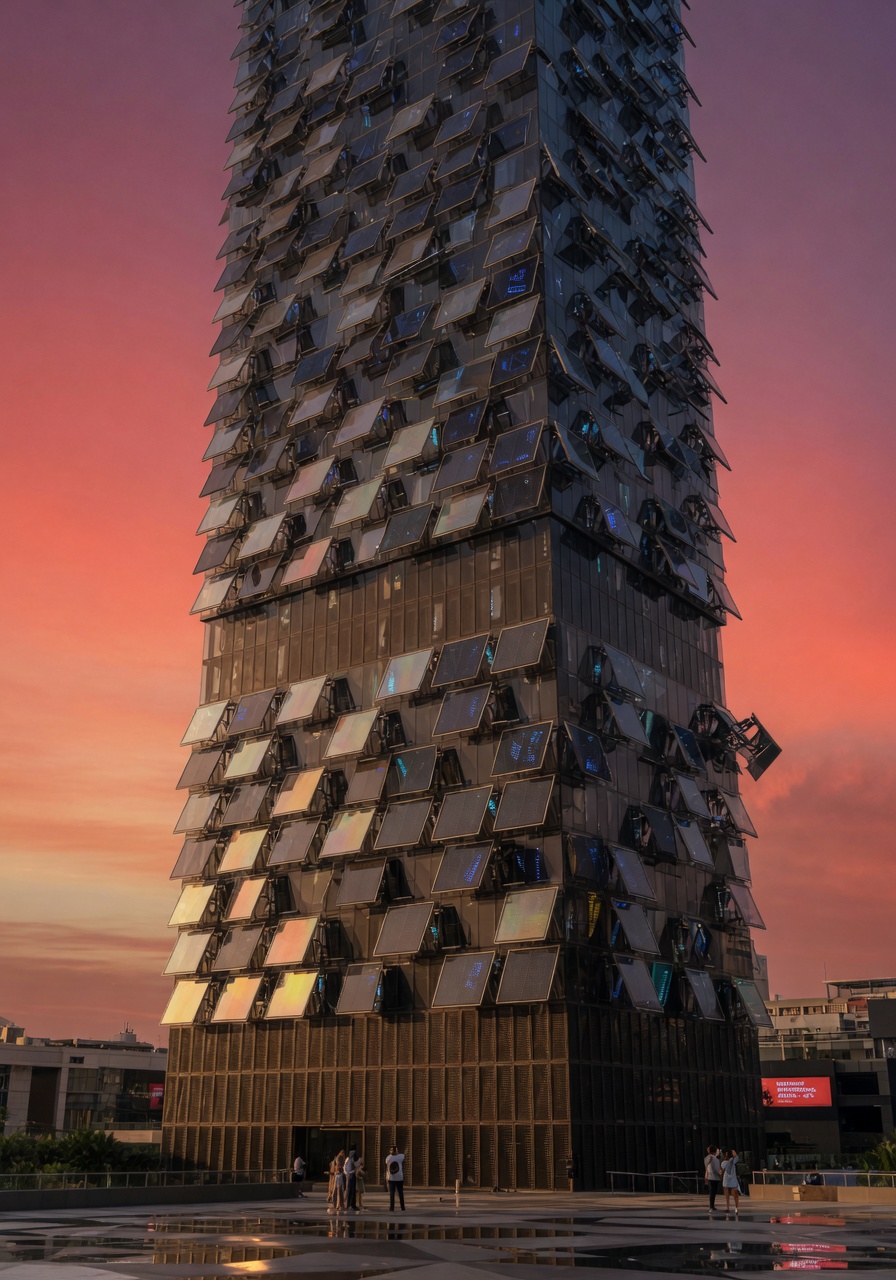
Skyscrapers in scorching cities are shedding their rigid exteriors for surfaces that shift and respond, much like living tissue adjusting to stress. These climate-adaptive facades combine embedded sensors, motorized parts, and responsive materials to counter swings in heat, light, and wind without waiting for human commands. Louvers pivot automatically to block direct sun, while coatings shift hue to bounce away infrared rays and phase-change layers absorb or release warmth to steady indoor temperatures. The payoff shows up quickly on utility bills: cooling loads often drop by nearly a third in regions where air conditioning once ran nonstop.
Designers did not invent this flexibility from scratch. Centuries-old mashrabiya lattices in the Middle East already filtered harsh sunlight and channeled breezes through intricate wooden patterns. Contemporary versions replace fixed carvings with AI-guided motors that forecast weather hours ahead, turning a passive screen into a predictive shield.
One of the clearest demonstrations stands in Abu Dhabi. The Al Bahar Towers, finished in 2012, wrap their curved forms in umbrella-shaped panels that open and close like petals tracking the sun. The system cuts solar heat gain by half, earning the buildings top-tier green certifications while keeping offices comfortable. In New York, the Edge tower uses similar motorized fins to balance daylight against glare, trimming both energy use and occupant complaints about overheating.
As heat islands intensify and storms grow more erratic, these active envelopes address the construction sector’s outsized role in global emissions—nearly 40 percent. They stabilize interior conditions for people inside, lower operational carbon, and give cities a practical way to endure rising temperatures and stronger weather events. Rather than fighting the climate, the best new architecture now works with it, treating the building skin as an intelligent partner instead of a fixed barrier.
Comments are closed