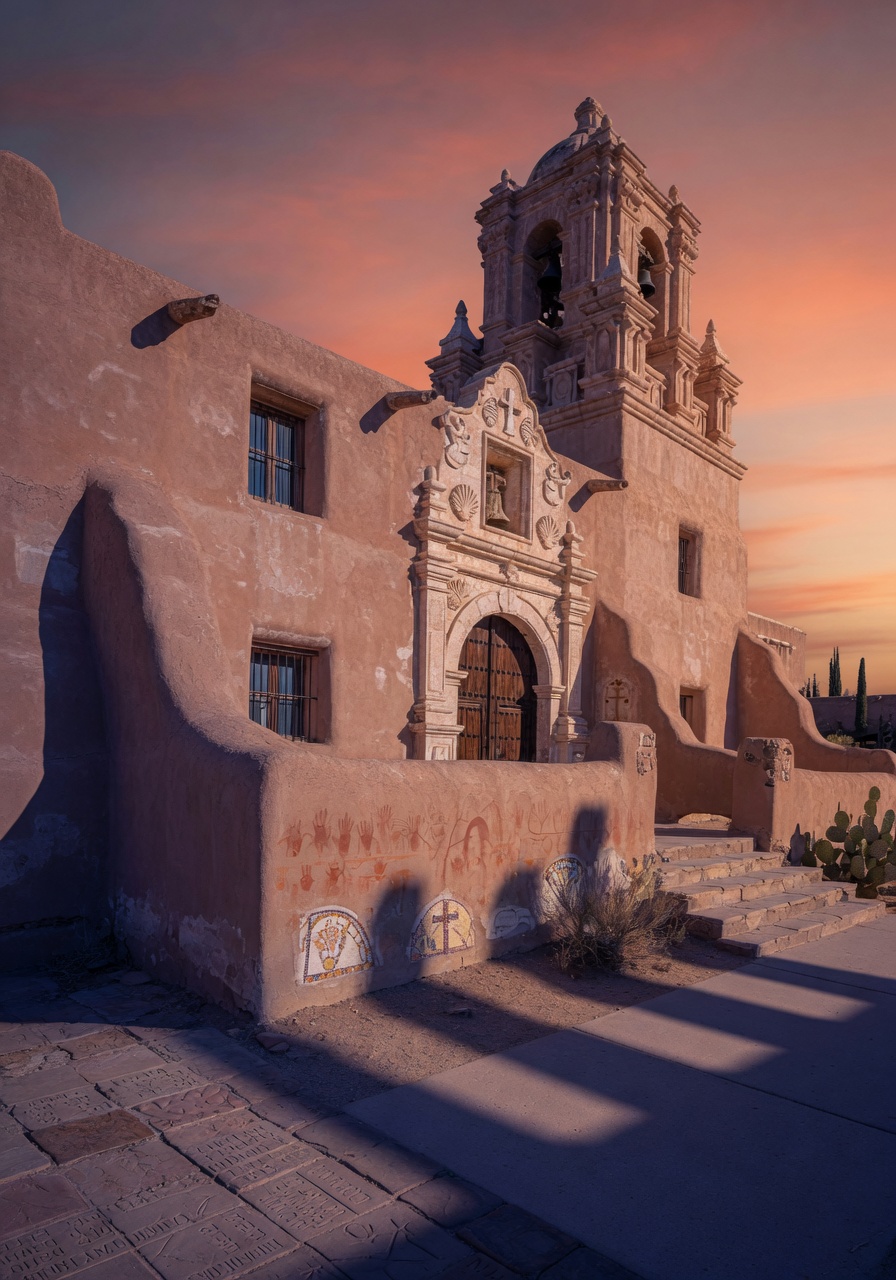
Adobe walls baked under desert suns still stand as quiet testaments to a vast colonial experiment that redrew maps and lives across the American Southwest starting in the 1500s. Spanish missions were never just places of worship. They fused religious ambition with the hard necessities of survival in unfamiliar terrain, creating outposts that doubled as farms, schools, and defensive positions against rival powers.
Construction relied on local materials and labor. Thick adobe bricks provided natural insulation against extreme heat and cold, while central churches rose with bell towers that called people together for services and community alerts. Workshops, living quarters, and irrigated gardens filled the compounds, and architectural details often blended Spanish baroque arches with indigenous patterns carved into doorways and altars. The result was a practical yet distinctive style built to last centuries rather than decades.
Spain’s push to claim territory and convert Native populations drove the mission system forward. Friars established these sites in Texas, California, and Arizona to secure borders and introduce European agriculture, livestock, and trade. Indigenous communities faced sweeping changes as labor demands and new customs reshaped daily routines, languages, and spiritual practices. By the late 1700s, connected chains of missions stretched along key routes, marking the northern edge of Spanish control and accelerating both cultural exchange and displacement.
Today the same locations serve different roles. San Antonio’s Mission Trail preserves four restored complexes with original irrigation channels still visible. Mission San Xavier del Bac near Tucson continues to impress visitors with its detailed interior artwork. Along California’s El Camino Real, sites like San Juan Capistrano draw crowds for their preserved grounds and seasonal events. Many now operate as state parks or museums, offering guided tours that attract millions annually while maintaining active community ties.
Their influence reaches well beyond preserved buildings. Missions illustrate the tangled origins of multiculturalism in the Americas, where cooperation and coercion produced lasting blends in food, architecture, and language. They also remind us how colonial decisions altered ecosystems and social structures that persist today. In ongoing conversations about heritage and identity, these sites offer concrete examples of resilience and adaptation, encouraging a clearer look at both the costs and continuities of shared history.
Comments are closed