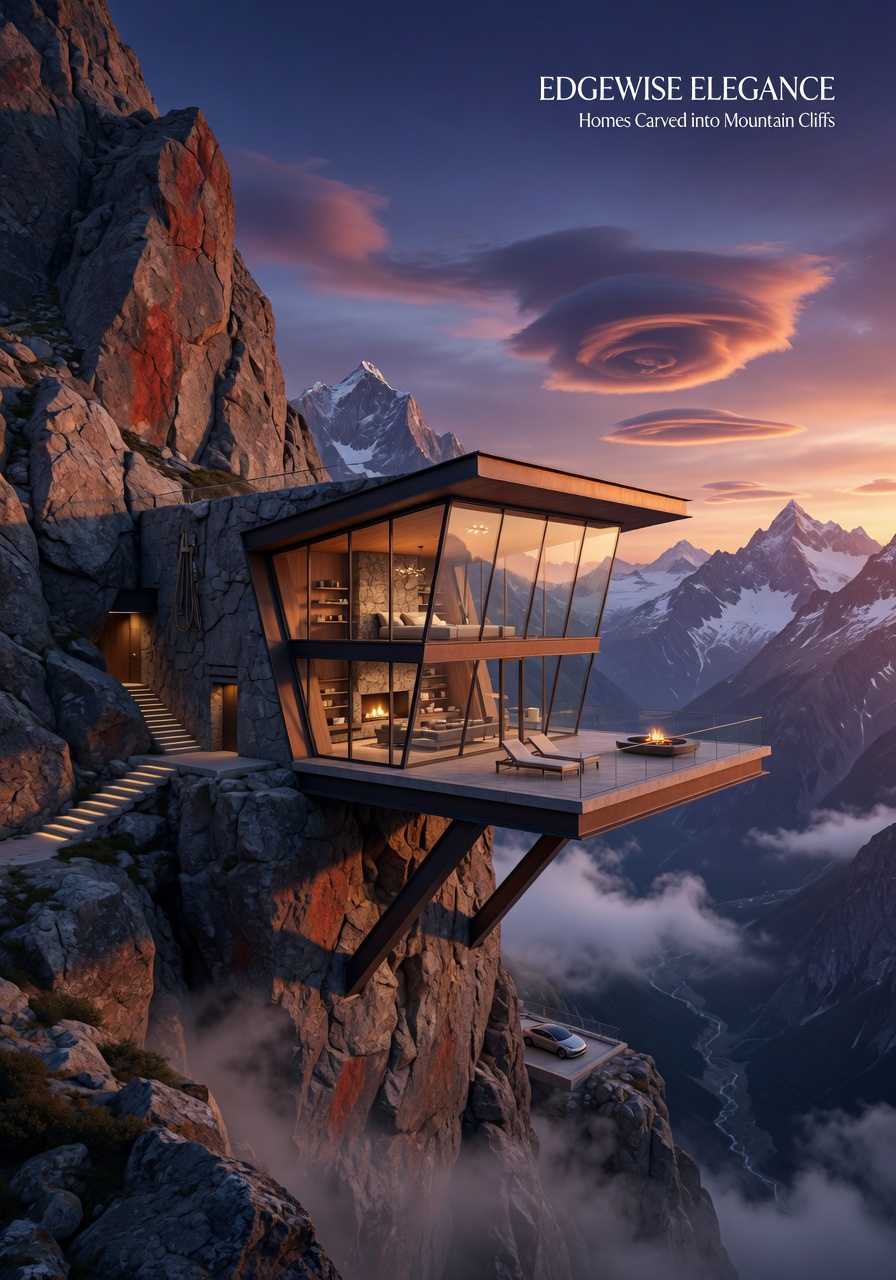
Homes etched into sheer mountain cliffs push the boundaries of what architecture can achieve, blending raw engineering with the stark power of untouched landscapes. These structures don’t just sit on the edge—they seem to grow from it, turning precarious rock faces into places where daily life unfolds against backdrops of sweeping valleys and shifting weather patterns.
The real draw lies in how these homes balance daring design with solid functionality. Cantilevered sections extend dramatically over drops, delivering unbroken sightlines while relying on high-strength steel frames and deep rock anchors to handle everything from sudden snow loads to whipping winds. Inside, expansive glass walls and fluid layouts pull the outdoors in, making rooms feel like extensions of the terrain itself. Sustainable touches such as ground-source heating and living roofs cut energy demands, while practical additions like sturdy barriers and quick-access routes keep residents secure without spoiling the view.
Cliff dwellings have a long lineage. The Ancestral Puebloans built multi-level adobe complexes into Colorado’s Mesa Verde alcoves around 1200 AD, using the rock for natural insulation and defense. In the last century, projects like Frank Lloyd Wright’s Fallingwater showed how buildings could integrate with water and stone, sparking interest far beyond flat terrain. Contemporary versions range from sleek villas tucked into Italy’s Dolomites to custom residences in Colorado’s high peaks, where firms like Studio Gang shape forms that echo the surrounding strata. In the Swiss Alps, updated chalets merge classic wood details with precise modern bracing to stay stable on exposed ledges.
These homes matter now because they offer a direct counterpoint to dense cities and constant screens. They encourage careful building in fragile zones, testing methods that could shape more resilient construction elsewhere as climates shift. At the same time, they tap into a clear appetite for spaces that support well-being through direct contact with wild settings. In the end, they show how thoughtful risk and respect for place can create deeper ties to the land’s most striking features.
Comments are closed