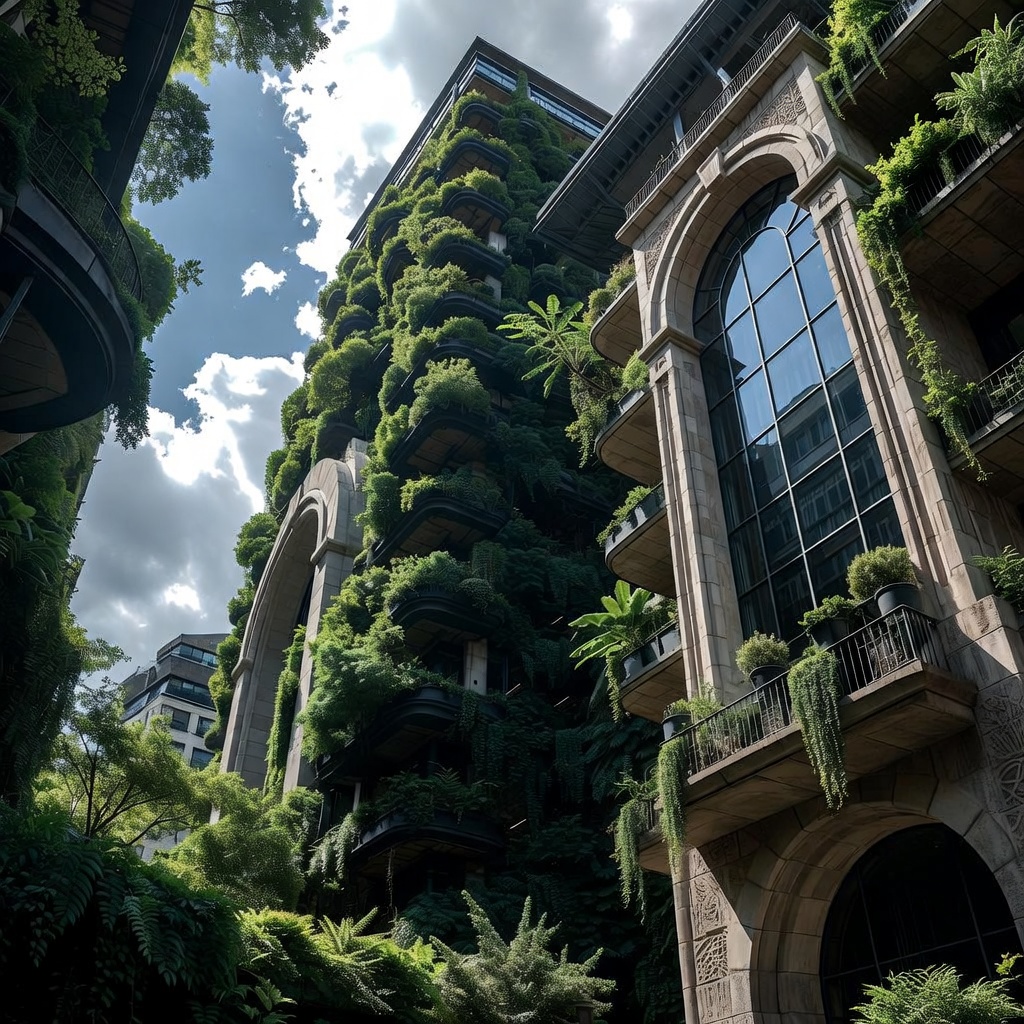
Cities are swallowing green space at an alarming rate, yet a growing number of residents and designers are pushing back by covering sheer walls with living plants instead of letting them stay blank and gray. Vertical gardens stack growth upward in tight quarters, using everything from basic pocket planters screwed into brick to full hydroponic rigs that deliver nutrients through water alone. In dense spots like New York or Tokyo, these setups turn otherwise wasted façades, rooftops, and even interior partitions into productive green layers without needing extra land.
The payoffs run deep. The foliage pulls pollutants from the air and pumps out oxygen, a direct help in neighborhoods choked by traffic fumes. One square meter of this greenery can drop nearby temperatures by a few degrees, easing the heat-trapping effect of concrete and asphalt during summer months. At the same time, the plants create small pockets of habitat that let pollinators and birds survive in places that were previously lifeless.
Food production gains ground too. In Singapore, stacked community systems now yield leafy greens and tomatoes year-round, cutting the distance produce has to travel and trimming the emissions that come with long-haul trucking. Neighbors who tend the same wall often end up trading pruning tips or harvest ideas, turning maintenance into an informal social hub.
None of this is effortless. Upfront costs for frames, pumps, and lighting add up quickly, and the plants still demand consistent water, trimming, and checks for pests. In drier regions, systems that recycle water help, but older setups can still guzzle more than expected. Newer kits with built-in sensors now track moisture and nutrient levels automatically, lowering the daily workload and making the approach more realistic for first-timers.
Milan’s Bosco Verticale towers show what’s possible at scale: more than 90,000 plants wrap the two residential buildings, forming their own cooler microclimate while locking away measurable amounts of carbon dioxide each year. Similar projects are appearing from Singapore to Mexico City as planners look for ways to offset rapid urban growth.
With over half the world’s population already living in cities, these living walls are shifting from novelty to practical infrastructure. They cool streets, lift moods with a bit of visible nature, and let people grow food closer to where they live. Whether the project is a few herb-filled panels on a balcony or a full building retrofit, the tools and know-how are becoming simpler to find. The result is a quieter, steadier kind of urban change—one wall at a time.
Comments are closed