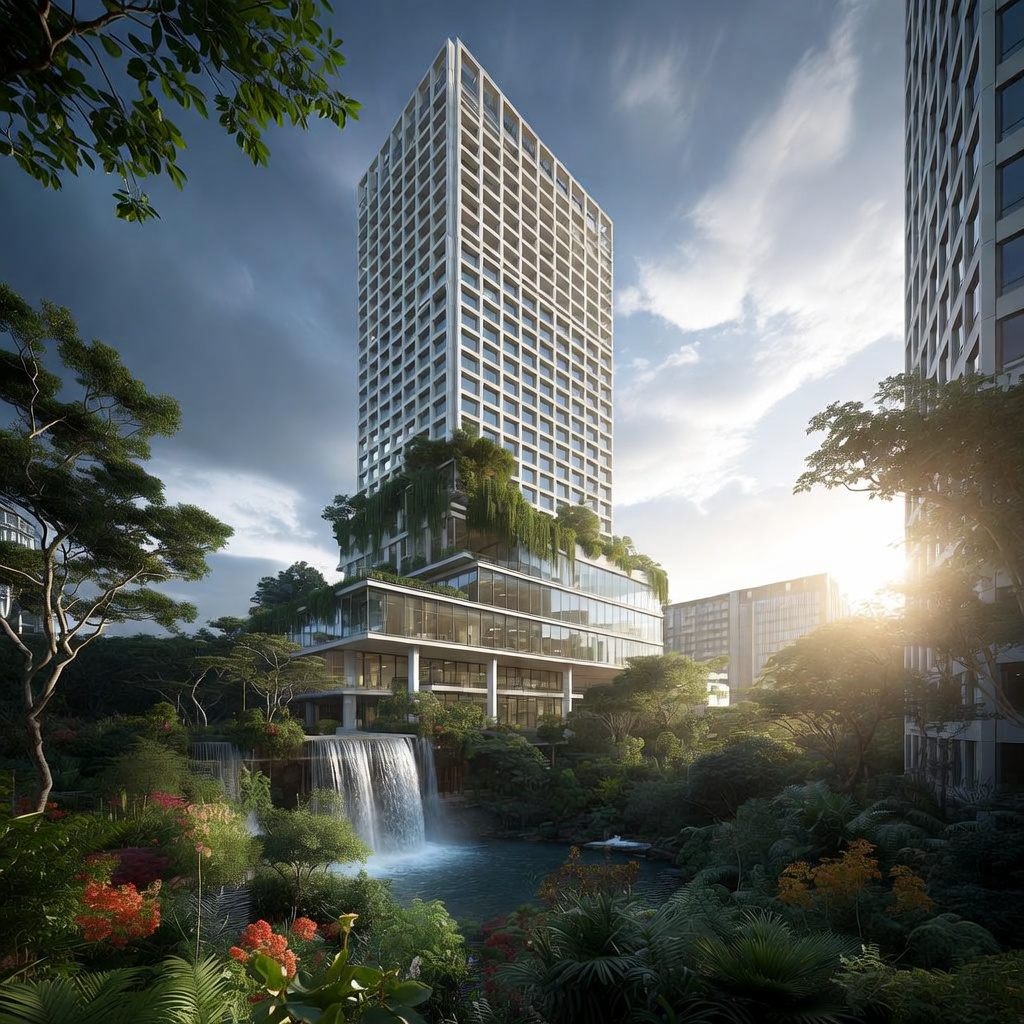
People spend nearly 90 percent of their lives inside buildings, yet most of those spaces still cut us off from the natural cues our brains evolved to expect. Biophilic design tackles that gap by weaving daylight, plants, natural textures, and organic patterns straight into the fabric of offices, hospitals, and city streets. The approach stems from biologist E.O. Wilson’s biophilia hypothesis, which argues that humans carry an inborn pull toward living systems. Rather than treating nature as decoration, the method treats it as a core design material—think timber finishes that release subtle scents, ceilings patterned after leaf veins, or ventilation systems that mimic breezes through a forest canopy.
Research backs the shift. A Human Spaces study found that workplaces with strong biophilic elements cut reported stress by about 15 percent while lifting focus and job satisfaction. Hospitals see parallel gains: patients whose rooms overlook greenery leave sooner and request fewer painkillers. On the environmental side, the same strategies lower energy loads; deeper daylight penetration and living façades reduce the need for artificial lighting and mechanical cooling. At home, even modest additions—an herb wall in the kitchen or a small fountain in a hallway—can soften the constant digital hum and make rooms feel more restorative.
Cities are already testing these ideas at scale. Singapore’s Gardens by the Bay pairs supertrees with climate-controlled conservatories, dropping local temperatures and drawing crowds who treat the site like an everyday park. Tech campuses such as Google’s have installed living walls and interior courtyards, reporting measurable upticks in creative output. The same principles work without big budgets. Swapping a desk to face a window, choosing a cork or wood floor over vinyl, or hanging a large print of branching river systems can nudge any room toward the same effect.
As heat waves intensify and anxiety rates climb, ignoring our connection to nature looks increasingly costly. Biophilic design offers a practical response: it embeds living systems into the places we already occupy, turning routine environments into sources of calm and clarity. Whether through a single climbing plant or a full-building retrofit, each step reintroduces the sensory signals that help us think and feel better—signals that concrete alone has never supplied.
Comments are closed