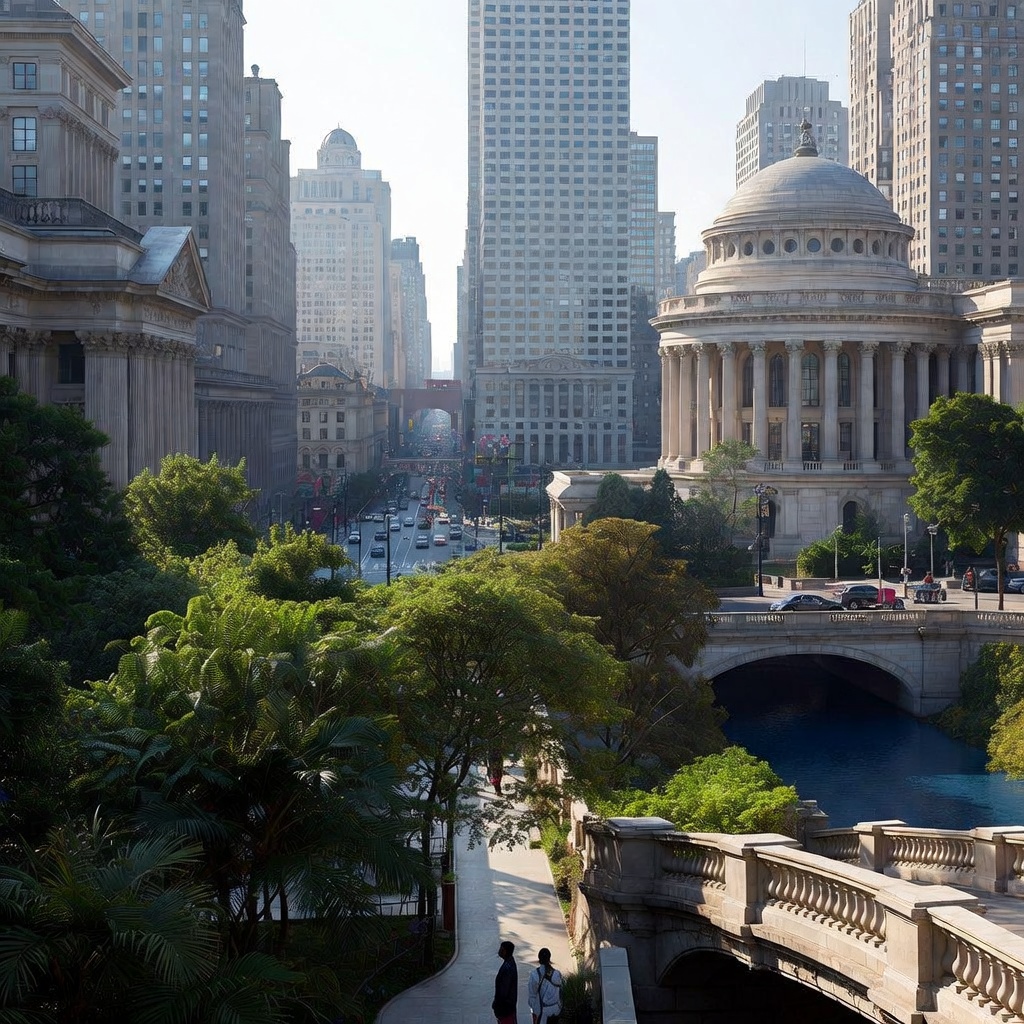
Cities once grew around grids of asphalt and steel, with green space squeezed in as decoration. Landscape urbanism flips that order, treating soil, water, plants, and terrain as the actual framework for how urban areas expand and adapt.
The shift took hold in the 1990s when designers grew tired of rigid modernist plans that favored cars and isolated towers. Figures such as James Corner and Charles Waldheim pushed instead for cities that function like living systems, able to absorb floods, support wildlife, and encourage daily contact between people. Their argument was simple: start with the ground and let buildings respond to it.
That approach now lines up directly with climate pressures. Cities generate the bulk of global carbon output, yet they can also reduce it through practical moves like permeable surfaces that soak up storm water, tree canopies that cut summer heat, and restored waterways that double as parks. These features are not extras; they lower maintenance costs over time and give neighborhoods room to breathe during extreme weather.
New York’s High Line shows the payoff. An unused rail line slated for scrap became a planted walkway that draws steady crowds, lifts nearby rents, and offers quick access to open air without leaving the street grid. In Singapore, the Gardens by the Bay project uses solar-powered “supertrees” to manage rainwater and shade visitors, turning an infrastructure need into a landmark people actually use.
Critics rightly note that splashy projects sometimes land in wealthier districts first and carry hefty price tags. Yet the same toolkit scales down: smaller rain gardens, pocket parks, and daylighted streams have appeared in lower-income areas with measurable drops in local flooding and hospital visits tied to heat. The core promise remains equity—nature that is not gated behind a ticket or a long commute.
As more regions face denser populations and shifting weather, the method offers a workable template. It treats every vacant lot, river edge, or rooftop as potential infrastructure that can also improve daily life. The result is not a perfect city, but one that keeps evolving with both its residents and the climate around them.
Comments are closed