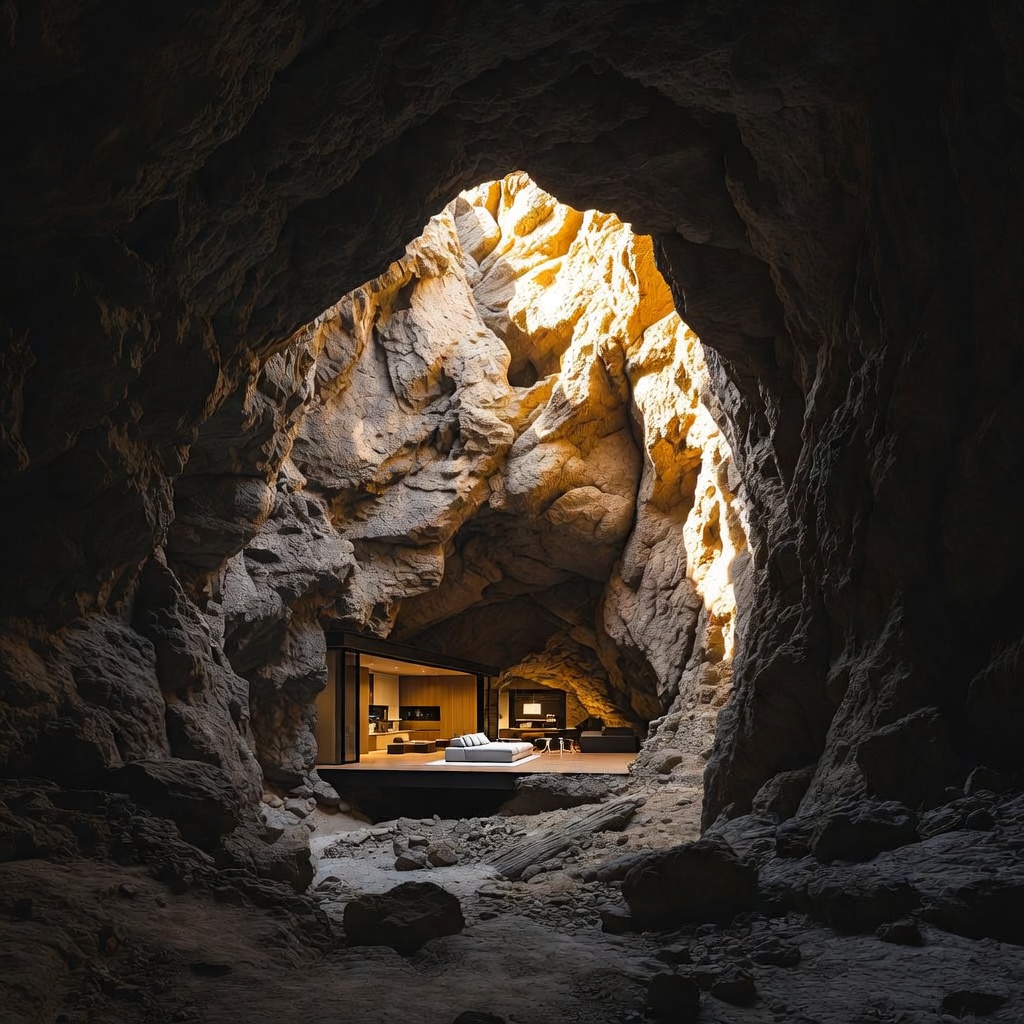
Deep under the sun-baked earth of Coober Pedy, families have turned old mining tunnels into year-round homes that stay at a steady 21 degrees Celsius while the surface hits 49. What began as a practical escape from Australia’s outback furnace now includes solar arrays, LED lighting, and streaming setups that draw 80 percent less power than conventional houses. Retiree Sarah Wilkins describes the quiet as addictive: no late-night arguments from next door, just the faint rush of wind across the desert above.
Halfway around the world, Cappadocia’s fairy-chimney formations have become something entirely different. Boutique hotels and private residences carved into the soft volcanic rock now run on geothermal loops that pull stable heat from the ground itself. Voice commands dim lights in chambers once used by Byzantine monks, and discreet routers keep Wi-Fi flowing to wall screens. Projects such as Yunak Evleri Cavesuites collect rainwater and recycle greywater, turning ancient troglodyte dwellings into low-impact retreats without visible modern scars.
In Spain’s Andalusia region, developers are digging fresh communities rather than restoring old ones. Earthquake-rated reinforcements and carefully placed window openings let daylight pour in while the surrounding rock does the heavy lifting on temperature control. Studies from the European Green Building Council show these homes cut carbon output by 50 to 70 percent compared with surface builds. Inside, raw stone walls meet clean-lined furniture, creating spaces that feel both timeless and current.
Cave living still demands engineering attention. Proper ventilation prevents moisture buildup, and local zoning rules can slow projects. Yet the combination of natural insulation, passive design, and smart tech offers a practical answer to rising energy costs and erratic weather. As cities expand and grids strain, more people are discovering that moving downward can mean living lighter, quieter, and with far smaller utility bills.
Comments are closed