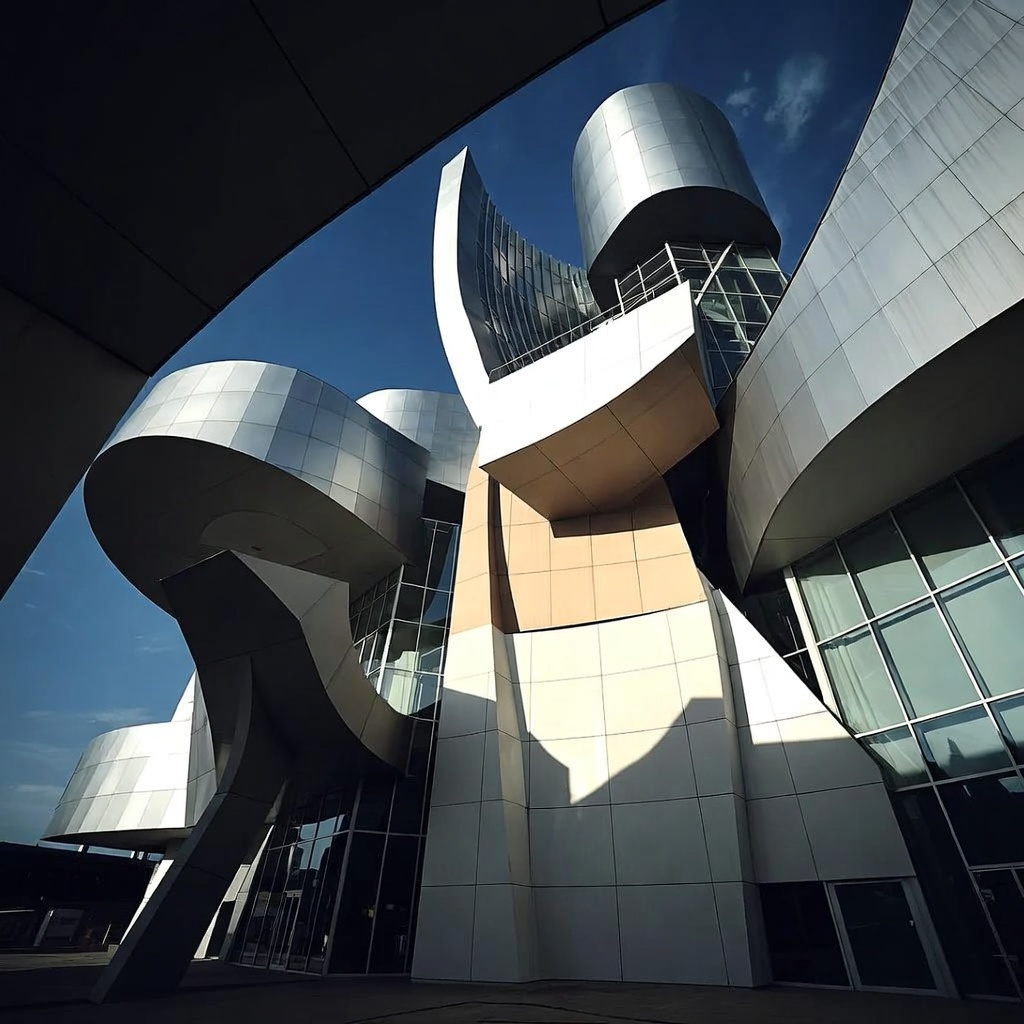
A tower shielding itself from the sun by folding its skin or a stadium roof parting like curtains for better airflow—these aren’t special effects. They’re real examples of kinetic architecture, where structures incorporate deliberate movement to respond to weather, light, and the people inside them.
The concept draws from the Greek word for motion and covers everything from simple pivoting screens to fully automated facades run by sensors and software. Early experiments gained momentum in the mid-20th century with Buckminster Fuller’s geodesic domes, which suggested buildings could adapt rather than merely stand. By the 1960s and ’70s, architects such as Jean Prouvé were testing movable walls, while Frei Otto’s tensile roof for the 1972 Munich Olympics flexed with wind loads like a giant sail.
Today the approach tackles practical demands with striking results. The Al Bahar Towers in Abu Dhabi use a field of 1,000 computer-controlled triangular panels inspired by traditional lattice screens; the panels open and close to block harsh sunlight, cutting cooling loads by as much as 40 percent and producing a shifting pattern across the glass. The Beijing National Stadium, built for the 2008 Games, relies on an interwoven steel lattice that permits slight, controlled shifts, turning the structure into a symbol of flexibility as much as strength.
The appeal goes beyond looks. Kinetic elements improve performance in measurable ways. Solar-tracking arrays on Seattle’s Bullitt Center tilt throughout the day to capture maximum energy. Retractable roofs like the one at Mercedes-Benz Stadium in Atlanta open on temperate days, lowering the need for mechanical cooling. In Zaragoza, the MediaTIC building uses inflatable ETFE cushions that expand or contract to create variable shade and ventilation, giving occupants a space that literally breathes with changing conditions.
Engineering these systems is not simple. Motors, hydraulics, and weatherproof sensors add cost and require regular upkeep; a single jammed mechanism can disrupt an entire facade. Yet falling prices for robotics and smarter control software are easing both hurdles. At the 2012 Yeosu Expo, Hyundai’s rotating pavilion demonstrated how large-scale motion could be choreographed in real time. Future versions may monitor occupancy patterns or even self-diagnose wear, allowing buildings to adjust without constant human oversight.
As cities grow denser and climates less predictable, the ability to embed movement into the built environment offers a direct way to reduce energy use and improve comfort. Instead of fighting external forces, these structures work with them. The result is architecture that feels less like a fixed backdrop and more like an active participant in daily life.
Comments are closed