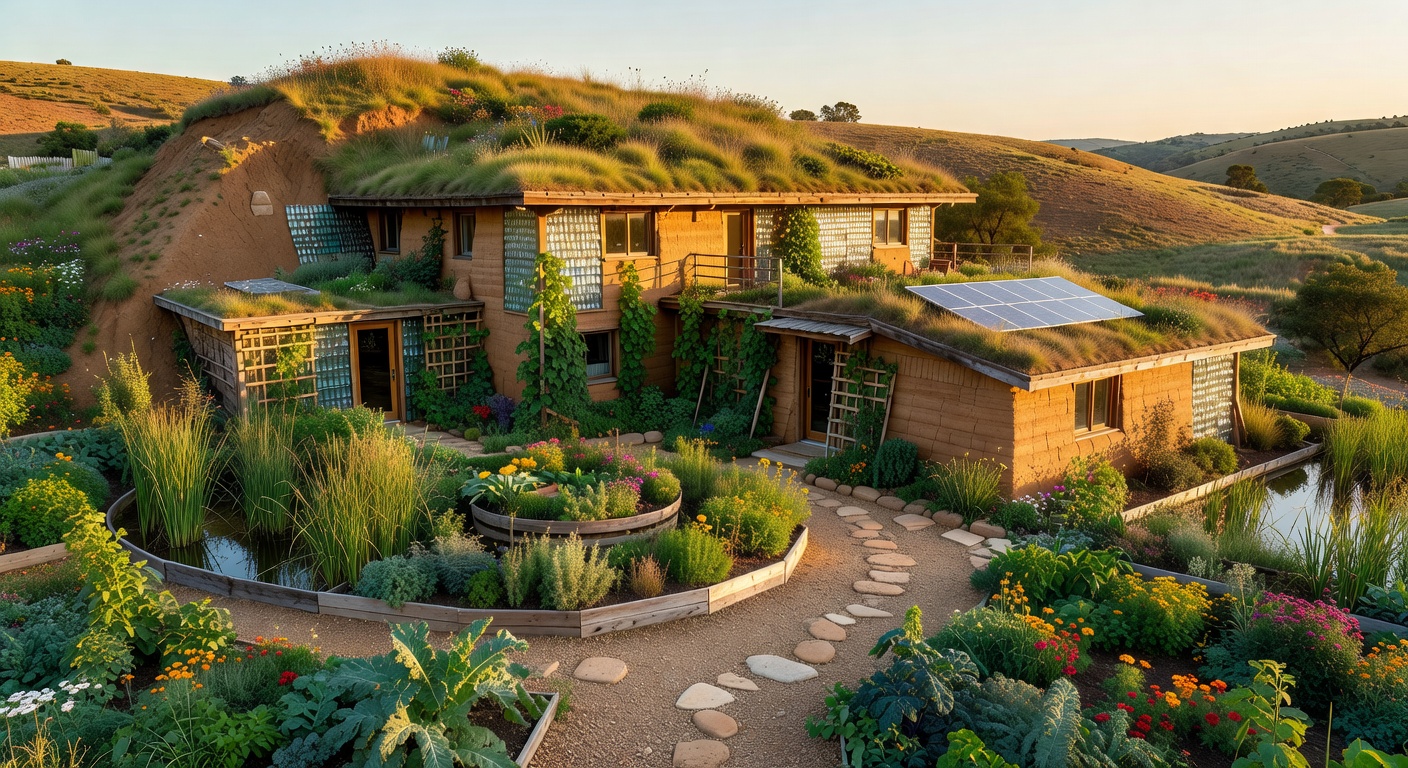
Buildings don’t just sit on the land anymore. A growing number of them actively work with it, pulling energy from the sun, cycling water through living systems, and turning waste into resources that keep the cycle going. This approach, rooted in permaculture, treats human structures as extensions of the ecosystems they occupy rather than separate boxes that consume and discard.
The practical side starts with simple alignments. South-facing walls covered in fruiting vines deliver shade during peak summer heat and insulation when temperatures drop, while also supplying food. Water from sinks and showers gets redirected to wall-mounted gardens or compact aquaponic setups that clean it on the spot, often recovering most of what a household uses. Rooftops double as productive layers—low-growing sedum for pollinators, berry shrubs for quick harvests, and solar panels tucked among the plants. Inside, thick rammed-earth walls stabilize indoor humidity without mechanical systems, and composting toilets feed on-site worm composting that builds soil for nearby plantings. Even small urban lots can use shallow swales to guide rainwater where roots need it most, cutting runoff and erosion at the same time.
The idea took shape in the 1970s when Australians Bill Mollison and David Holmgren developed permaculture as a response to energy shocks and soil decline. Early experiments, such as Michael Reynolds’ Earthships in the New Mexico desert, showed that recycled tires, cans, and passive design could create comfortable off-grid homes in extreme conditions. Today the same logic appears in larger projects. Seattle’s Bullitt Center runs on rooftop solar, collects its own rainwater, and composts waste while producing more energy than it uses. In Portugal, the Tamera community combines adobe construction with food-producing landscapes that achieve water independence. On larger scales, Mark Shepard’s work in Wisconsin surrounds homes with perennial plantings that yield nuts, fruit, and timber year after year without annual replanting.
These methods matter because conventional buildings still account for roughly 40 percent of global energy demand and a heavy share of emissions. Designs that generate power, food, and water on site reduce that load and add resilience when grids fail or supply chains break. Lower operating costs follow naturally—many owners report cuts of 60 to 70 percent in utility bills once systems are established. In dense cities where soil is scarce and food travels long distances, the same buildings create pockets of production that communities can maintain themselves.
New materials are accelerating the shift. Mycelium bricks and hempcrete now pair with sensors and efficient solar tech, letting designers combine biological processes with modern performance. Whether someone adds a balcony garden or plans an entire neighborhood, the direction is the same: structures that support the systems they depend on instead of draining them.
Comments are closed