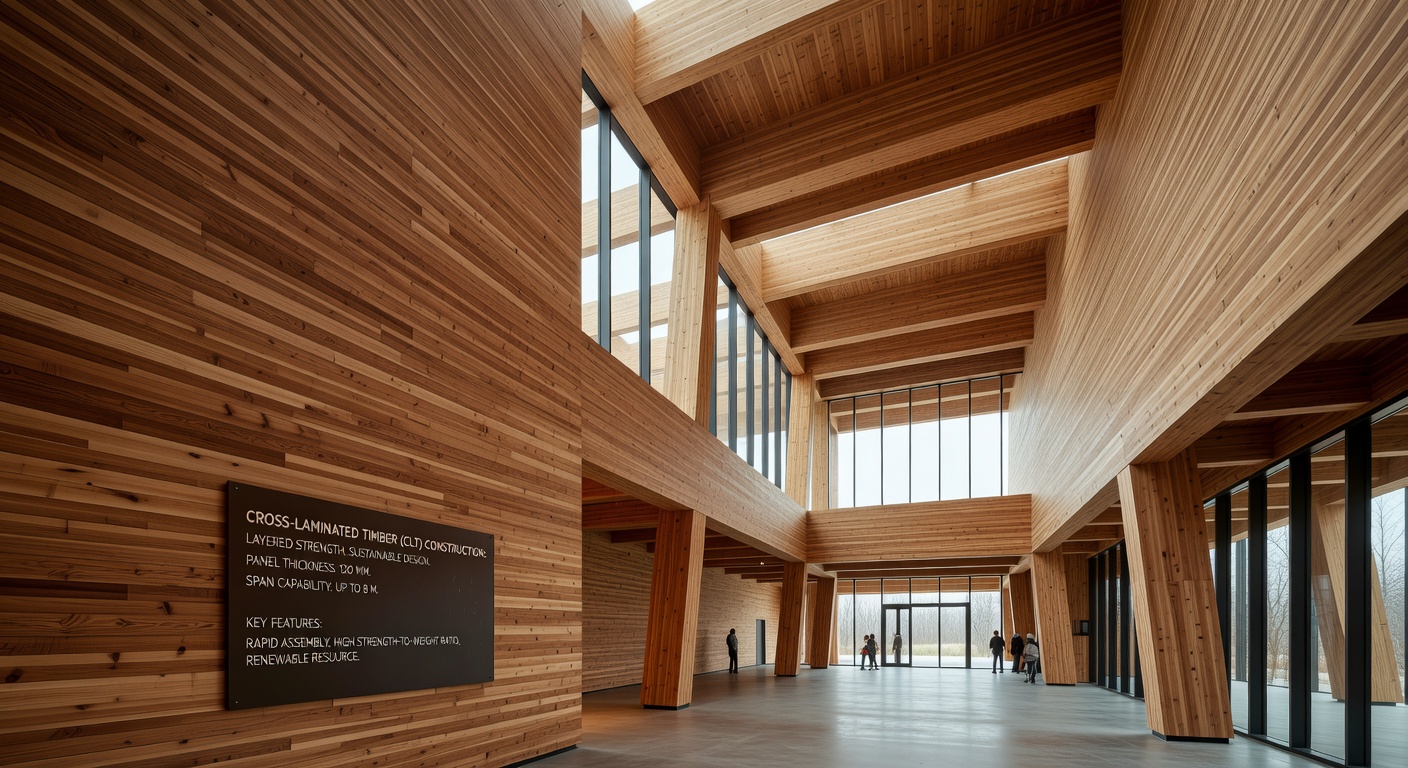
Cross-laminated timber has upended expectations in construction by turning a familiar material into something capable of supporting serious height. Made by stacking lumber in alternating grain directions and bonding the layers under pressure, these panels deliver strength comparable to concrete while weighing far less and offering better thermal performance. The odd-numbered layers—typically three to nine—create a balanced structure that resists warping and handles both vertical loads and lateral forces in earthquake-prone areas.
Its practical advantages show up quickly on site. Prefabricated panels arrive ready to connect, allowing crews to lock floors and walls into place much faster than with poured concrete or welded steel. Projects often finish 30 to 50 percent sooner, which matters when labor is tight. Fire performance holds up because the outer surface chars and protects the inner core, satisfying code requirements without added chemicals. The material also dampens sound more effectively than metal frames and helps stabilize indoor temperatures, trimming energy use for heating and cooling.
The technology took shape in Austria during the 1990s, where manufacturers refined the process for mid-rise structures. North America entered the picture around 2012 with Vancouver’s nine-story Murray Grove building. Recent milestones include Norway’s 18-story Mjøstårnet, completed in 2019 at 280 feet, and Milwaukee’s Ascent tower, which reached 284 feet in 2022 using a hybrid wood-and-steel approach. These examples demonstrate that mass timber can scale beyond low-rise housing while meeting modern safety standards.
The timing aligns with urgent climate goals. One cubic meter of wood stores roughly a ton of carbon dioxide, and substituting CLT for conventional materials can cut a building’s embodied emissions by 45 to 75 percent. At scale, panel costs have become competitive, and the approach supports regional forestry jobs by drawing on sustainably managed softwoods. Moisture control still requires careful detailing, and supply chains remain uneven in some regions, yet updated building codes and financial incentives are easing adoption.
Cities facing housing shortages and emissions targets now have a tested option that combines speed, lower carbon impact, and structural reliability. Mass timber is moving from pilot projects to standard practice, reshaping how dense urban environments get built.
Comments are closed