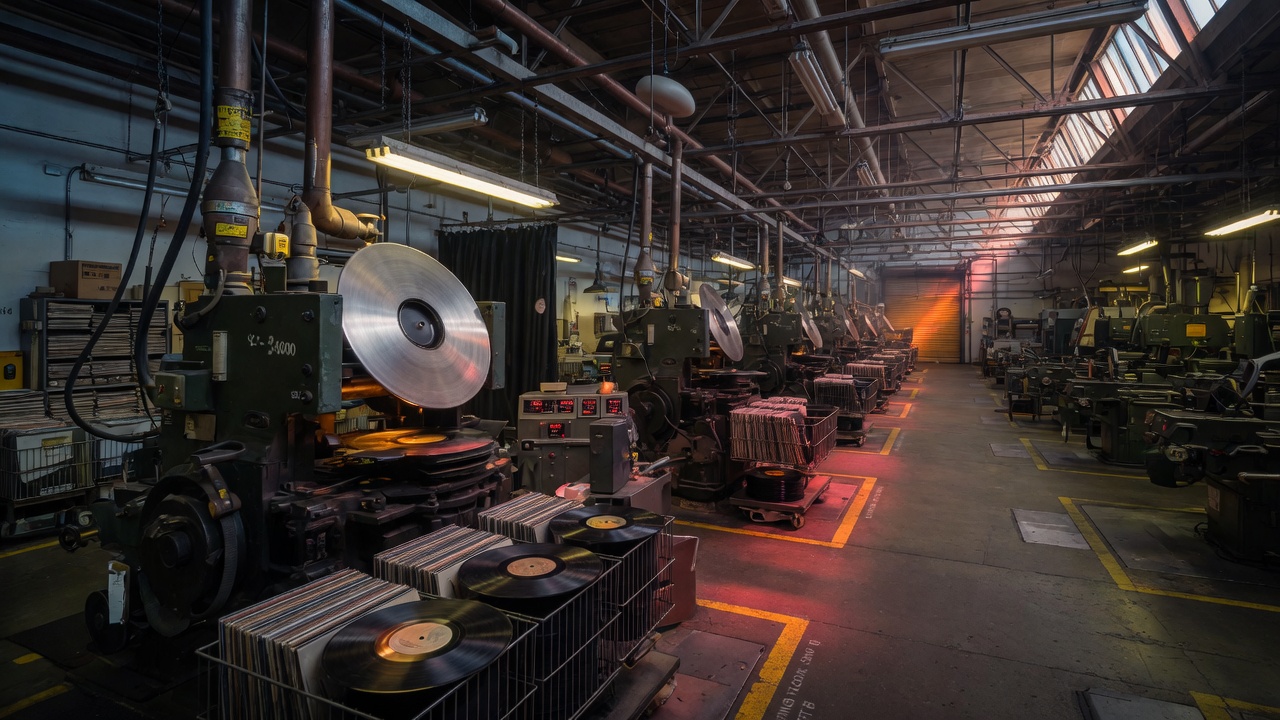
In the pressing plant, the building itself becomes an extension of the hydraulic press. Wide, single-story sheds with thick concrete slabs absorb the repeated shocks of the stampers descending at 300 degrees. These floors, poured without expansion joints in long runs, keep the machines level so that each groove lands true. Skylights set into shallow sawtooth roofs bring in even northern light, reducing the need for overhead lamps that might cast shadows across the inspection tables where workers check for warps.
The layout follows the material’s transformation. PVC pellets arrive at one end through loading bays sized for rail cars, then move by gravity-fed hoppers into the mixing rooms where stabilizers and pigments are added. From there the compound travels on belt conveyors beneath low ceilings that keep heat from rising and escaping through the roof deck. The pressing room itself sits at the center, its columns spaced just wide enough for two eight-ton presses side by side and an operator’s narrow walkway between them. Behind the presses, cooling tunnels occupy the coolest, least ventilated corner so that records harden evenly before labels are applied.
Walls are rarely finished. Exposed block and steel trusses collect a fine gray film of vinyl dust that workers wipe from horizontal surfaces each shift; the dust itself becomes part of the room’s acoustic character, softening the sharp report of the press cycle. Doors are oversized and placed in opposing walls so that a fork-lift carrying boxes of finished records can exit without turning, preserving the straight-line movement that prevents warping.
Temperature and humidity dictate more than comfort. The same roof that admits light also carries insulation thick enough to hold the interior at a steady 72 degrees even when outside air swings thirty degrees in a single day. Small offices and listening booths are tucked against the perimeter, their partitions built of gypsum rather than glass so that sound from the shop floor remains muffled rather than reflected.
In plants still operating, the original 1960s steel sash windows have been left in place. Their single glazing leaks heat in winter, yet the slow movement of air through the frames keeps solvent vapors from the label adhesive from concentrating near the presses. The architecture does not celebrate the record; it simply makes room for the weight, the heat, and the precise repetition that turn raw compound into playable disc.