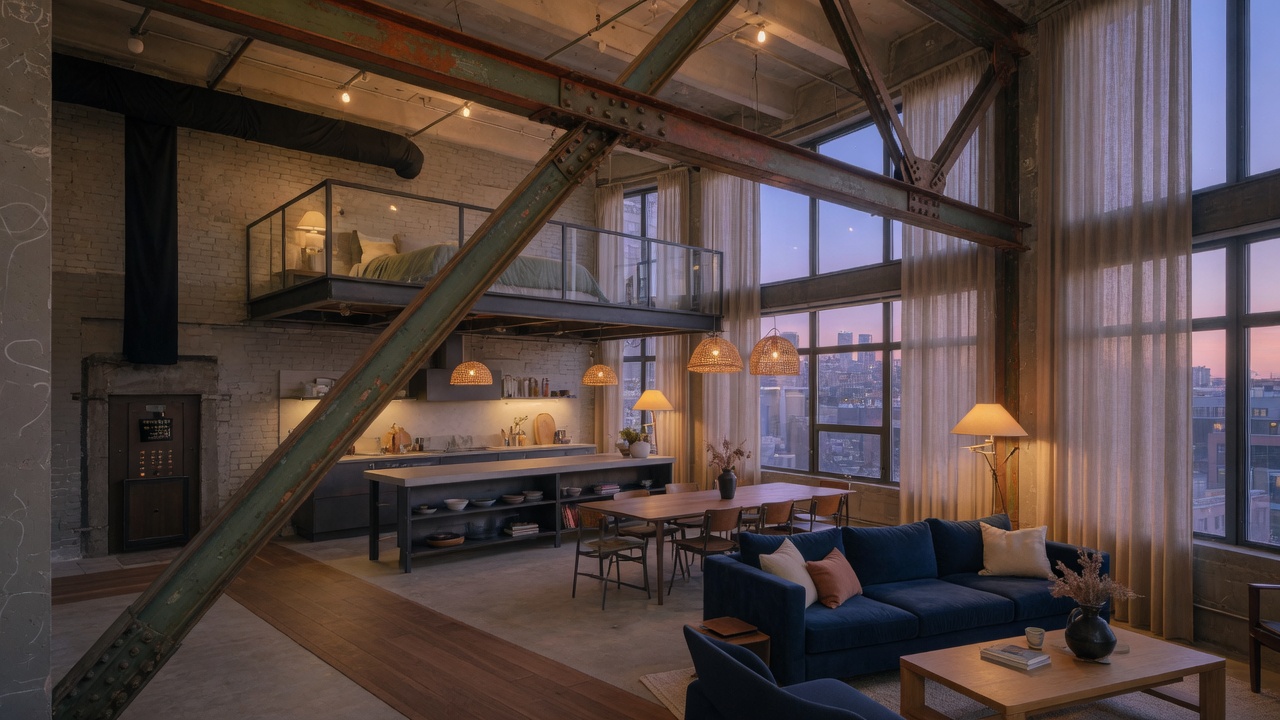
In many downtown towers the raised floors still bear the faint grid of old cubicle legs, yet now those same planes hold beds, tables, and the slow accumulation of shoes by the door. The conversion of vacant offices into lofts begins with this simple recognition: the building already possesses generous spans, high ceilings, and daylight that most new residential work must fabricate at great cost.
The concrete slab, once hidden beneath carpet tile, becomes the finished floor. Its coolness under bare feet in summer and its capacity to hold warmth from winter sun alter the daily rhythm of the rooms. Where mechanical ducts once crossed in straight runs, new partitions are set at angles that catch morning light across the slab and send it deeper into the plan. The original steel columns remain exposed, their fireproofing removed to reveal the riveted connections; residents learn to read these joints the way earlier generations read the grain of timber posts.
Plumbing presents the real discipline. Core bathrooms and kitchens are clustered near the old service risers so that new lines do not chase across the entire floor plate. This concentration leaves the perimeter free for living spaces that open to the city rather than to internal corridors. Windows that once framed views of other towers now frame the movement of clouds and the changing color of brick across the street.
Sound changes too. The low hum of HVAC is replaced by the creak of floorboards underfoot and the occasional rattle of a freight elevator still serving the upper stories. Residents discover that the deep floor-to-floor height allows for a partial mezzanine without violating ceiling clearances, turning what had been uniform office volume into two levels of use within a single structural bay.
Not every tower converts equally well. Buildings with low ceilings or tightly spaced columns resist the rearrangement of rooms. Yet where the structure permits, the result is housing that carries the memory of collective work while offering the privacy of individual dwelling. The city gains dwellings without consuming new land or new steel, and the old towers acquire the slower tempo of lives lived rather than tasks completed.