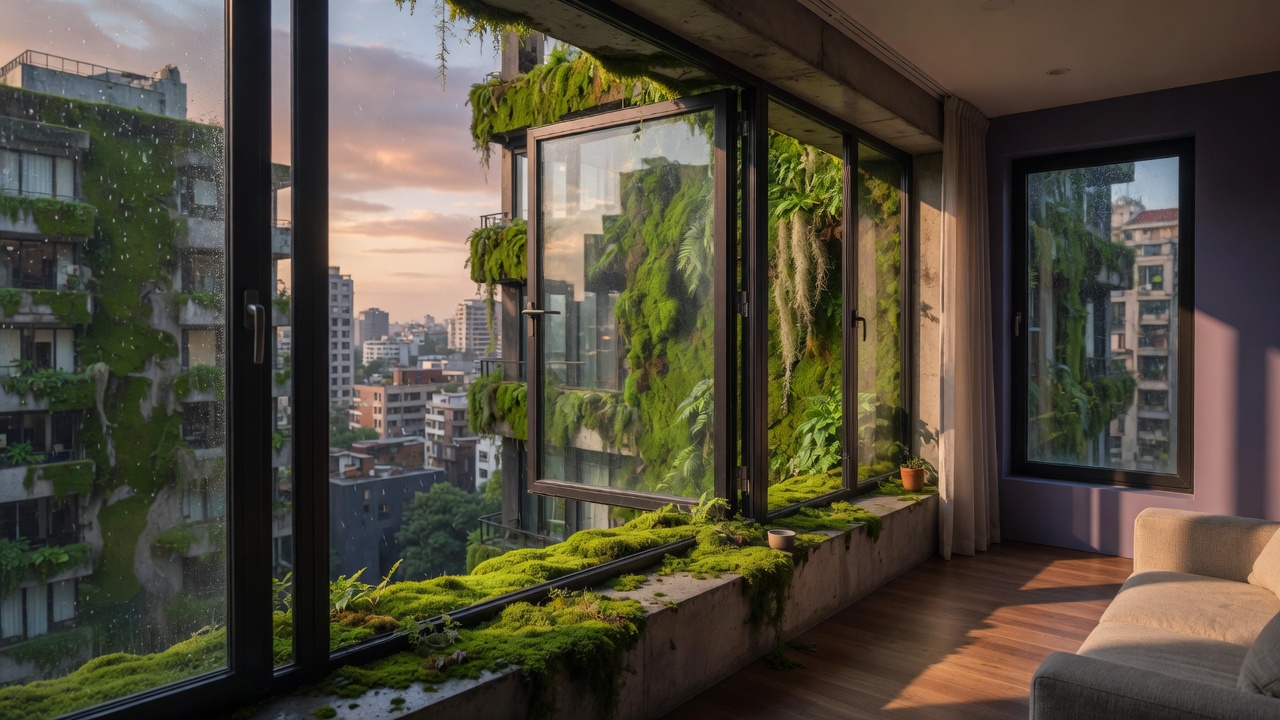
In older apartment buildings, residents sometimes left their kitchen doors ajar in summer so that the corridor could carry the smell of rain-soaked soil from a single planter left on the landing. That small habit points to a deeper need that persists even when towers replace row houses: the body still registers the difference between a surface that has grown and one that has only been applied.
Biophilic design begins with this register. In the 28-floor residential block completed in 2019 along Copenhagen’s harbor, the architects inserted a central atrium lined with staggered planters of native grasses and ferns. Morning light reaches the lowest level through a clerestory of fritted glass that also diffuses the glare from the water outside. Residents report that the temperature in the corridor feels two degrees cooler on humid days, an effect produced less by mechanical cooling than by the evapotranspiration of the plants and the thermal mass of the reclaimed brick walls behind them.
Further north, a smaller project in Oslo converted three adjacent 1960s slabs into a single cooperative. Rather than adding green walls as decoration, the team replaced sections of the original concrete balustrades with deep timber planters that cantilever over the street. The wood, left untreated, has silvered; its grain now catches low winter light that once struck only blank concrete. Inside the units, the same timber appears as window reveals and kitchen thresholds, creating a continuous tactile path from the street to the sink. Tenants describe reaching for the wood unconsciously when they pause to look out, a gesture that reintroduces the hand to a material that ages in measurable ways.
Water elements remain rare in rental apartments because of maintenance cost, yet a handful of recent conversions in Berlin have retained the original cast-iron downpipes and routed them visibly through winter gardens on each floor. The sound of rain moving through the pipes travels upward and downward, giving every landing a brief acoustic signal of weather. The gardens themselves are modest—gravel beds planted with shade-tolerant perennials and a single tap for hand-watering—but the presence of moving water and the slight humidity it produces alters the perceived dryness of mechanically ventilated corridors.
These interventions succeed when they remain ordinary rather than spectacular. A living wall that requires constant professional attention quickly becomes another piece of infrastructure residents ignore. A timber sill that can be touched and that darkens where hands rest daily continues to register presence without announcement. The most durable biophilic moves are therefore those that accept the maintenance patterns already embedded in apartment life: the weekly watering of a few shared planters, the occasional replacement of a weathered board, the simple act of opening a window onto leaves that move.