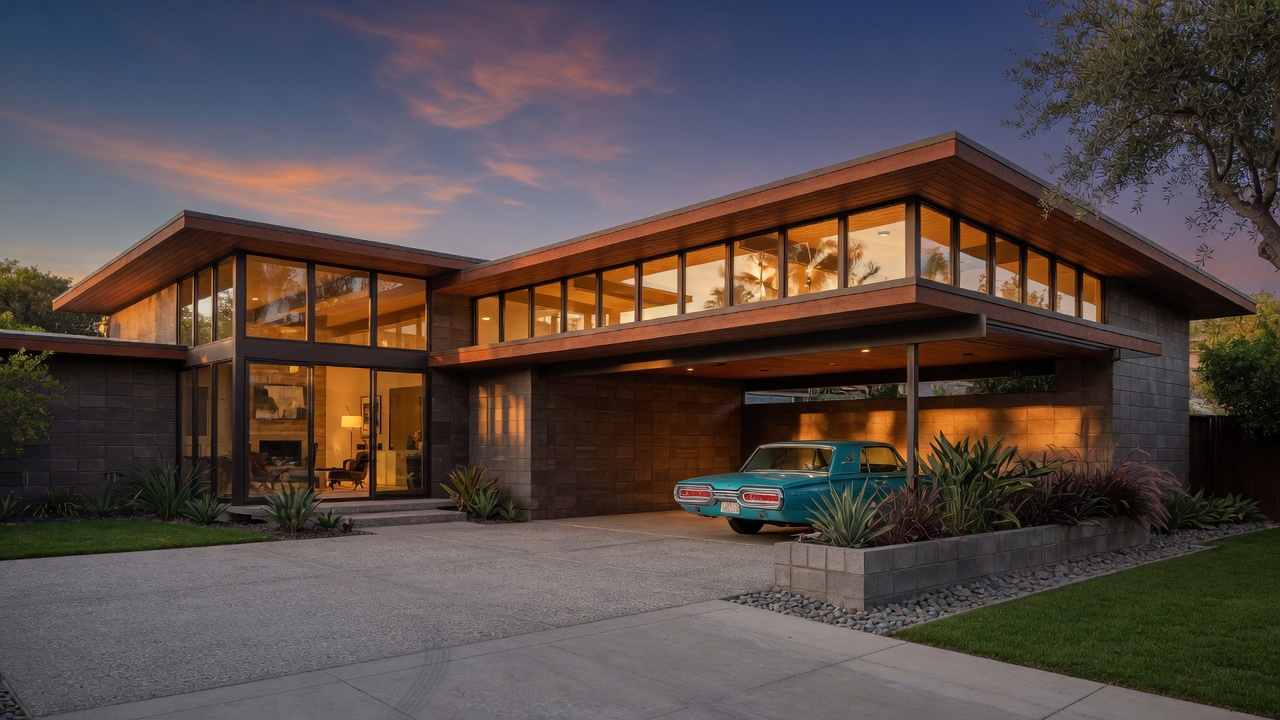
In certain postwar subdivisions, the afternoon light now crosses living rooms in a thin, even band set high along one wall. The effect comes from new construction that borrows the mid-century habit of lifting windows to the ceiling line while keeping the lower walls solid. Builders place these clerestories above kitchen counters or along hallways that once held only standard double-hungs, and the change alters how residents move through the day.
The revival shows itself most clearly in the choice of structure. Instead of hiding roof joists behind drywall, many of these houses leave the beams exposed and painted the same warm gray as the siding outside. The wood carries the eye from the carport through the front door and into the main room without interruption. Where older tract homes used dropped ceilings to conceal ducts, the new work routes mechanical lines along the perimeter or beneath the slab, preserving the sense of continuous height.
Materials stay close to the originals yet adjust for current codes. Concrete masonry units appear again as interior screen walls, their surfaces left unpainted so the texture registers against the smoother gypsum board nearby. Sliding glass doors, now fitted with low-emissivity glass, open onto shallow patios edged with the same gravel beds that once separated house from lawn. The gravel still crunches underfoot, though the beds are narrower to meet stormwater rules.
Inside, the plan loosens the strict separation of rooms. A single volume holds living, dining, and a study alcove defined only by a change in flooring from terrazzo tile to oak strip. Families report that children’s toys migrate across this surface without the visual barrier of a doorway, yet the clerestory still throws light onto the back wall so the space never feels dim at four o’clock in winter.
Some owners add built-in cabinets of rift-sawn white oak that run the full length of the living wall, their faces flush with the plaster. The cabinets store records and books while their tops serve as ledges for plants that catch the high light. The arrangement echoes the storage walls of 1950s California houses, yet the proportions have been tightened to fit smaller suburban lots.
These details accumulate without announcement. A visitor notices first the quiet of the street, then the way the roof plane seems to float above the clerestory band, and finally the absence of any single dramatic gesture. The houses simply continue an earlier conversation about how ordinary rooms might hold daylight and movement with modest means.