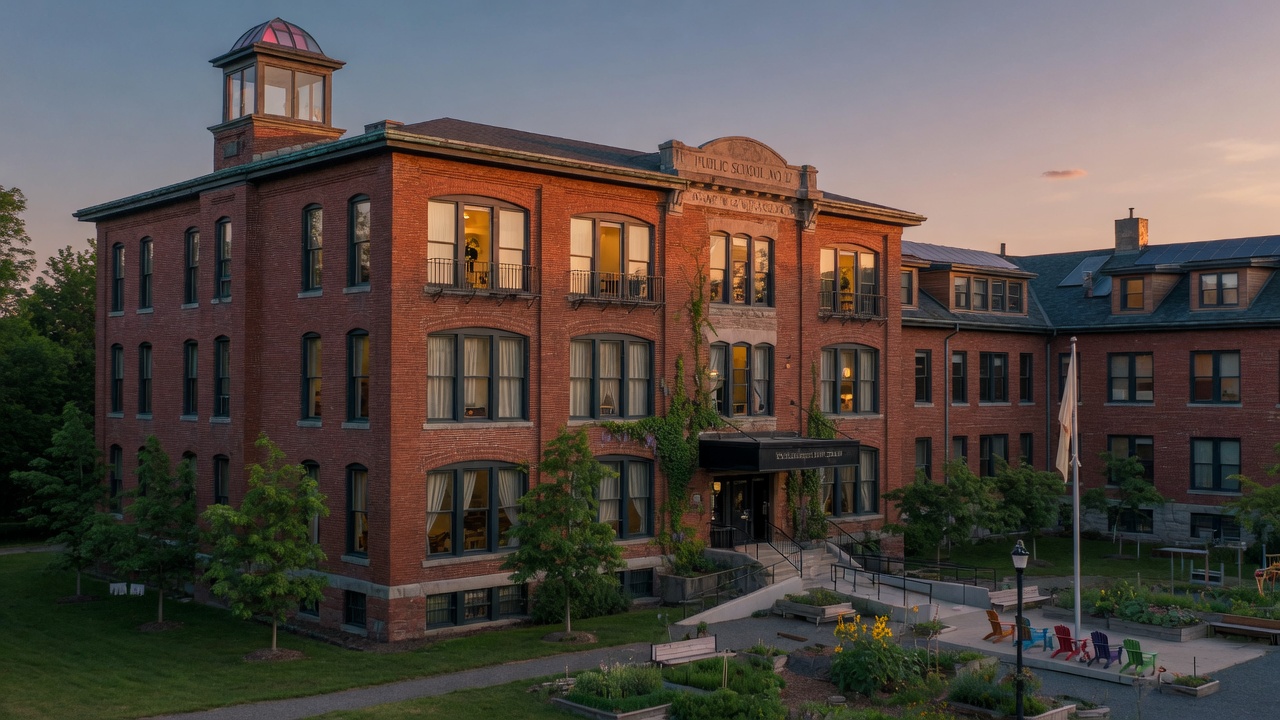
In the old brick school on the edge of a river town, the high windows still catch the low afternoon light exactly as they did when children filed in each morning. The panes are the same, their wooden frames swollen slightly from decades of weather, yet the rooms below now hold beds, tables, and the quiet accumulation of private lives.
The adaptation begins with what cannot be moved. Long corridors, once lined with lockers and coat hooks, become shared passages between apartments. Their terrazzo floors, polished by generations of shoes, remain underfoot, their slight unevenness a reminder of the building’s original purpose. Classrooms, sized for twenty-five desks, are divided by new partitions that stop short of the ceiling, preserving the sense of volume and the way sound travels across the space. Where a blackboard once hung, a kitchen counter now runs beneath the same chalk rail, its groove still visible in the plaster.
Materials dictate the character of each unit. The original maple floors, sanded but not replaced, carry a warmth that new construction rarely achieves. In one former science lab, the slate sinks have been capped and turned into plant stands, their cool surface holding condensation in winter light. Gymnasium walls of exposed concrete block receive only a thin coat of whitewash, so that the texture of the blocks remains legible even as daylight from clerestory windows moves across them during the day.
Residents speak of the building’s institutional memory without sentiment. Footfalls in the hallway still carry farther than in purpose-built apartments, and the rhythm of doors closing echoes the old schedule of bells. Yet the same acoustics that once amplified children’s voices now soften the sound of a single household. Outside, the asphalt playground has been broken into small gardens, each plot bounded by the low brick walls that once contained recess games.
The conversion succeeds because it leaves the building’s primary structure and apertures largely untouched. New systems—plumbing, wiring, insulation—are threaded through existing chases rather than carved into the masonry. The result is housing that feels both larger and more grounded than most contemporary apartments, its proportions shaped by the needs of education rather than speculation.