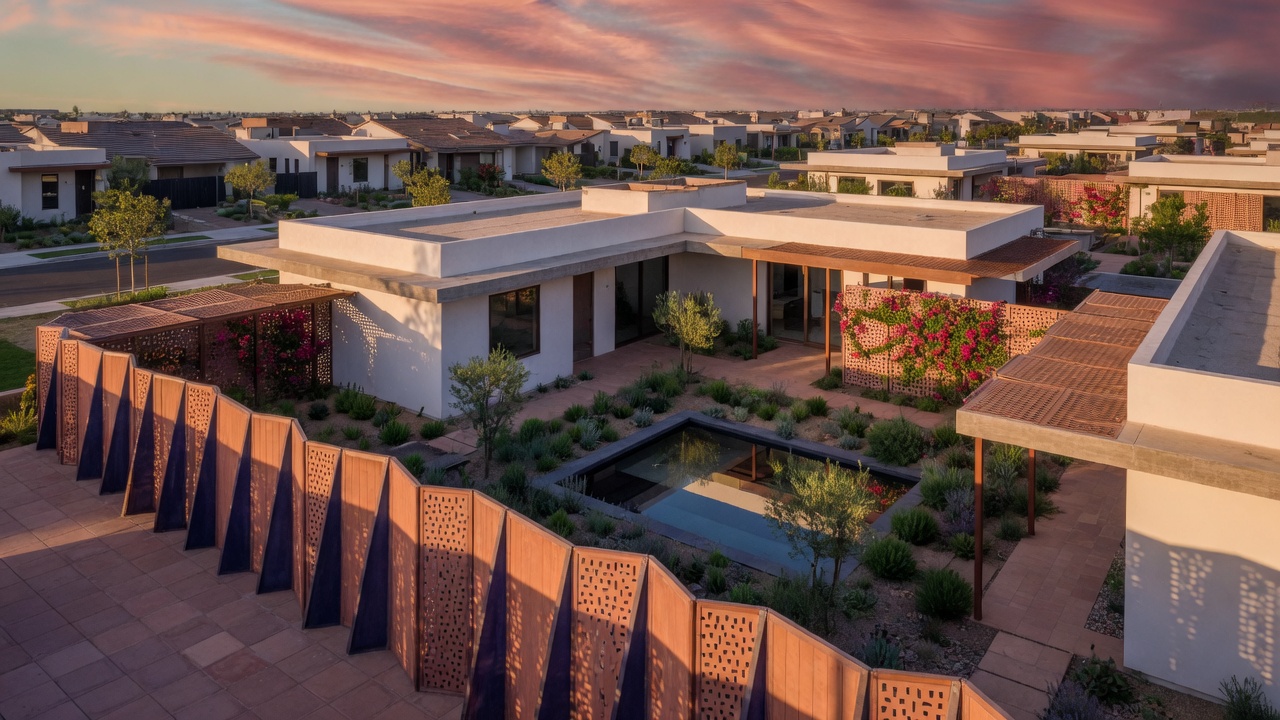
In the long afternoons of a warming suburb, heat pools along wide streets and low roofs until the air itself feels thick. A single enclosed courtyard interrupts that pattern. Its walls throw steady shadows across packed earth or pale stone, while a narrow opening to the sky admits only a measured slice of light. The temperature inside often drops several degrees below the surrounding pavement, not through machinery but through the simple containment of air and the slow release of moisture from leaves and shallow basins.
Materials matter here. Thick masonry or rammed-earth walls absorb daytime heat and give it back after dark, when residents step outside again. Light-colored paving reflects what sun does reach the floor, and climbing vines on the inner faces add another layer of insulation without demanding extra land. In a cluster of such homes outside Tucson, these surfaces stay cool enough under bare feet well past noon; the same walls also block the low-angle western glare that otherwise turns west-facing rooms into ovens.
Ventilation works through careful gaps rather than open plans. A high clerestory on the leeward side draws rising warm air outward, while a lower slot on the shaded side pulls cooler courtyard air inward. The movement stays gentle, carrying the scent of damp soil and herbs without the noise of fans. Residents describe evenings when the courtyard feels like a separate climate, its edges marked only by the change in temperature against the skin.
Privacy and outdoor time increase together. Children play within sight of the kitchen yet shielded from street traffic; older residents sit under a single tree whose canopy never needs to fight the larger suburban canopy of power lines. Because each courtyard belongs to one household, maintenance stays personal—sweeping leaves, adjusting a canvas shade—rather than depending on distant management.
Over repeated seasons the pattern begins to influence the larger block. Shared walls between neighboring courtyards reduce exposed surface area, and the vegetation inside each one softens runoff during sudden rains. The houses themselves sit closer together than conventional lots allow, yet each retains a private sky. What emerges is not a return to historic forms but an adjustment of suburban space to the heat already arriving.