In the kitchen of a 1920s bungalow, the sink sits a few inches lower than modern standards, its porcelain basin worn smooth along the front edge where countless hands have leaned for support. That slight adjustment, unplanned at the time, now lets an older resident rest their weight without strain while rinsing a plate. Such details matter more than any added device because they belong to the room already.
Wider doorways, at least thirty-six inches across, allow a walker or a helping arm to pass without turning sideways. The change registers first in the shoulder rather than the eye; the body moves forward instead of twisting. Hallways gain the same generosity, their walls set far enough apart that morning light from a side window can travel the full length without casting deep pockets of shadow where a foot might hesitate.
Floor materials shift underfoot with intention. Cork or matte-finished oak gives slightly under pressure and stays warmer than tile, reducing the chill that travels up through thin slippers on winter mornings. Where transitions occur between rooms, the threshold is planed flush or given only the gentlest bevel so that a cane tip does not catch. Grab bars appear not as clinical additions but as extensions of existing woodwork, their grain running continuous with the stair rail.
In the bathroom, the shower replaces the tub entirely, its curb reduced to a single tile height. A built-in bench of the same stone as the floor offers a place to sit while water runs, and the handheld showerhead hangs low enough to reach without stretching. Lighting here stays even and indirect, mounted on side walls rather than ceilings, so that no sharp glare strikes the eye when someone bends to retrieve a towel.
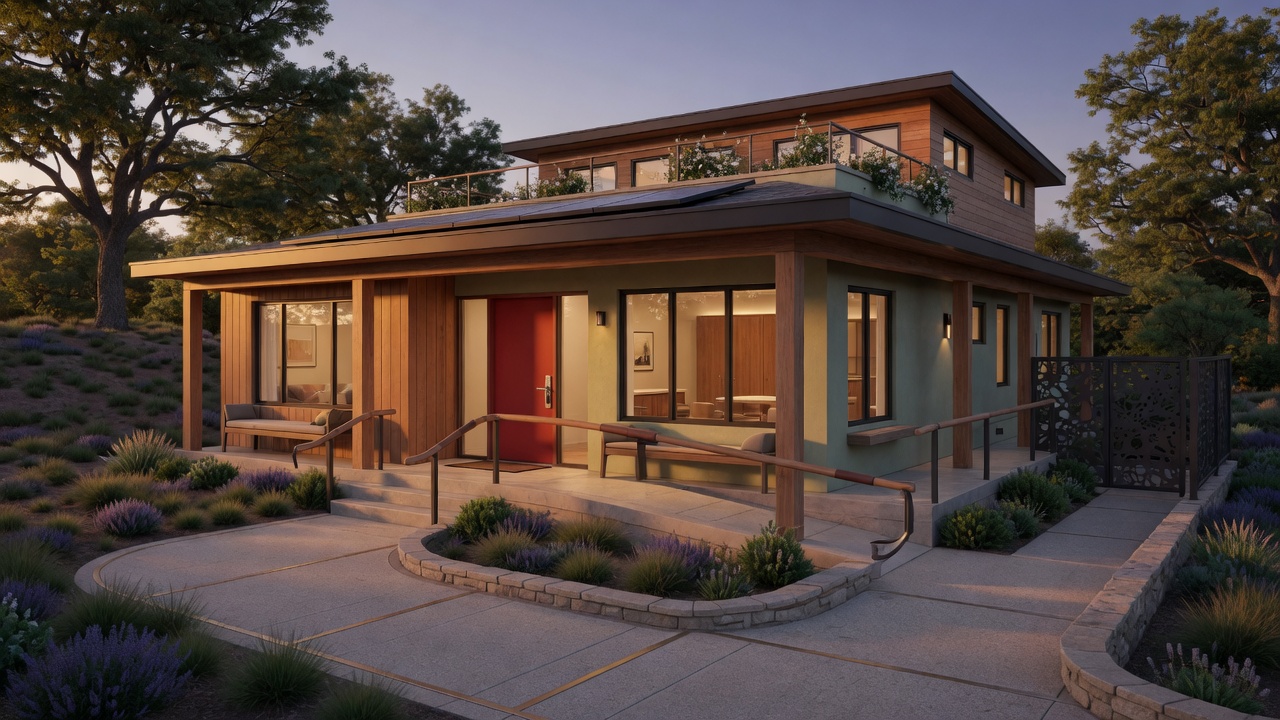
Outside, the entry stoop becomes a broad platform rather than a single high step, its surface textured just enough to hold traction after rain. A simple bench beside the door gives a moment’s rest before the key turns, turning arrival into a measured sequence instead of a hurried push.
These adjustments accumulate quietly. They do not announce themselves as special equipment but remain part of the house’s ordinary fabric, ready when the body asks less of itself.