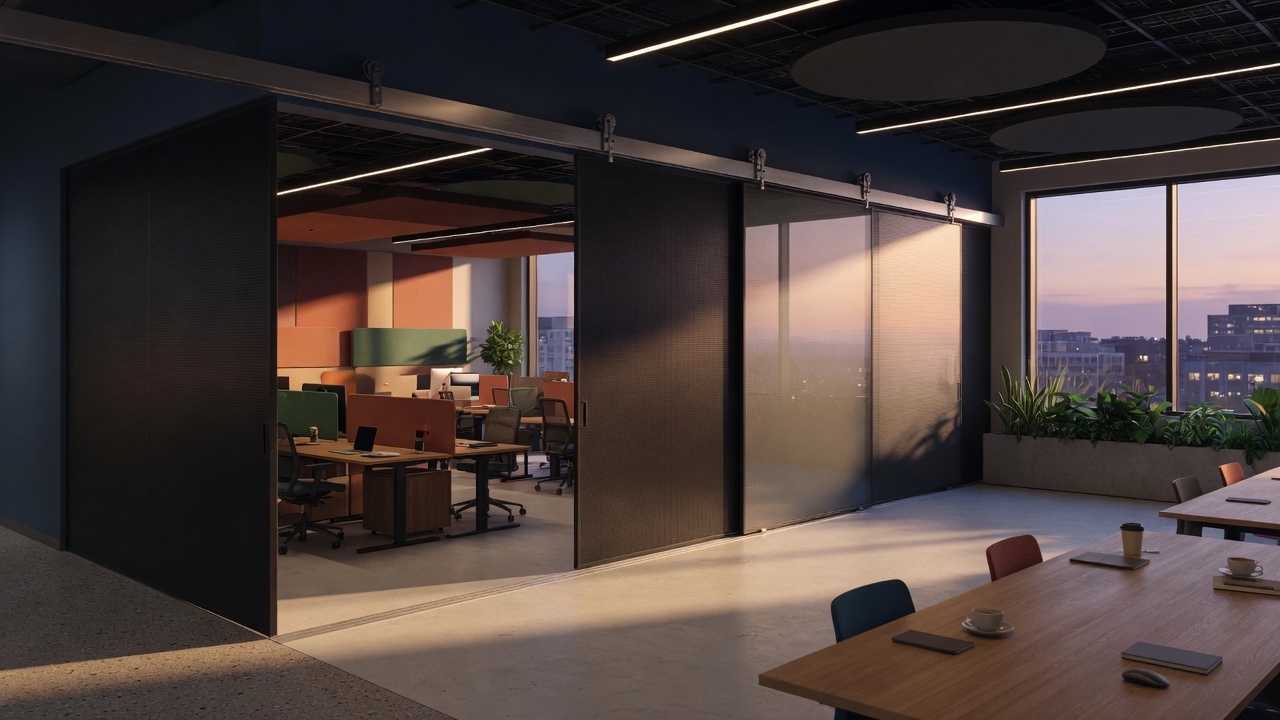
A row of oak partitions stands half-drawn in a converted Portland warehouse, their edges catching the low sun that slips between neighboring rooftops. On Tuesday the room holds twelve people; by Thursday only three remain, and the light now reaches the far plaster wall without interruption.
Designers have begun treating occupancy as a seasonal rhythm rather than a fixed load. In one recent project, a single corridor serves both deep-focus alcoves and larger tables. The alcoves are lined with thick wool felt that absorbs the sharper sounds of a nearly empty floor, while the tables sit beneath clerestory windows that flood the surface when fewer bodies block the light. Moving the partitions requires two people and ten minutes; the effort itself marks the shift in pace.
Materials matter because they register absence. Unfinished timber darkens where hands rest daily and stays pale where no one sits. The contrast becomes a quiet record of use. Acoustic plaster on the ceiling softens the hollow echo that appears when a team is scattered across home desks, yet it still allows the faint street traffic to enter on days when the room feels too still. These surfaces do not announce flexibility; they simply tolerate it.
The same approach appears in a smaller Copenhagen studio where sliding steel-framed glass doors divide a single volume into three. When closed, each section holds its own temperature and lamp warmth. When open, the shared air carries the scent of coffee across the whole floor. Staff choose the configuration each morning according to who has come in, not according to a booking system. The doors themselves, with their slight resistance and audible latch, make the decision physical rather than administrative.
Light and sound therefore become the real calendars. A desk placed beneath a north-facing window receives steady illumination regardless of attendance, while a south-facing table grows warm only when the shutters are adjusted for fewer occupants. The building records these adjustments in small ways: a chair left at an angle, a coat hook still swinging, a strip of sunlight that now crosses an unused keyboard. These traces accumulate without requiring new technology, only attention to how the room behaves when it is not full.