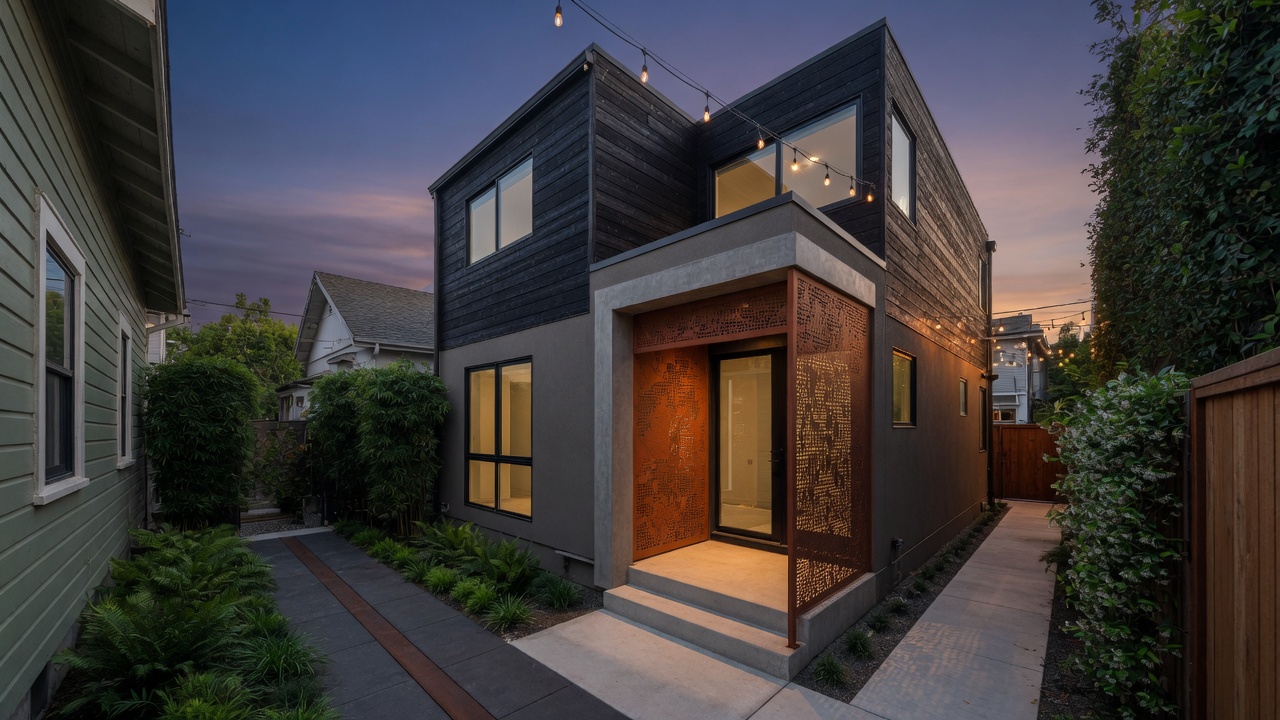
In older blocks where the main house still faces the street with its porch and brick steps, a narrower path now leads past the fence and between two fences to a second door. These accessory dwellings rarely announce themselves. They sit low, often clad in the same cedar or fiber cement as the original garage, their roofs pitched just enough to shed rain toward the alley.
Inside, the rooms feel compressed yet precise. A single skylight set above the bed pulls daylight down the whitewashed wall, while a clerestory band at the rear admits the changing color of the western sky without revealing the occupant to neighbors. Builders favor simple materials—plywood floors sealed with clear oil, exposed joists painted the same pale gray as the ceiling—so that the space registers as an extension of the garden rather than a separate structure. At dusk the interior glow becomes visible through the narrow side window, a quiet lantern that registers occupancy without floodlighting the yard.
Such additions alter the daily rhythms of the block more than their modest footprints suggest. A retired carpenter might occupy the rear dwelling while his daughter’s family uses the main house; the shared clothesline between the two buildings becomes a daily point of exchange. On weekends the alley receives more foot traffic as tenants wheel bicycles past the garbage bins. The sound of a screen door closing travels differently here than a front door does, softer and more contained, absorbed by the surrounding fences and mature trees.
In Seattle’s older single-family zones, where regulations now permit detached units up to 1,000 square feet, these structures often reuse the concrete pads of former garages. The new foundations sit a few inches higher to meet flood standards, creating a shallow step that marks the threshold between the old use and the new. Rainwater collected from the secondary roof feeds a small cistern tucked beside the fence; overflow drains to the same planting strip that once collected runoff from the main house alone. The result is not a dramatic increase in density but a finer grain of occupation, measured in footsteps along the side path and in the additional set of curtains visible after sunset.
The scale remains domestic. A visitor approaching from the alley encounters the same weathered gate hardware and the same scent of damp soil that marked the lot before the second dwelling appeared. Only the slight shift in roof pitch and the presence of a mailbox beside the second door signal that another household now shares the ground.