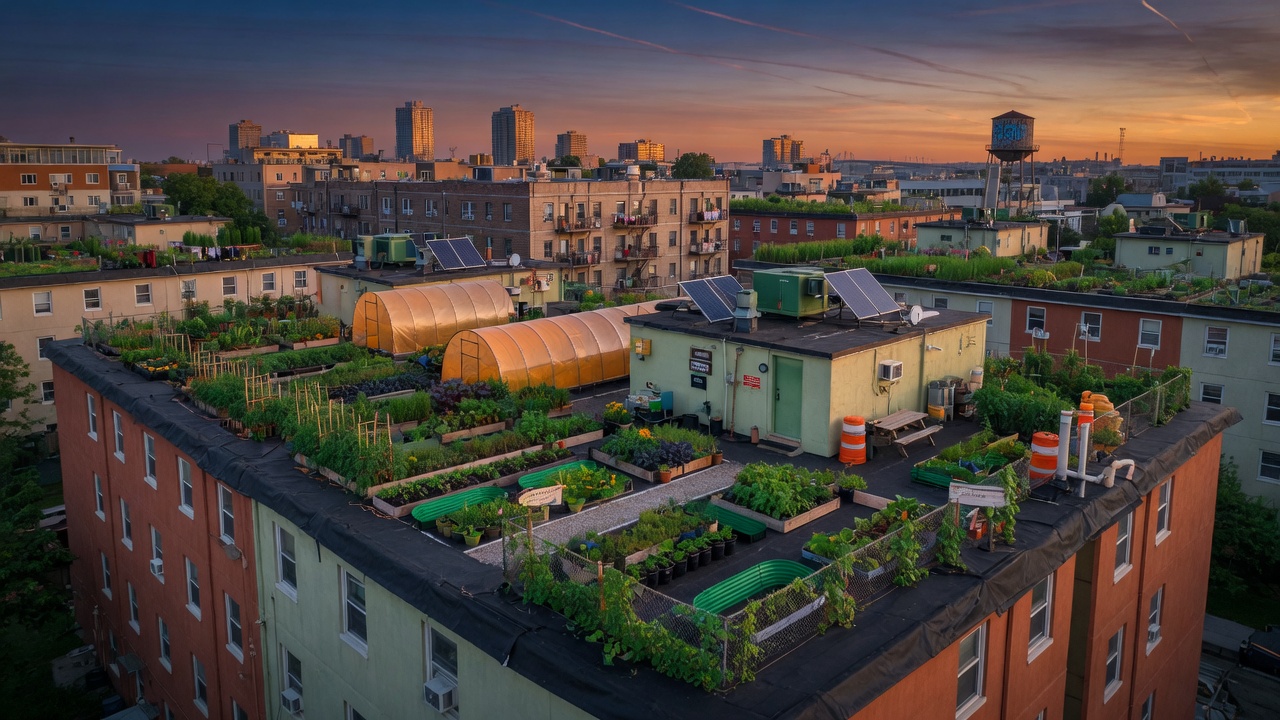
In certain older apartment blocks along the Gowanus Canal, the roof hatch now opens onto rows of galvanized troughs where basil and kale push against the wind. The surface was once a membrane of asphalt and gravel, hot underfoot by midday. Now the same plane holds eighteen inches of engineered soil, held back by cedar planks that darken with each season of rain.
Residents climb the stairs carrying pruning shears and empty yogurt containers for seedlings. The air changes as soon as the door swings open; the metallic smell of the canal mixes with the sharper scent of crushed tomato leaves. Light arrives differently here, unobstructed by neighboring cornices, yet the plants must contend with sudden gusts that sweep between the water tanks. Taller varieties are staked with scrap conduit left over from bathroom renovations below.
Structural adjustments remain modest. Extra joists were sistered into the existing framing where the troughs sit, and a thin layer of rigid insulation keeps the membrane from softening under the new weight. Drainage runs to the original scuppers, though the soil itself slows the flow during heavy storms, turning sudden sheets of water into a steadier drip that reaches the street below.
Children from three different apartments water the beds on rotation. They learn the difference between the brittle leaves of arugula that bolt in July and the slower growth of chard that survives the first cool nights of October. Produce is divided at the end of each week in the building’s small lobby, where the radiator still hisses. Surplus heads of lettuce sometimes travel down the block to a neighbor whose own roof faces north and stays in shade.
The arrangement is fragile. A single puncture in the liner beneath the soil can send water into the apartments two floors below, and every spring the group checks the seams with a garden hose. Yet the same roof that once reflected heat back into the top-floor units now holds moisture and casts a modest shadow across the tar. In late afternoon the leaves turn the color of the brick parapet behind them, and the city’s low roar seems to arrive from farther away.