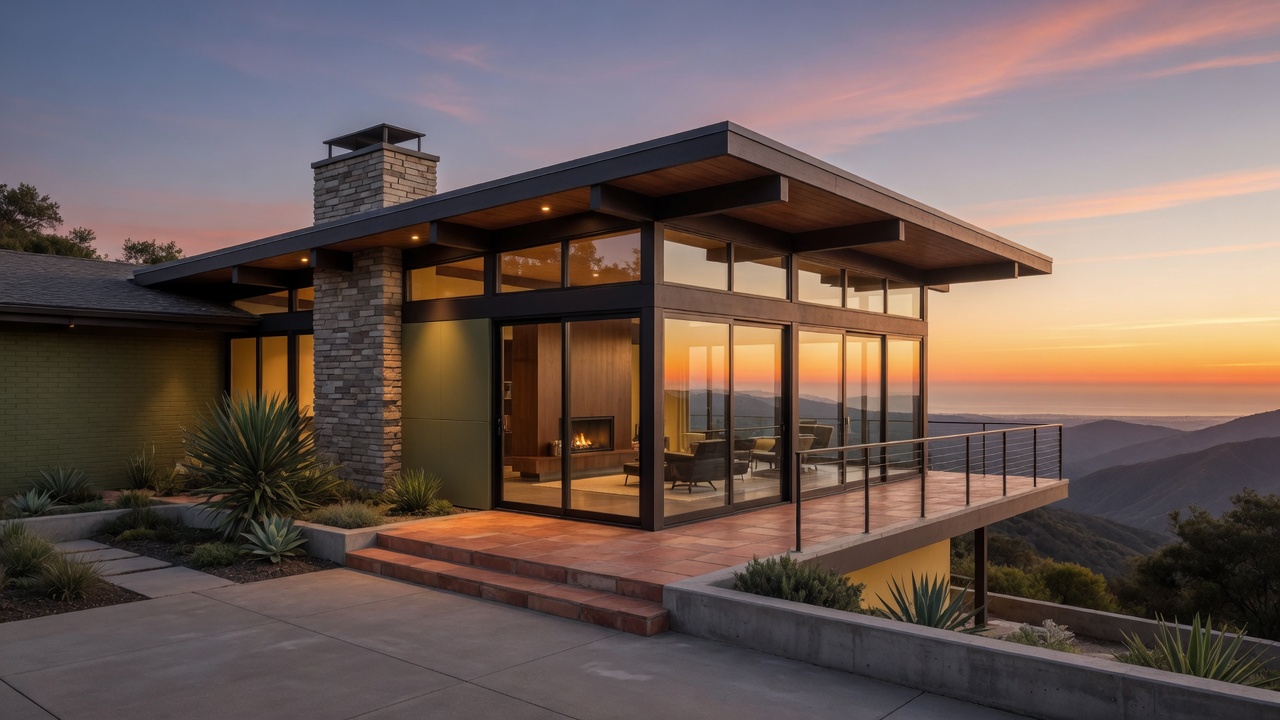
In the flat-roofed houses of mid-century California, where a single sheet of glass once met the ceiling without interruption, any retrofit must begin with the question of how much new material the original frame can accept before the sense of lightness disappears. Owners of these homes often start with the roof, sliding rigid insulation boards between the exposed beams rather than covering them. The result keeps the ceiling plane intact while reducing heat loss that once sent warm air straight through the thin decking.
Window replacement follows a similar restraint. Instead of swapping entire walls for thicker units with bulky frames, many choose low-profile aluminum inserts that sit in the original rebates. The new glass carries a low-emissivity coating thin enough to remain nearly invisible from inside, yet it changes the quality of light at certain angles, softening the harsh afternoon glare that once required heavy drapes. On cooler mornings the interior surfaces no longer radiate cold, so the same open living area feels usable without added furniture clusters to create small warm zones.
Exterior siding presents a different problem. Original redwood boards, now cupped and checked, are sometimes left in place and furred out with new vertical battens that create a rainscreen. The added depth is only an inch, yet it shifts the shadow line along the elevation just enough to register as an update rather than an erasure. Where walls meet the ground, builders insert a continuous thermal break at the slab edge, a detail invisible once the planting beds are restored against the new base.
Inside, the mechanical systems must serve the same volume of air without visible ducts crossing the open ceilings. Small high-velocity runs are tucked along the perimeter, their outlets aligned with existing beam spacing so the eye still travels uninterrupted from one end of the room to the glass beyond. The result is a house that holds temperature more steadily while preserving the original sensation of moving through a single, sunlit space rather than a series of conditioned rooms.