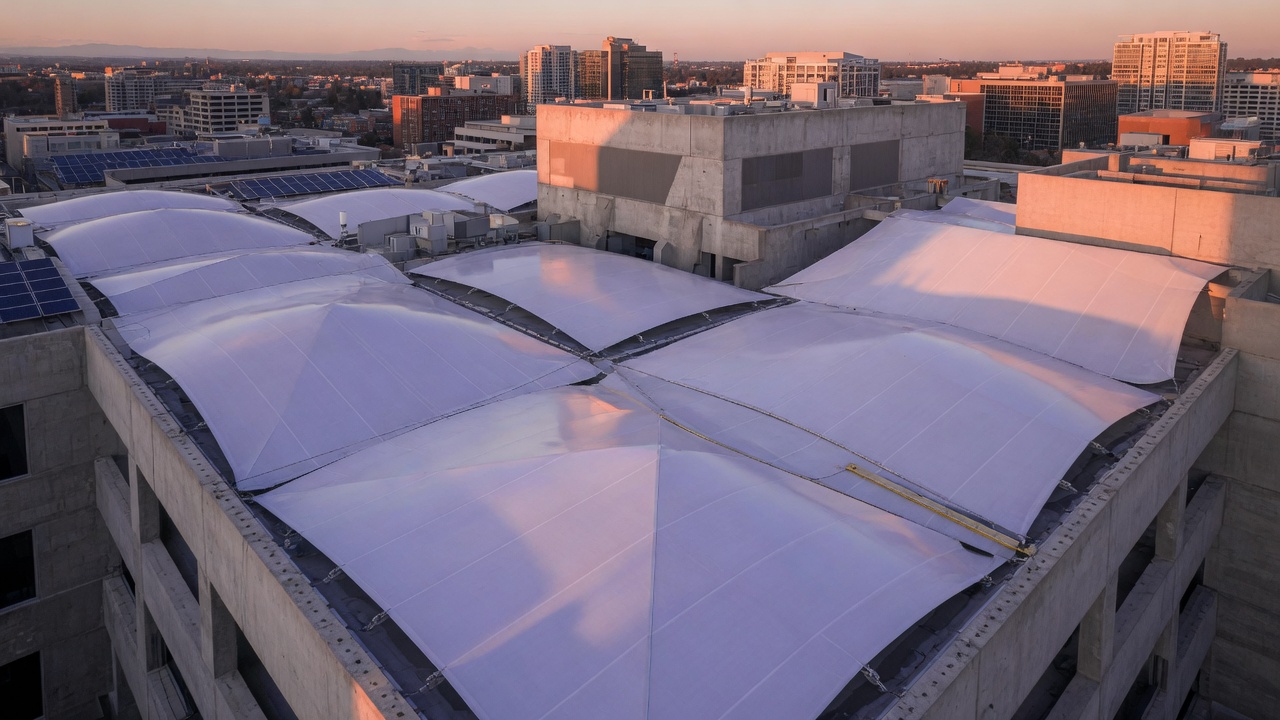
In many older city blocks the rooftops remain invisible from the street, yet they shape the temperature felt on sidewalks and inside apartments. Flat expanses of tar and dark membrane absorb sunlight through long afternoons, then release stored warmth well into the night. Where pale coatings or light gravel have replaced those surfaces, the air above them stays several degrees cooler by late afternoon, a change measured not only by instruments but by the reduced need to draw blinds against reflected glare from above.
The materials themselves vary in texture and longevity. Elastomeric coatings applied in thin layers create a continuous white skin that expands and contracts with the deck below. On other buildings, river-washed gravel sits several centimeters deep, its rounded stones scattering light in all directions while allowing drainage during sudden storms. Both approaches depend on high albedo, the simple capacity to return most incoming radiation rather than convert it into heat. When these surfaces age, the difference becomes visible: a once-bright membrane dulls to gray, and the cooling benefit declines until maintenance restores the reflectance.
Residents notice the change most directly in top-floor rooms. Ceilings that once radiated warmth after sunset now remain closer to the temperature of the interior air. Mechanical systems run shorter cycles, and the low hum of rooftop condensers quiets earlier in the evening. On the street, the effect registers more subtly. Trees planted near pale-roof buildings receive slightly less radiant heat from above, so their leaves hold moisture longer through dry spells. Pedestrians walking narrow corridors between buildings feel less heat descending from the cornice lines.
Maintenance routines adjust to the new surfaces. Workers scheduled for annual inspections must avoid dark-soled shoes that leave marks on light coatings, and property managers track reflectance readings rather than only checking for leaks. In neighborhoods where multiple buildings adopt the same treatment, the cumulative reduction in ambient temperature becomes measurable across several blocks, though individual structures still vary according to orientation, parapet height, and the presence of mechanical equipment that casts shadow.
The choice of color and finish also carries visual consequences for those who can see the roofs from taller buildings nearby. A uniform white field alters the relationship between sky and city plane, especially at dusk when the surface holds the last of the daylight longer than surrounding darker roofs. This quiet visual shift accompanies the thermal one without announcing itself to daily street life.