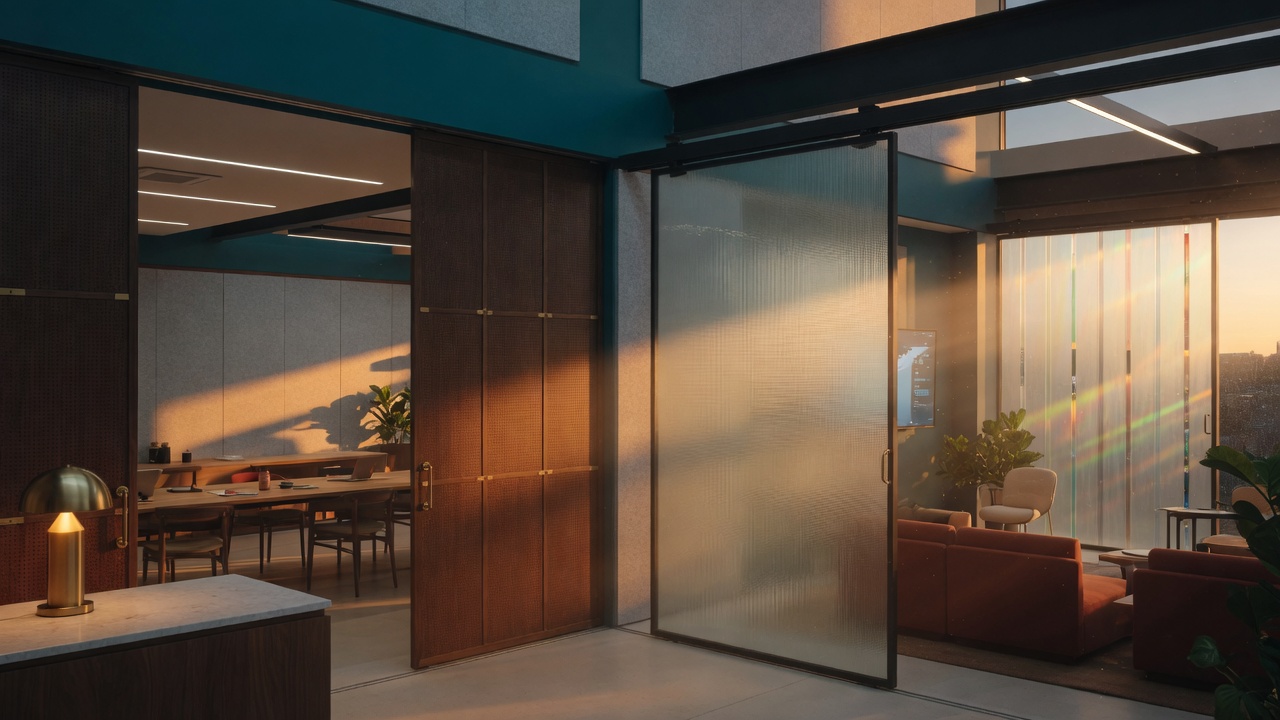
In a low brick building once used for garment work, the new office keeps its original south-facing windows but adds a system of timber screens on ceiling tracks. These screens can be pulled into place for small meetings or pushed back to open sightlines across the floor, letting daylight reach the inner tables without artificial help until late afternoon.
The material choice matters here. The screens are made from thin oak slats spaced just wide enough for air to pass, so the sound of voices stays contained while the sense of the larger room remains. Workers describe the difference in concentration when they can hear the distant keyboard taps yet still feel alone. The oak darkens slowly where hands rest most often, recording daily use in the same way the original floorboards have darkened along the paths between machines.
Further along the same floor, a row of small enclosed booths lines one wall. Each booth has a single frosted-glass panel set at eye level when seated and a solid back wall finished in rough plaster. The plaster holds a faint coolness even on warm days, offering a brief thermal contrast to the open work area. Inside, a narrow ledge holds a laptop and a single task lamp; the booth is sized for one person only, discouraging the drift toward informal calls that once spilled across shared tables.
On the floor above, a larger room serves the opposite need. Its ceiling is higher, and the original steel beams have been left exposed and painted a soft gray that reflects whatever light enters. Long tables here can be grouped or separated by low cabinets on casters, their tops covered in linoleum that muffles the sound of coffee cups and notebooks. Because the cabinets are shallow, two people can still converse across them without raising their voices.
These adjustments are not attempts to replicate domestic comfort or to enforce constant visibility. They acknowledge instead that the same person may require different degrees of enclosure within a single week. The sliding screens, the small booths, and the movable tables all depend on the building’s existing structure and its changing light rather than on added mechanical systems. When the afternoon sun moves across the oak slats, the pattern of shadow shifts with them, reminding occupants that the day itself continues outside the choice of where to sit.