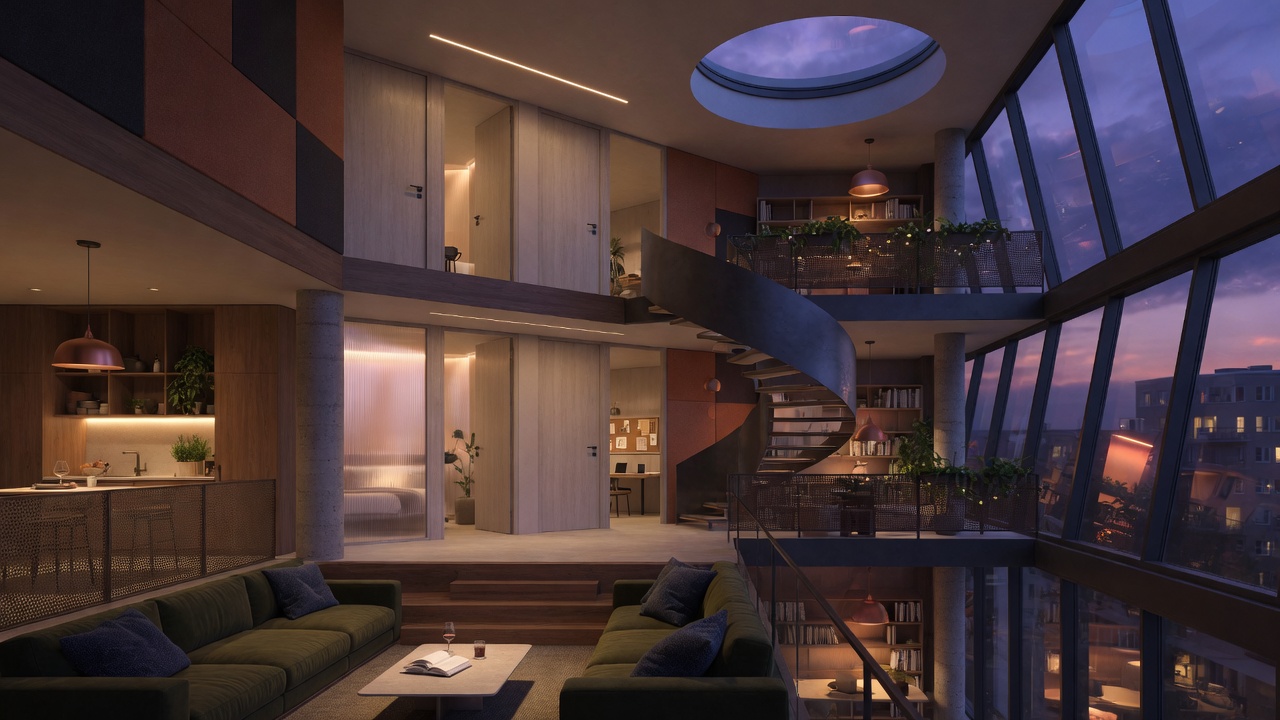
In a converted brick warehouse on the edge of a northern European port city, the morning light moves first across a narrow courtyard before reaching the private rooms. Residents wake to the low sound of water running in the shared kitchen two floors below, a reminder that solitude here is never absolute.
These co-living arrangements differ from earlier models of shared housing by treating privacy as a material condition rather than a simple matter of square meters. Thick timber screens slide along tracks to close off sleeping alcoves, yet their grain allows a soft diffusion of light from the central volume. The screens carry the marks of previous hands—small dents, faint oil stains—because the wood is left unfinished and allowed to age with use.
Sound travels differently than in conventional apartments. A conversation in the ground-floor workshop carries upward through a stairwell lined with perforated clay tiles, softening as it rises. Residents learn to recognize the particular rhythm of a neighbor’s footsteps on the steel treads without needing to see the person. The building itself becomes an instrument that registers presence without demanding interaction.
Communal spaces are sized for ordinary acts rather than programmed events. A long table in the kitchen accommodates six comfortably and twelve when needed; its surface of reclaimed oak shows the cuts from years of bread and vegetables. Above it, a clerestory window admits late afternoon sun that warms the table even on overcast days, drawing people without announcement. Smaller niches off the main corridor hold single chairs and reading lamps, offering retreat within the larger volume.
The arrangement asks residents to negotiate the boundary between their own routines and the building’s shared metabolism. Laundry facilities sit one level below the private rooms so that the hum of machines remains present but not intrusive. A roof terrace, planted with low herbs and grasses, collects rainwater in a simple zinc channel that feeds a small cistern visible from several windows. The water’s slow movement provides a quiet counterpoint to the city’s traffic below.
Such spaces do not eliminate loneliness, yet they embed daily life within a fabric of small, repeated contacts. The architecture records these contacts in worn thresholds, softened edges, and surfaces that continue to change with each season of occupation.