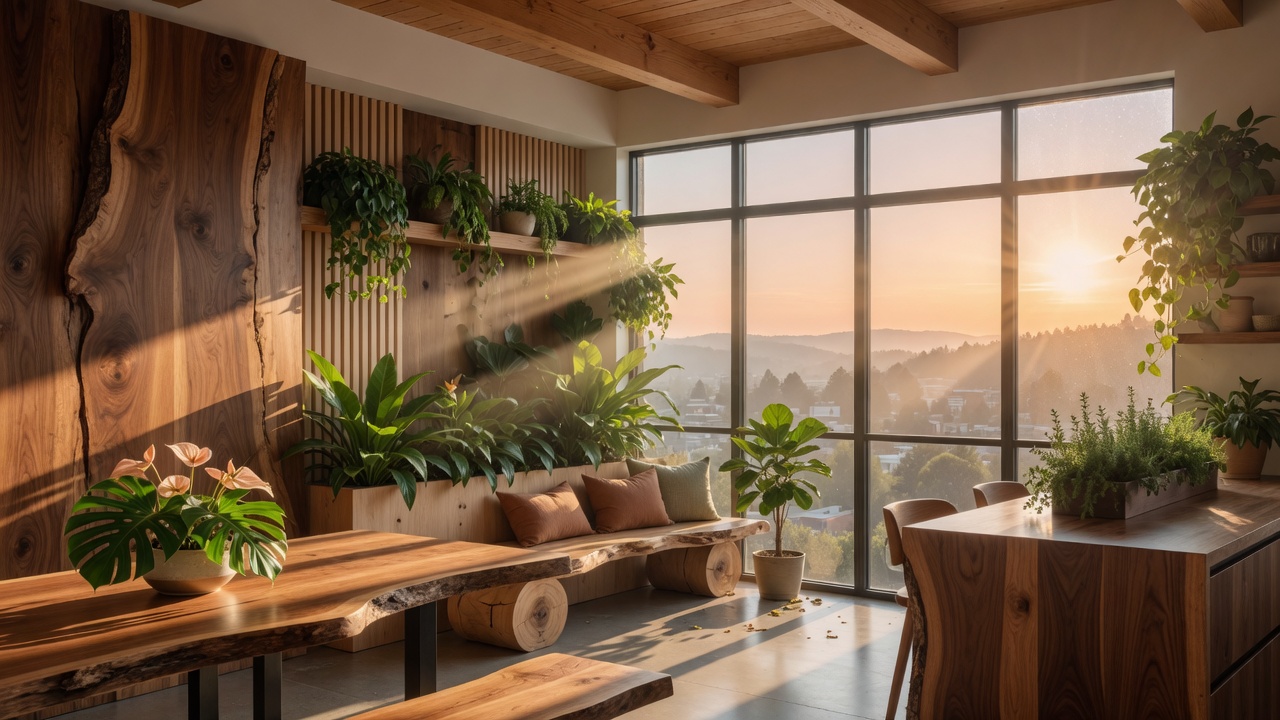
In a compact apartment where the kitchen opens directly into the living space, a long oak counter runs beneath a wide clerestory window. Each morning the sun strikes the timber first, warming its pale grain before the rest of the room wakes. The wood darkens slightly where hands have touched it over years, turning the surface into a quiet record of daily use rather than a finished surface.
Biophilic design in such rooms rarely announces itself with dramatic gestures. Instead it appears through repeated contact with materials that carry their own histories. A narrow strip of river stone set into the floor near the entry cools the feet on summer afternoons. Above it, a shallow shelf holds a line of small clay pots filled with thyme and oregano; their leaves release scent when brushed. The eye travels from stone to herb to the changing color of the oak without needing to cross a threshold.
Light itself becomes the most consistent natural element. In one project a narrow slot was cut high in a party wall, allowing a neighbor’s maple tree to cast moving shadows across white plaster for several hours each day. The pattern shifts with wind and season, offering a low-cost substitute for a larger view. Residents describe the same room as feeling larger on breezy days when the leaves flicker across the surface.
Vertical planting systems appear more often in these apartments than floor space would suggest. A simple grid of cedar battens holds felt pockets against one wall of a bedroom. The plants chosen—ferns, trailing pothos, a few small orchids—require little water and tolerate the low light that reaches the interior. Their presence alters acoustics as well; voices soften against the leaves, and the room holds a faint trace of moisture even in winter.
Timber continues to serve as the primary connection to the living world. Where possible, designers retain original joists and simply sand away layers of paint, leaving the marks of old nails visible. New additions use the same species, so the eye registers continuity rather than contrast. A bench made from a single reclaimed beam sits beneath the window; its surface still carries the faint pitch scent of the forest it once stood in.
These choices accumulate slowly. Over time the apartment begins to register small changes in weather and season through touch, scent, and shifting light rather than through any single installed feature.