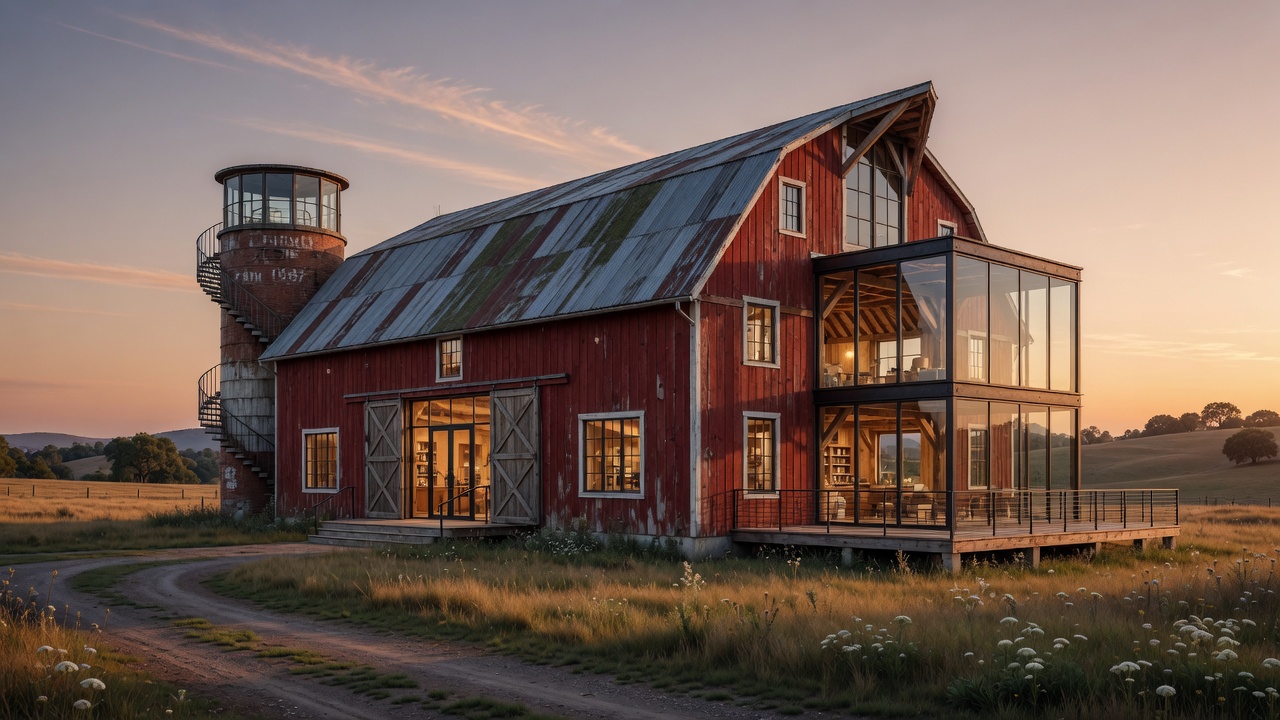
In the foothills of the Catskills, a red-painted barn from the 1880s still carries the faint pitch of its original roof tar. Its heavy posts stand slightly out of plumb, and the mortise-and-tenon joints have darkened to the color of saddle leather. Rather than replace the frame, the owners threaded new steel plates through the joints and left the wood exposed inside the finished rooms.
The decision changes how the house is occupied. Morning light reaches the kitchen through gaps that once ventilated hay. At midday the same light falls across a concrete floor poured directly on the old dirt, its surface marked with the grain of the boards that formed it. The original siding remains on the north wall; its boards have cupped just enough to let thin lines of daylight enter the bedroom like ruled lines on paper.
Such projects succeed when the new work accepts the barn’s existing rhythm instead of fighting it. Where a loft once stored grain, a narrow stair now rises between two original posts, its treads cut from the same species of oak. The stair rail is simply a continuation of an old tie beam, planed smooth on one face and left rough on the other. The hand finds both textures without explanation.
Further south, in Pennsylvania, a stone bank barn was converted by cutting a single long slot in the uphill wall and inserting a continuous clerestory. Rain now strikes the new glass at the same angle it once struck the fieldstone. Inside, the temperature stays even because the thick walls and the air volume above the living space act together, the way they did when the space held livestock. No added insulation was needed beyond what the stone already provided.
These conversions rarely announce themselves from the road. The silhouette stays low and agricultural. Only the change in window proportion or the presence of a single flush door reveals that the building has been asked to shelter people instead of equipment. The structure continues to read as a place shaped by weather and use, now shaped a little further by the habits of those who live within its original envelope.