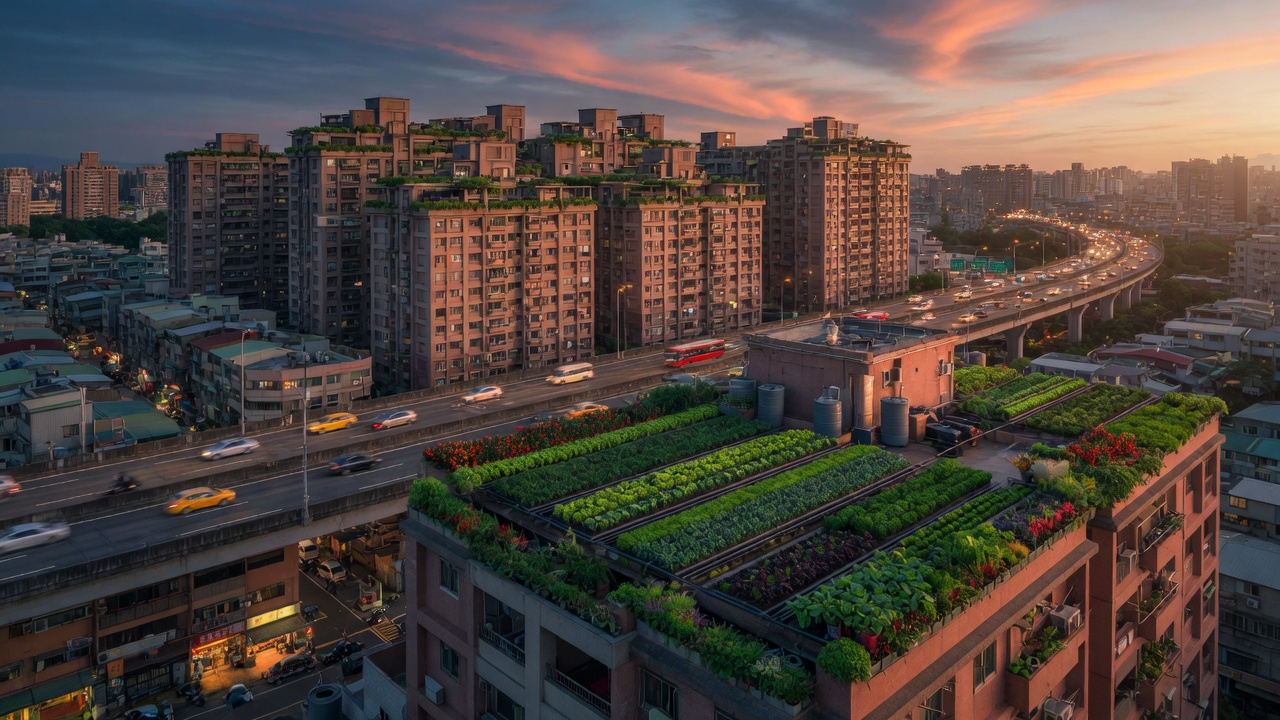
In certain residential towers the roof slab no longer ends in a plain membrane and a line of mechanical units. Instead it carries shallow beds of lightweight soil where residents plant tomatoes, herbs, and leafy greens that ripen in the unobstructed sun.
The experience begins with the walk up the final flight of stairs. Light changes; the air moves more freely. One steps onto a surface that still feels like a roof yet smells of damp earth and crushed basil. Wind arrives in sudden gusts that bend the taller stalks, so the beds sit low behind parapets or windbreaks of woven reed. Water is drawn from cisterns that collect roof runoff, then metered through drip lines that keep the medium moist without adding excess weight.
Structurally the change is modest but deliberate. Engineers thicken the slab at the perimeter and add a layer of rigid insulation beneath the drainage mat. The growing medium itself is a blend of expanded clay, compost, and crushed brick, light enough that the total load stays within the original design limits. In one twenty-two-story building in Brooklyn the architects left the central roof open for gatherings while the outer ring holds the beds, turning circulation into a slow promenade between rows of peppers and chard.
Residents speak of small daily rituals: checking soil temperature with a fingertip before breakfast, harvesting mint on the way down to the street. The produce travels only a few floors, yet the distance feels larger because it crosses from sky to kitchen without passing through a truck or warehouse. In winter the beds are covered with heavy fabric; in summer the same fabric becomes shade cloth. The plants register the seasons more clearly than the apartments below, where light and temperature are controlled by switches.
Drainage remains the quiet discipline of the whole arrangement. Excess water is led to scuppers that empty into visible copper channels, their patina deepening each year. The sound of that water on a rainy afternoon becomes part of the roof’s ordinary life, no longer an event to be hidden but a measured release that keeps both plants and structure intact.