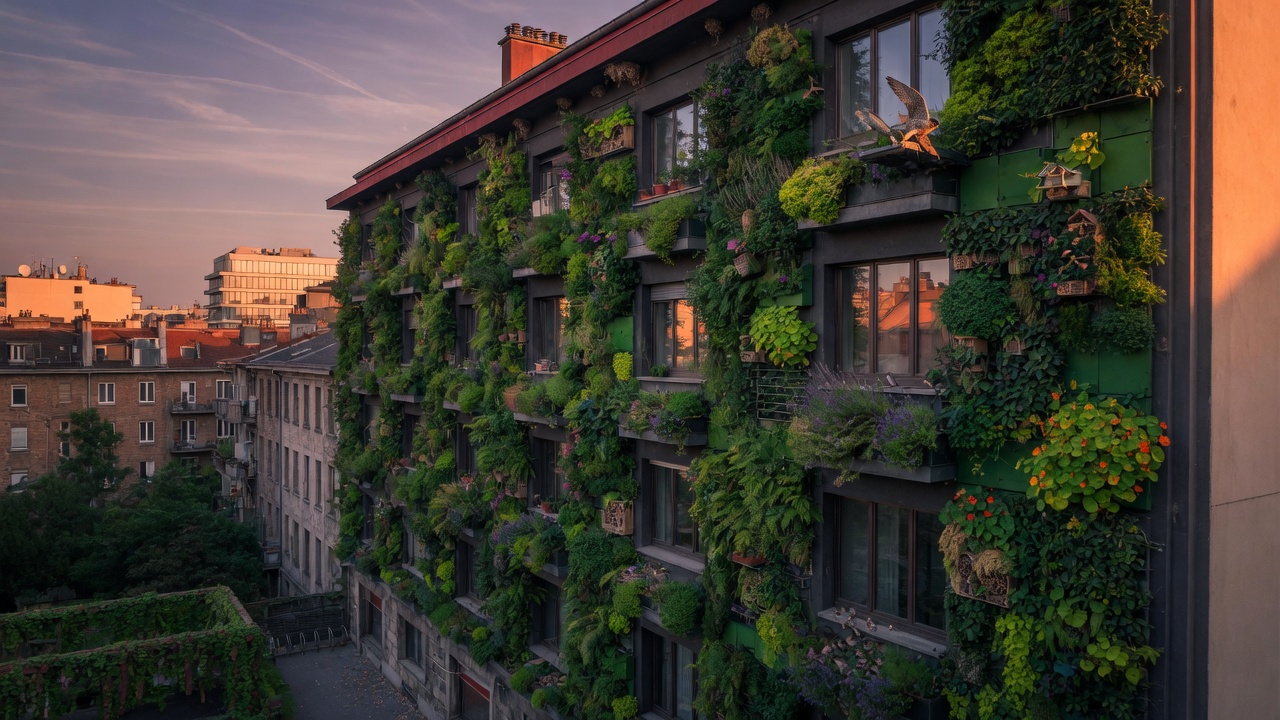
On certain streets in Paris, the eye meets not stone or render but a dense weave of ferns, grasses, and trailing vines that shift with each breeze. These living facades, often installed as hydroponic panels or modular soil trays fixed to existing masonry, turn otherwise inert surfaces into layered habitats. Over time the plants trap dust, moderate surface temperatures, and offer perches and food sources that local insects and small birds quickly claim.
The effect reaches beyond visual relief. In summer the foliage releases moisture that softens the dry heat reflected from adjacent pavement. After rain the scent of damp soil drifts downward to the sidewalk. Passersby notice the faint rustle of leaves where once only traffic noise prevailed. The same walls also register seasonal change: summer fullness gives way to autumn seed heads that feed finches through winter.
Architects working with botanists have refined plant palettes for different exposures and wind loads. On the north face of a renovated warehouse in Lyon, shade-tolerant mosses and ferns form a velvet mat that requires little irrigation once established. South-facing panels in Madrid hold drought-tolerant sedums and aromatic herbs whose flowers draw pollinators even at upper stories. Maintenance crews inspect irrigation lines and prune vigorous growth twice a year, treating the facade as a cultivated garden rather than a static finish.
Such systems also alter the building’s thermal behavior. The plant layer and its trapped air reduce heat gain in warm months and provide a modest insulating buffer in winter. Measurements taken on completed projects show surface temperatures several degrees lower than neighboring bare walls during peak sun. Over successive seasons the accumulating organic matter and root networks begin to support spiders, beetles, and nesting birds that would otherwise find little purchase on glass or concrete.
Residents on upper floors report hearing more birdsong at dawn. Ground-level shopkeepers note that the greenery softens the visual weight of the street wall and draws people to linger. These incremental shifts accumulate across a single block or an entire district when multiple buildings adopt similar treatments. The facades become part of an extended urban canopy, continuous with street trees and pocket parks yet occupying the vertical plane that conventional landscaping leaves unused.