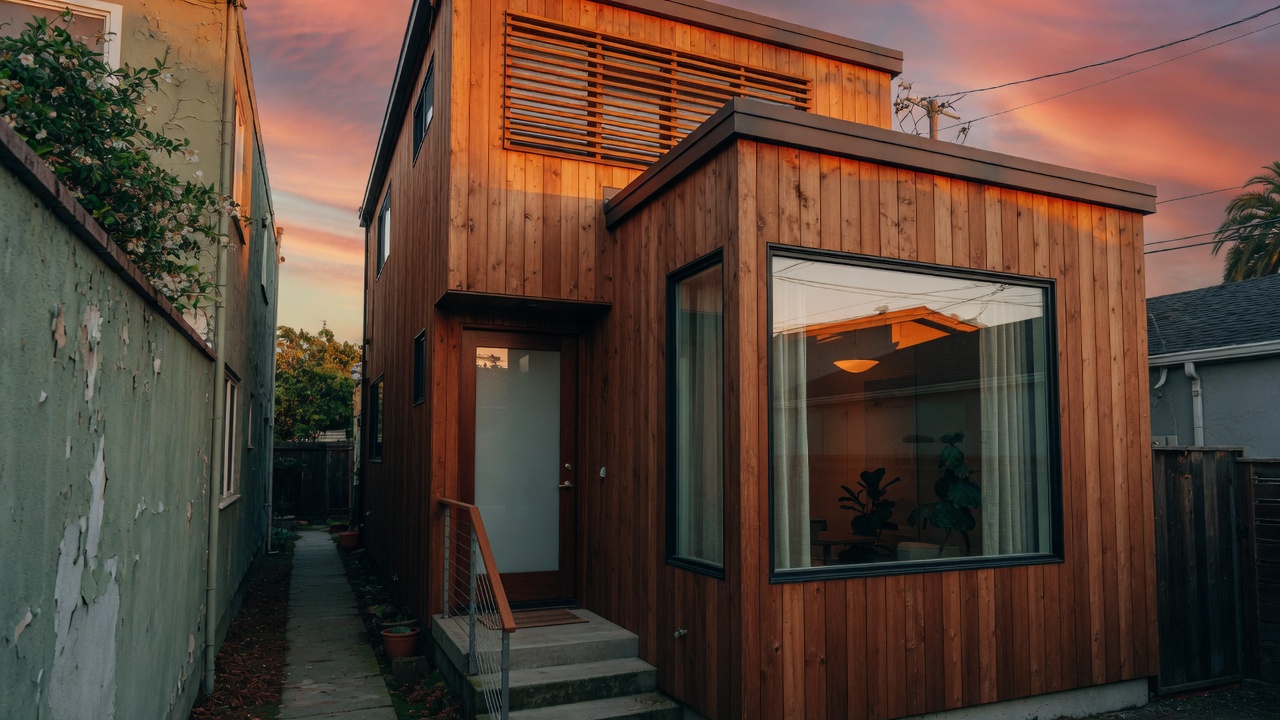
A narrow gravel path runs between two wooden fences in a Portland neighborhood, leading past a hydrangea to a door no wider than a person’s shoulders. Inside, Douglas fir boards line the walls and a single clerestory window admits the low winter sun across a compact kitchen counter. The room holds a bed, a desk, and a small bath; its scale feels deliberate rather than diminished.
These backyard structures, often no larger than a two-car garage, sit lightly on existing lots. Builders favor simple frames of locally milled lumber and metal roofs that shed rain with a soft percussion rather than the heavier sound of asphalt shingles. Insulation tucked between studs keeps the interior temperate without demanding heavy mechanical systems, while operable windows pull cross breezes from the garden toward the alley.
Residents describe the experience of moving between the main house and the new unit as a short walk that resets the day. Morning light arrives differently here, filtered through neighboring trees rather than the wide front windows that face traffic. At dusk the small structure glows from within, its modest footprint leaving most of the yard in shadow for vegetables or children’s play.
In older districts where zoning once restricted additional dwellings, these additions restore a pattern once common before single-use codes took hold. A retired carpenter might occupy one, renting the main house to a young family, or a grown child might return without crowding the original rooms. The arrangement preserves the street’s established rhythm while inserting new thresholds at the rear.
Materials remain modest by necessity. Plywood cabinetry, salvaged doors, and concrete floors that retain warmth from daytime sun keep costs contained and maintenance straightforward. The resulting spaces carry the grain and scent of wood rather than the uniform surfaces of larger developments.
When rain begins, water courses along the metal eaves and into a narrow channel that feeds a small rain garden beside the path. The unit remains dry inside, its single volume registering each shift in weather through sound and light.