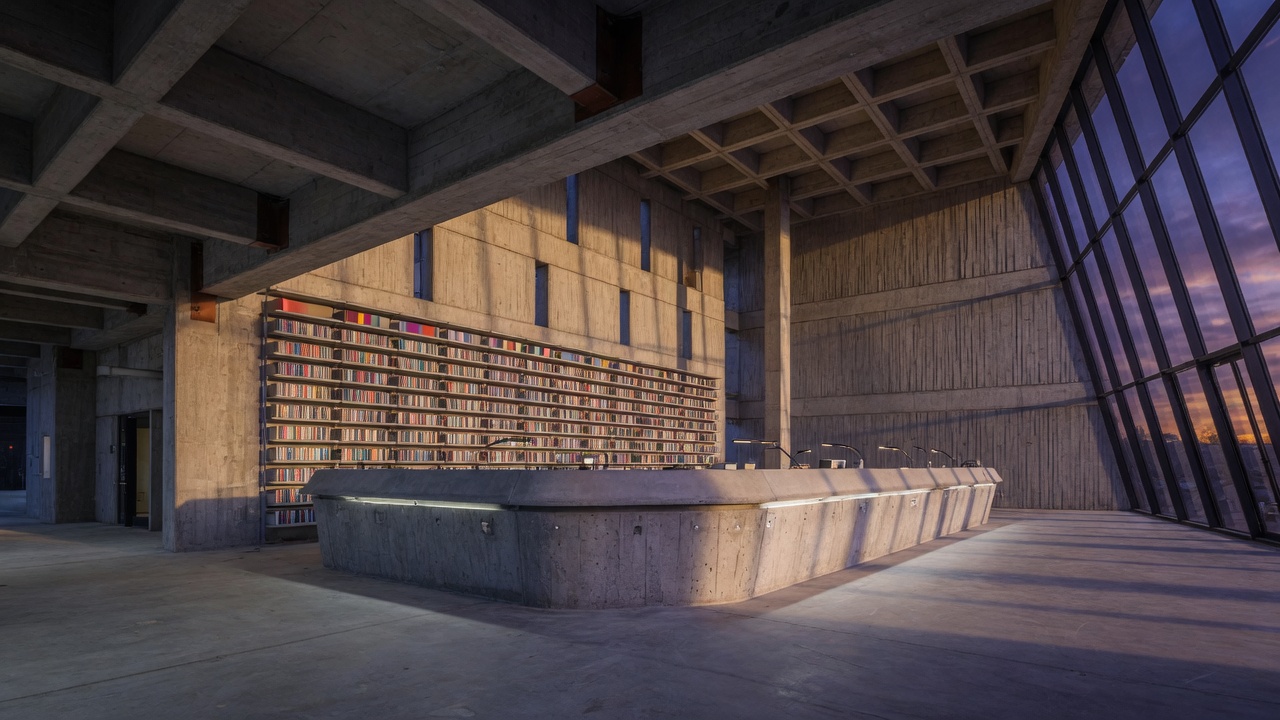
A reader steps inside and feels the temperature drop a degree or two where the wall meets the floor. The concrete carries the imprint of its timber forms, a fine vertical grain that catches dust and afternoon light in equal measure. This is not the polished surface of an earlier brutalist library but something slower, built in the last five years and already showing small signs of use.
The choice of material is deliberate. In an age when most public buildings seek to disappear behind glass or render, these new libraries insist on weight. The concrete does not pretend to be anything else. It holds the books, supports the reading tables, and absorbs the low sound of pages turning. Narrow slots cut high in the walls allow shafts of light to travel down the stacks without the need for clerestory glass that would require constant maintenance. The light moves across the rough surface and changes the apparent depth of the wall throughout the day.
One recent example stands in a former industrial district now given over to housing and small workshops. The building uses the same board-marked concrete for both exterior and interior walls, so that the distinction between street and reading room is softened. Benches cast in the same pour run along the perimeter, their edges left sharp enough to register the pressure of a hand or an elbow. The architects left the form-tie holes open rather than plugging them, creating a quiet rhythm of small shadows that echo the spacing of the shelves.
Another library, this one set against a river embankment, exposes its structural frame on the upper floors while enclosing the ground level in thicker, more protective walls. The contrast gives the reading areas a sense of enclosure without shutting out the movement of water and sky. Visitors notice how the concrete takes on the coolness of the river air and holds it into the evening. The material performs the simple task of making the room feel occupied even when few people are present.
These projects do not claim to solve larger civic problems through architecture alone. They simply offer rooms where the physical qualities of the building remain legible. The concrete records its own making, and the library records the presence of those who use it. The two records sit side by side without needing further explanation.