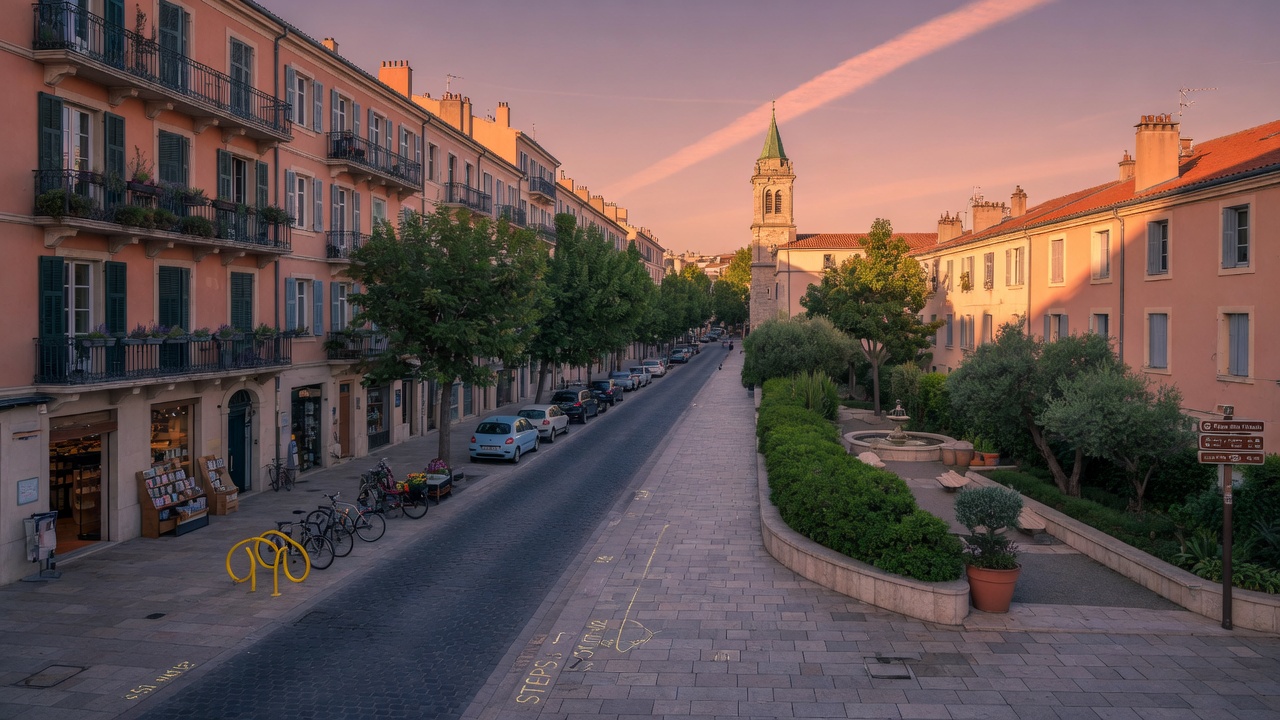
In the narrow lanes of Barcelona’s Eixample, the morning light still slips between plane trees to touch the same shopfronts that residents pass on their way to bread or school. The 15-minute city revives an older logic of proximity, where daily life unfolds within the distance a person covers at an ordinary pace rather than the reach of an engine.
That pace registers in the body. A child’s shoes scuff against slightly uneven paving; a breeze carries the scent of roasting coffee from an open door two blocks away. The street itself becomes the measure. When blocks are short and corners frequent, the eye meets new thresholds every few minutes—awnings, stoops, small gardens tucked behind low walls. These repeated encounters replace the long, undifferentiated sightlines that cars demand.
Barcelona’s superilles demonstrate the shift in concrete terms. By limiting through-traffic to the perimeter of each nine-block district, interior streets have been reclaimed for benches, play, and market stalls. Residents report fewer car trips for groceries or after-school pickup because the same errands now fit inside a single loop on foot. The change is not abstract policy but the altered soundscape: fewer engines, more voices, the occasional bicycle bell.
Similar adjustments appear in older fabric that never needed reinvention. Kyoto’s machiya rows once placed workshops, dwellings, and shrines within the same continuous street wall; a weaver could step outside for thread and return before the kettle cooled. Modern zoning often severs these overlaps, yet the surviving examples show how mixed ground-floor uses keep sidewalks occupied throughout the day rather than only at rush hours.
Light and material also participate. Narrower carriageways allow buildings to cast partial shade across the pavement, softening summer heat. Brick or stone underfoot retains warmth into the evening, inviting later walks that asphalt tends to discourage. Where trees are planted close to buildings rather than in distant medians, their canopy meets the upper stories and creates a layered ceiling that changes with the seasons.
The result is not a single model but a recurring pattern: daily destinations clustered so that walking becomes the default rather than the exception. In such places the city reveals itself incrementally, block by block, rather than as a distant destination reached only by car.