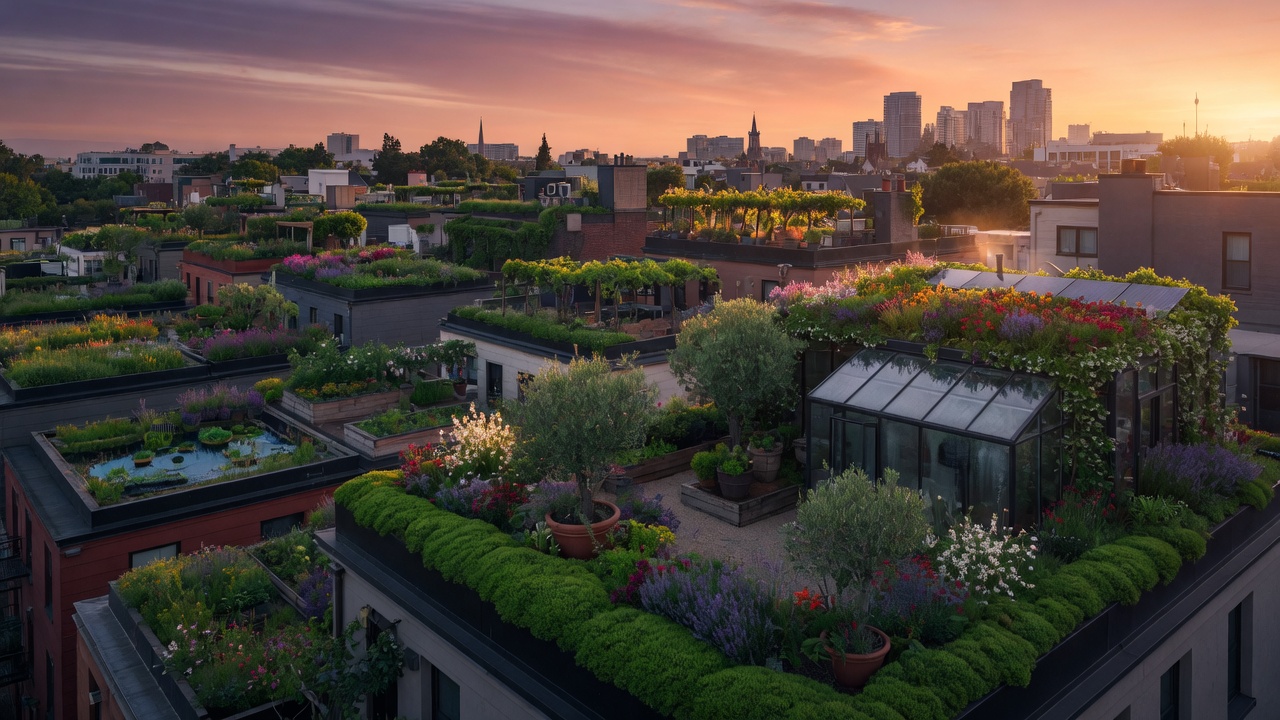
In certain blocks the flat plane of roof no longer ends the building but begins another surface, one that moves with wind and rain and returns a different color with each season.
The change registers first from the street. Where a cornice once cut a hard line, leaves now spill over the edge or grasses catch late light, breaking the uniform gray with a softer, shifting boundary. Walkers notice the difference most at dusk, when the upper stories hold a faint green glow instead of reflecting only the last sky.
Engineers have learned to keep these layers light. On a converted warehouse in Brooklyn, thin trays of engineered soil sit above the original membrane, drained by narrow channels that feed into the building’s existing downspouts. The plants—switchgrass, sedum, and small oaks—root in less than six inches of medium yet survive the freeze-thaw cycles of the harbor. From below, the effect is modest; from an adjacent tower the roof reads as a low meadow floating above the brick facades.
Farther south, in a São Paulo residential tower completed a decade ago, the roof was designed from the start as a stepped garden rather than a single plane. Concrete planters of varying depths allow both shallow herbs and deeper-rooted citrus. Residents on the floors beneath report that the air entering their windows carries the scent of damp earth after storms, and the constant drone of traffic arrives filtered through foliage. The garden also collects rainwater that the building reuses for irrigation and cleaning, though the residents speak more often of the birds that now nest there than of any measured savings.
These surfaces alter movement as well as appearance. Maintenance paths wind between planting beds, turning what was once a restricted mechanical zone into a place where people linger. On clear evenings the temperature on the roof drops several degrees below the street, and the sound of leaves replaces the echo of tires on pavement. The skyline therefore changes not only in outline but in the way it is occupied: an intermediate realm between the enclosed rooms below and the open sky above.
The same principle appears in simpler form on older masonry buildings retrofitted with modular trays. The trays can be lifted and rearranged as leaks are repaired or as tastes change, so the roof remains adaptable without requiring a full reconstruction. What matters is that the surface is no longer treated as the end of the building but as another habitable layer, one that registers light, weather, and growth against the fixed geometry of the city.