On a still morning after rain, the river along an old mill district does not look like an enemy. It looks like glass laid between brick warehouses, a sheet of pewter that holds the sky. Then the water climbs a few inches against a stone abutment, and you remember that the city was built on a floodplain because the floodplain was useful: barges, mills, cheap land, a view.
Flood-resilient houses along urban rivers are not bunkers. They are instruments for living with a body of water that will not stay in its channel. In Maasbommel in the Netherlands, amphibious dwellings rest on hollow concrete pontoons, moored to steel piles. When the Maas swells, the houses rise a meter or two and settle again, kitchens still level, gardens briefly islands. The motion is slow enough that a teacup does not slide. You hear only a faint scrape of guide posts and the new hush of water under the floor.
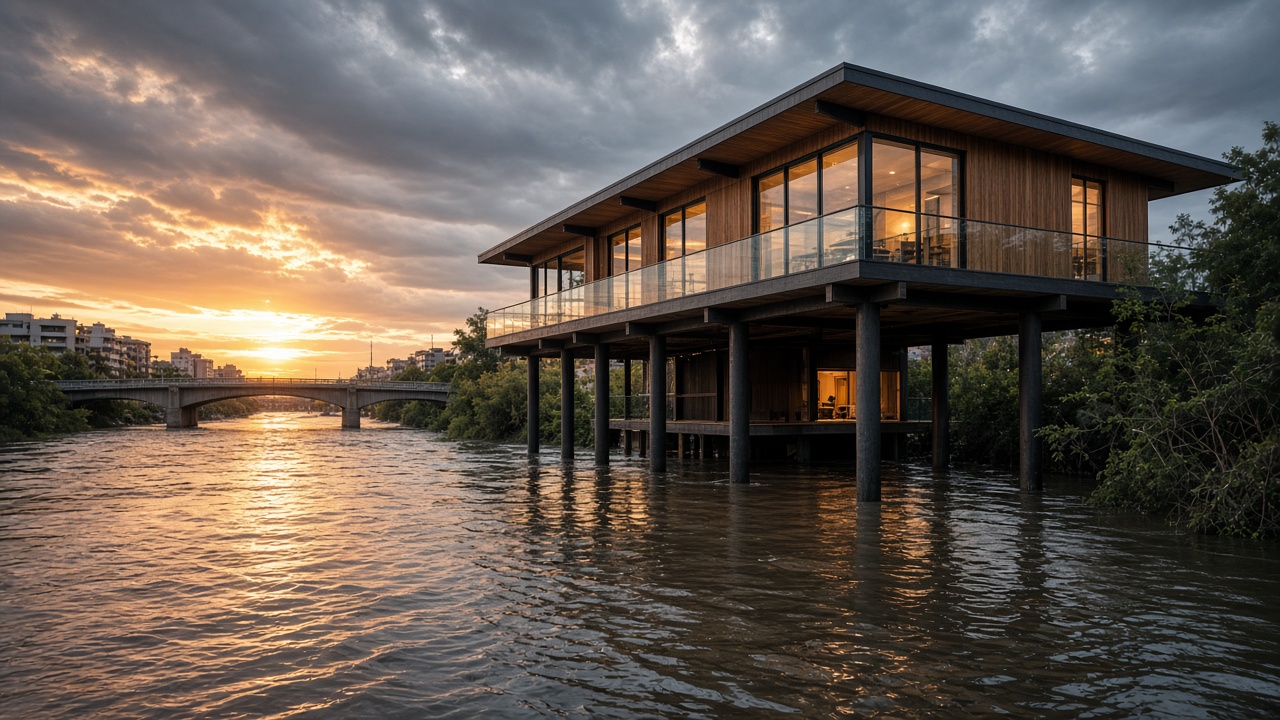
Elsewhere the strategy is height rather than float. In parts of New Orleans after Katrina, shotgun houses were jacked onto taller piers, their porches now looking down on streets that still pond after a hard storm. The air under the floorboards smells of damp timber and river silt; light stripes the dirt. In Tokyo’s Sumida ward, some riverside apartments sit above parking that is designed to flood first, a sacrificial plinth of columns and open bays. The living rooms stay dry while the river uses the ground floor as a temporary canal.
Materials matter because water is patient. Untreated pine blackens and fails. Galvanized steel, marine-grade plywood, lime plasters that breathe, and concrete mixed for wet-dry cycles last longer. Windows that can be unlatched and removed before a surge keep the glass from becoming knives. Electrical risers start high. The poetry is in the ordinary: a threshold that can take a bootful of water without rotting the joists.
Urban rivers are cultural as well as hydrological. The Thames barrier is a machine; the houses behind it still need to know how high the tide might come. In Hanoi, stilt houses along the Red River have long stored boats under the floor in the wet season. The contemporary version is a townhouse with a garage that floods cleanly and a living level that does not. You still hang laundry on the balcony. You still hear traffic and kingfishers.
What changes is the contract with the bank. Instead of a levee that pretends the river is elsewhere, the house admits the river’s calendar. A slightly raised garden becomes a wetland for a week. A deck becomes a dock. Neighbors watch the gauge together. The architecture is less a wall than a set of joints: piles, pontoons, breakaway panels, rooms that can be emptied of furniture in an afternoon.
Light on floodwater is different from light on a dry street. It throws the undersides of eaves into relief, doubles the brick, and makes the city briefly amphibious. The houses that work do not deny that doubling. They keep their kitchens above it, their doors facing it, and their piles in the mud.