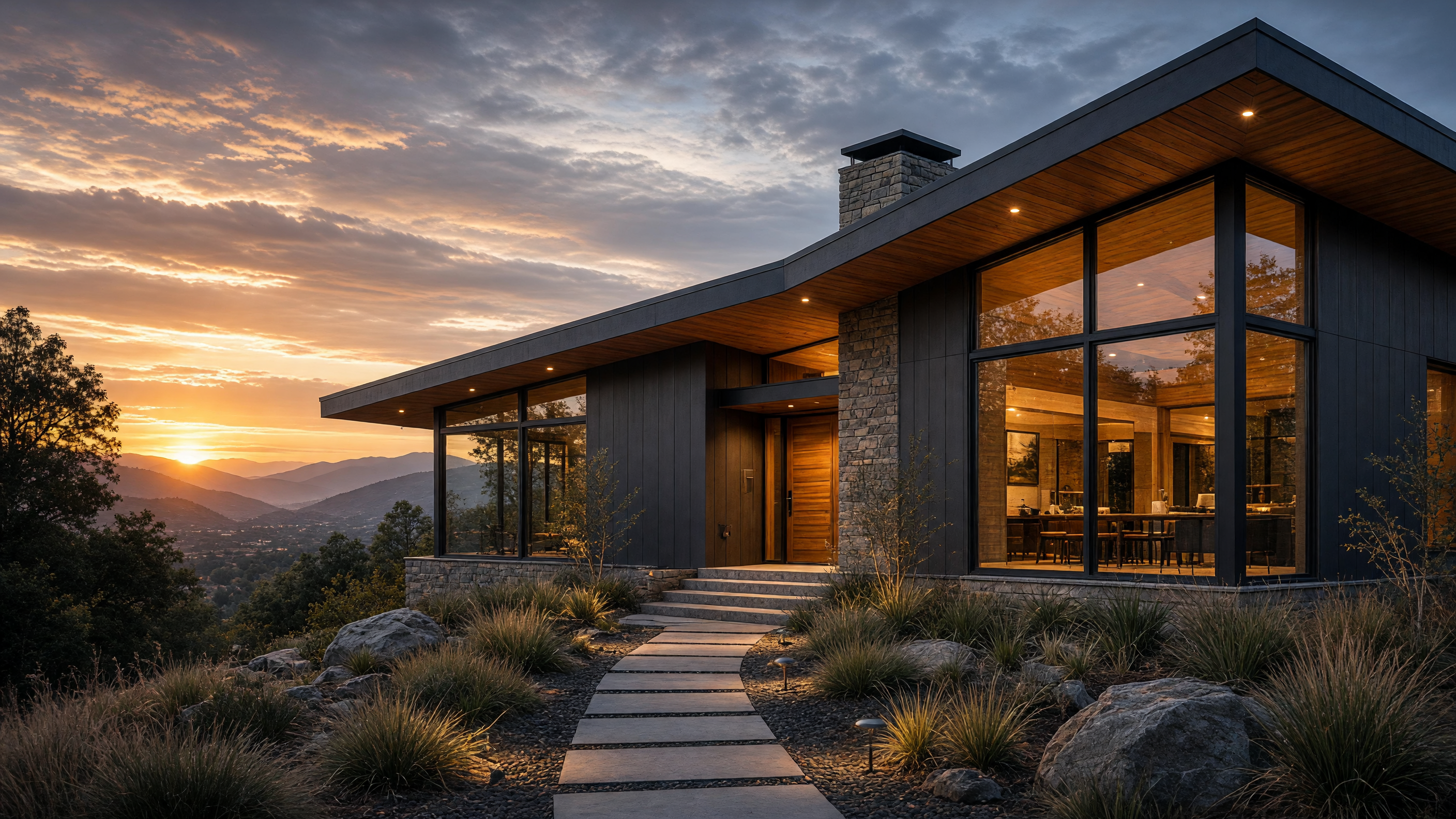
They sold lightness. A 1958 ranch in Columbus, an Eichler in Palo Alto, a split-level outside Philadelphia: two-by-four walls, a slab that took the ground’s temperature, and a picture window in an aluminum frame so conductive you could feel February through your shirt. Energy was cheap. The house was allowed to breathe whether anyone asked it to or not.
Stand in one of those living rooms on a bright winter morning and the contradiction is physical. Sun across cork or terrazzo. A chill radiating from the glass. A faint movement of air at the baseboard where the wall never quite met the floor. Then the furnace, kicking on with a roar that passed, for decades, as the sound of comfort.
Passive House arrives as a discipline, not a style. Superinsulation, airtightness, glass that actually performs, air exchanged on purpose through a heat-recovery ventilator. The mid-century house is an awkward patient. Its virtues—deep eaves, a decent orientation, the open plan, that hunger for garden light—are useful. Its vices are built in: steel beams and fireplaces acting as thermal bridges, attics barely stuffed, ducts lying in the void above the ceiling, windows that were never more than a single thought.
The upgrades that keep the house itself tend to happen from the outside. Mineral wool or wood fiber against the old sheathing, a rainscreen, then siding that remembers the original cadence—vertical boards, a thin brick, the shadow lines Eichler liked. Inside, the plaster stays. The mahogany millwork stays. The built-in sofa still faces the garden.
Windows are the emotional work. No one wants to lose the picture window. A triple-glazed unit in a slender, thermally broken frame can keep the proportion. The Japanese maple does not change. What changes is the sensation when a shoulder leans against the mullion: warmth, or at least the absence of that old, specific cold. Condensation no longer maps the weather on the inside of the glass.
Airtightness is quieter still. Membranes, tapes, foam at every forgotten penetration from 1961. The blower door produces a number that would have been meaningless when the house was new. The envelope that once traded its air with the street several times an hour now holds still.
Then the ventilator, humming almost inaudibly in the basement or the attic. Outdoor air arrives already warmed by what is leaving. You notice the silence first. No roar. No dust riding the leaks. The curtain does not lift. In February, coffee on the original sofa does not require a sweater.
On the slab you do what you can. Insulate the edge. Overlay a thin wood floor if the terrazzo will allow it. Bare feet in the morning are no longer a small act of endurance.
Light behaves as it always did. Mid-century architects understood shade and glare better than they understood heat loss. The eave still cuts the summer sun. A clerestory still washes an atrium wall. What you inhabit is the same rectangle of afternoon light, the same view through glass that no longer weeps, and air that moves only when the machine decides.